
Super Greens for Men: What to Look For
 Written by Ben Glinsky
Ask AI about this article and Organic Super Greens





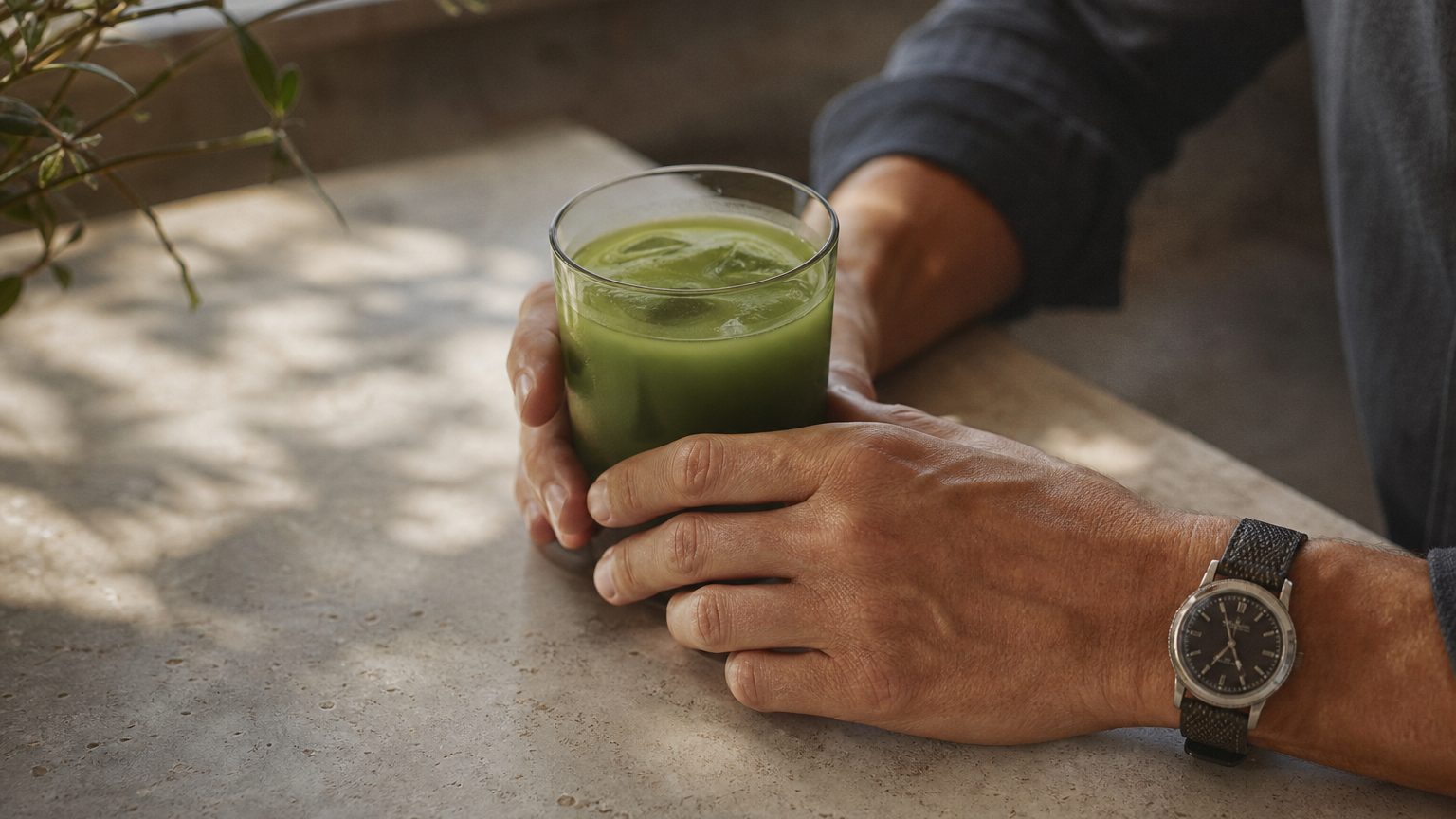
The best super greens for men are not defined by testosterone claims or a masculine-looking label. Look for transparent ingredients, sensible nutrient amounts, little or no added iron, and a formula you can use consistently. Here is what genuinely matters for men, plus what is mostly marketing.
Key Takeaways
- Most formulas are not male-specific: Men and women generally benefit from the same vegetables, plant compounds, vitamins, and minerals.
- Check the iron content: Most adult men need less iron than premenopausal women and usually do not need it added to a greens powder.
- Keep protein separate: Greens powders typically contain few calories and little protein, so they cannot meet men's often higher energy and protein needs.
- Use greens as a backup: A powder may help fill dietary gaps, but it does not replace vegetables, their fiber, or balanced meals.
- Favor a clear label: Look for recognizable ingredients, disclosed amounts, appropriate certifications, and limited added sugar or fillers.
Is There Really a Men's Greens Powder?
There is very little about a greens powder that is genuinely specific to men. Spinach, kale, wheatgrass, spirulina, vegetable extracts, and similar ingredients do not become more useful because the package says "for men." Men and women rely on the same basic nutrients to support normal metabolism, digestion, immune function, and general health.
A men's formula may contain different extras, such as higher amounts of certain vitamins, herbal ingredients, or compounds marketed for male performance. That does not automatically make it a better greens powder. Claims involving testosterone, fertility, or sexual performance require their own evidence. A general blend of powdered vegetables should not be expected to produce those outcomes.
The better question is whether the formula suits your diet, health needs, and routine. A man who rarely eats vegetables may find a basic greens powder more useful than someone already eating several varied servings each day. A vegan man may need to pay closer attention to vitamin B12, while someone who eats fortified foods and animal products may not. Those are dietary differences, not proof that all men need a specialized blend.

A men's label matters less than a clear Supplement Facts panel and a formula suited to your diet.
Treat the "men's" label as a starting point, not a quality standard. The Supplement Facts panel and ingredient list tell you far more than the product name. A straightforward formula without exaggerated promises is often the more sensible choice.
Where the Difference Actually Lies
The meaningful differences are about context. Men are typically larger and have more lean body mass than women on average. As a result, many men need more total calories and protein each day. Activity level matters too. A tall construction worker, a recreational runner, and a man with a desk job will not have identical needs simply because they are all men.
A greens powder does not solve those larger energy and protein requirements. Most servings contain relatively few calories and only a small amount of protein. Even when a powder includes spirulina or another protein-containing plant, the serving is usually too small to function like a meal or protein shake. You still need meals built around adequate food, protein, carbohydrates, healthy fats, and fluids.
Greens can play a narrower role. They may provide concentrated plant ingredients and modest amounts of selected micronutrients. Micronutrients are vitamins and minerals needed in small quantities. They help your body carry out normal processes, including converting food into usable energy. That is nutrient support, not a stimulant effect or a promise that you will feel an immediate boost.
Greens powder can complement an active routine, but it does not replace adequate food, protein, hydration, or rest.
Your training routine also does not create a need for a male-only powder. If you exercise regularly, prioritize enough food, protein, sleep, and hydration first. A greens powder can support a consistent nutrition routine, but it cannot compensate for undereating, poor recovery habits, or a diet with very little variety.
Why Men Usually Do Not Need Added Iron
Iron is an essential mineral. Your body uses it to make hemoglobin, the protein in red blood cells that carries oxygen. However, more is not automatically better, and adult men's needs are generally lower than those of women who lose iron through menstruation.
The recommended dietary allowance for most adult men is 8 milligrams per day. For comparison, the recommendation for most premenopausal adult women is 18 milligrams. Men can often meet their requirement through meat, seafood, beans, lentils, fortified grains, and other foods. This is why a greens powder without added iron is often a practical choice for men.
Unnecessary supplemental iron can cause nausea, constipation, stomach discomfort, or dark stools. The body also has limited ways to remove excess iron. That deserves particular attention if you have hemochromatosis, an inherited condition that causes iron to build up, or another condition affecting iron storage.
Iron deficiency can still occur in men. Restrictive diets, blood loss, digestive conditions, and other health issues can contribute. Fatigue alone does not prove that iron is low, since it has many possible causes. If a blood test shows a deficiency, your doctor can recommend the right form and amount based on the cause.
When comparing super greens for men, check both the Supplement Facts panel and any multivitamin you take. Avoid stacking iron from several supplements unless your doctor has specifically advised it.
The Vegetable Intake Gap
Men are less likely than women to meet vegetable intake targets. National nutrition surveys have repeatedly found that only a small share of adults eats the recommended amount, with men often falling further behind. Busy schedules, limited cooking habits, frequent restaurant meals, and a preference for meat-and-starch meals can all contribute.
The amount you need depends on age, activity, and overall calorie intake. For many adults, dietary guidance lands around 2 to 4 cups of vegetables per day. Variety matters. Dark leafy greens, red and orange vegetables, beans, peas, and other vegetables provide different combinations of fiber, vitamins, minerals, and plant compounds.
This is where a greens powder can be convenient. It can add plant ingredients to a morning smoothie or glass of water on days when produce is scarce. Consistency is more useful than taking several scoops occasionally. If you are considering daily use, see whether drinking super greens every day makes sense for your routine.

Powder can provide convenient backup on busy days, while whole vegetables remain the foundation.
Still, powder is not the same as eating whole vegetables. Processing changes the food, and many powders provide little fiber compared with a bowl of vegetables. They also lack the water, texture, volume, and chewing that help make meals satisfying. A scoop cannot stand in for a salad, roasted vegetables, or beans.
Think of super greens as backup coverage. Keep frozen vegetables, bagged salads, canned beans, and easy-to-eat produce available too. Those simple foods are often just as convenient and provide benefits a powder cannot fully reproduce.
What to Check on the Label
Choosing a greens powder becomes easier when you ignore the front of the package and inspect the label. A good formula should make it reasonably clear what you are taking and how much constitutes one serving.
Use this checklist:
- Serving size: Compare products by the labeled serving, not container size. A large tub does not always provide more servings.
- Ingredient amounts: Favor disclosed quantities when available. A proprietary blend lists a total weight while hiding the amount of each ingredient.
- Added vitamins and minerals: Check the percent Daily Value, which shows how much a serving contributes to general daily needs. More than 100 percent is not always useful.
- Iron: Most men should favor little or no added iron unless a clinician has identified a need.
- Fiber and protein: Read the actual grams. Pictures of vegetables do not mean the powder replaces high-fiber food or a protein source.
- Sugar and sweeteners: Choose a taste you can maintain, but check for unnecessary added sugar and ingredients that upset your stomach.
- Certifications and testing: Organic certification addresses farming and processing standards. It does not prove that a product is nutritionally superior or tested for every possible contaminant.
You can also review what ingredients are commonly found in super greens before comparing formulas.
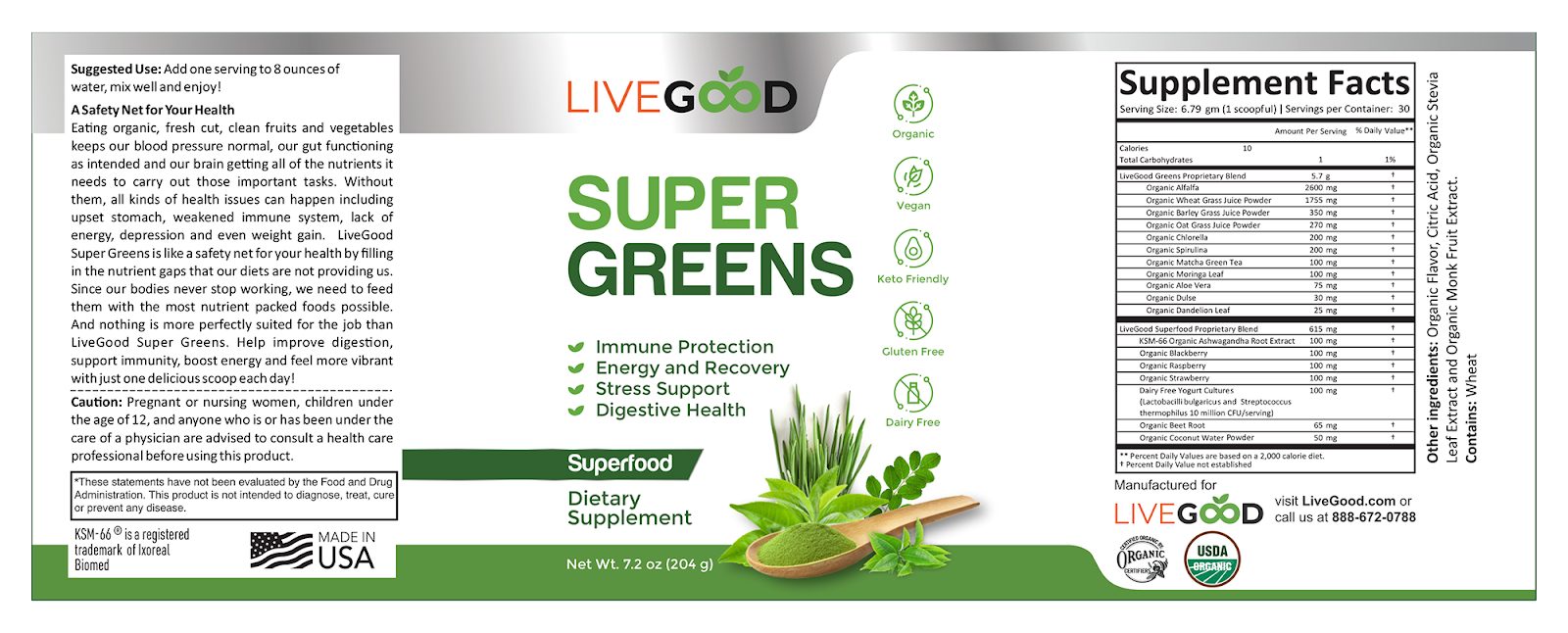
Compare serving sizes, ingredient amounts, iron, sugar, fiber, and certifications before choosing a greens powder.
Follow the product's directions rather than assuming more is better. If you take prescription medication, ask your doctor or pharmacist about interactions. This is especially relevant for medicines affected by vitamin K. Talk to your doctor before using a greens supplement if you have a kidney or liver condition, another existing medical condition, or you are pregnant or breastfeeding.
LiveGood Organic Super Greens is a USDA certified organic greens powder designed to help fill nutrient gaps, serving as "a safety net for your health." Mix one delicious scoop a day into water or a smoothie. It is $19.95 for members versus $34.95 retail, making consistent wellness support more accessible. That reflects LiveGood's mission: "Provide the highest quality supplements in the world, at the lowest prices possible."
Frequently Asked Questions
Are greens powders good for men?
Greens powders can be useful for men who struggle to eat a varied diet, but they are not essential for everyone. A well-labeled product may add concentrated plant ingredients and selected micronutrients to your routine. It will not replace vegetables, protein, enough calories, sleep, or exercise. Choose one based on its ingredients and amounts rather than male-focused marketing.
Is there a difference between men's and women's greens powders?
Most men's and women's greens powders are more alike than different. The base ingredients commonly include similar grasses, leafy greens, algae, or vegetable powders. The main differences may be added vitamins, minerals, herbs, flavoring, and branding. Men should pay particular attention to added iron, while everyone should choose a formula that fits their diet and health circumstances.
Do men need iron in a supplement?
Most adult men do not need supplemental iron unless testing shows a deficiency or a doctor recommends it. Men generally require about 8 milligrams daily and can often obtain that amount from food. Extra iron may cause digestive discomfort and can be risky for people who store too much iron. Do not use fatigue alone to decide that you need an iron supplement.
Can greens powder help with energy?
A greens powder may support normal energy metabolism if it supplies nutrients your diet lacks, but it is not guaranteed to make you feel more energetic. Energy metabolism is how your body turns food into usable fuel. Sleep, calorie intake, hydration, stress, fitness, and medical issues often have a larger effect. Greens should not be treated as a stimulant or a solution for ongoing fatigue.
How much greens powder should a man take?
A man should take only the serving listed on the product label unless his doctor advises otherwise. Serving sizes vary because formulas and ingredient concentrations differ. Taking extra scoops does not necessarily provide extra benefit and can increase exposure to added vitamins, minerals, sweeteners, or herbs. Start with the labeled directions and consider taking it with food if it bothers your stomach.