
HMB and Body Composition: What the Evidence Says
 Written by Ben Glinsky
Ask AI about this article and Creatine + HMB





HMB is not a fat burner, and research does not show that it directly reduces body fat. Its more plausible role is helping preserve lean mass when muscle is under stress, such as during a calorie deficit, hard training, illness-related inactivity, or bed rest. That distinction explains why HMB may affect body composition even when it does not increase fat loss.
Key Takeaways
- HMB does not burn fat: It does not directly target body fat, belly fat, or your metabolism.
- Muscle preservation is the focus: HMB may help reduce muscle protein breakdown when your body faces a strong physical stressor.
- Ratios can improve without extra fat loss: Preserving more lean mass can produce a more favorable body composition at the same body weight or fat loss.
- Results vary by population: Older adults, people on bed rest, and new or highly stressed trainees may have more room to benefit than trained athletes.
- A calorie deficit drives fat loss: Nutrition, resistance training, protein, sleep, and consistency matter more than any supplement.
HMB Does Not Burn Fat
HMB, short for beta-hydroxy beta-methylbutyrate, is a substance your body makes from leucine. Leucine is an essential amino acid found in protein-rich foods. Your body produces only a small amount of HMB through this process, which is why concentrated HMB is also sold as a dietary supplement.
The key point is simple: HMB does not directly break down body fat. It is not a stimulant, thermogenic ingredient, or substance shown to make fat cells release more energy. It also cannot target belly fat. Spot reduction, or losing fat from one chosen area, is not physiologically possible.
HMB is better described as anti-catabolic. Catabolism means tissue breakdown. In this context, anti-catabolic means HMB may help limit the breakdown of muscle proteins under certain stressful conditions. You can read more about this proposed mechanism in our guide to what HMB does to the body.
That does not mean HMB automatically builds muscle or changes your appearance. Human trials have produced mixed results, especially among experienced athletes who already eat enough protein and follow well-designed training programs. When a study reports a body composition benefit, the result may come from retaining lean tissue rather than losing additional fat. Those are different outcomes, even if both can make a body composition percentage look better.
HMB is studied for its potential role in muscle protein balance, not as a direct fat-burning ingredient.
Preserving Lean Mass in a Deficit
A calorie deficit occurs when you consistently consume less energy than your body uses. That deficit is what causes stored body tissue, including fat, to be used for energy. However, your body may also lose some lean tissue during the process. Lean mass includes muscle, body water, organs, bones, and other non-fat tissue.
Resistance training and sufficient protein are the primary tools for maintaining muscle during a deficit. A sensible rate of weight loss, adequate sleep, and avoiding an unnecessarily severe deficit also matter. HMB may offer additional support, but it should be viewed as a secondary tool rather than the foundation of a cutting plan.
The anti-catabolic idea becomes most relevant when muscle breakdown pressure is high. That may include a demanding training block, a large energy deficit, a sudden return to exercise, or a period of limited movement. Some research suggests HMB can help maintain lean mass in these settings, while other trials show little or no added benefit.
Your training background may affect the result. A beginner starting resistance exercise can gain strength and lean mass quickly because the stimulus is new. An advanced lifter has less room for rapid change. Protein intake also matters. If you already consume enough high-quality protein, sleep well, and train effectively, the measurable benefit from HMB may be small.
The realistic goal is not to make a diet burn more fat. It is to give your muscles a better chance of staying intact while the calorie deficit does its work.
Resistance training and sufficient protein remain the primary tools for maintaining muscle during a calorie deficit.
Why Body Composition Can Still Change
Body composition describes how much of your body is fat mass compared with lean mass. This makes it a ratio, not simply a number on the scale. Two people can weigh the same amount while carrying different proportions of muscle and fat.
Imagine that two people each lose 10 pounds during a calorie deficit. One loses 8 pounds of fat and 2 pounds of lean mass. The other loses 9 pounds of fat and 1 pound of lean mass. Their total weight loss is identical, but the second person finishes with a slightly better ratio of lean mass to fat mass.
That example explains where HMB could fit. If HMB helps someone retain more lean tissue, body composition may improve even though HMB did not cause the fat loss. The calorie deficit still produced the loss of stored fat. The potential supplement effect was on the amount of lean tissue retained.
There is another complication. Lean mass is not identical to skeletal muscle. Body composition scans count water and other non-fat tissue as lean mass. Creatine, carbohydrate intake, hydration, sodium, and the timing of a scan can all affect measured lean mass. A small increase on a scan does not necessarily mean the same amount of new muscle was built.
This is why before-and-after photos, one scale reading, or one body fat measurement can be misleading. For a clearer picture, track your waist measurement, body weight trend, gym performance, and measurements taken under similar conditions. No supplement can selectively remove fat from your stomach, hips, thighs, or any other area.
Body composition can improve when lean mass is preserved as body fat decreases.
What the Trials Actually Measured
HMB studies do not all ask the same question. Some recruit young resistance-trained athletes. Others study untrained adults, older people, or participants experiencing bed rest or reduced mobility. Those differences matter because a supplement may be more useful when muscle loss risk is higher.
Researchers commonly measure body weight, fat mass, and fat-free mass. Fat-free mass is everything in the body that is not fat. Depending on the study, it may be estimated using a DXA scan, air displacement, skinfold measurements, or bioelectrical impedance. Each method has limitations, and small changes may fall within the normal measurement error.
Trials may also measure strength, muscle soreness, markers of muscle damage, or physical function. An improvement in one measure does not prove improvement in another. For example, lower levels of a blood marker associated with muscle damage do not automatically mean a participant gained muscle or lost fat.
Research commonly examines about 3 grams of HMB per day, often for several weeks. That describes the study context, not a personal dosing instruction. Products may contain calcium HMB or a free-acid form called HMB-FA. Researchers have investigated both, but claims that one form always produces better body composition results are not firmly established across populations.
Reviews of athletic trials have generally found inconsistent or small body composition effects. Some individual studies report improvements, while others find no meaningful difference from a placebo. Follow label directions rather than increasing a serving to match or exceed a study. For broader precautions, see our review of possible HMB side effects.
Who Shows the Clearest Results
HMB appears most relevant when the risk of losing muscle is elevated. This can include older adults with low activity, people temporarily confined to bed rest, and those beginning a demanding exercise program. These groups may have more room for an anti-catabolic ingredient to make a measurable difference.
Older adults are frequently studied because age can make maintaining muscle more challenging. Even here, HMB is not a substitute for resistance exercise, adequate calories, or protein. Some trials combine HMB with amino acids, protein, vitamin D, exercise, or nutrition support. When several parts of a program change together, researchers cannot always attribute the full result to HMB alone.
Healthy, experienced athletes show less consistent results. Their training, protein intake, and recovery habits may already provide a strong muscle-preserving foundation. A small additional effect can also be difficult to detect over a short trial. That does not prove HMB has no value for trained people, but it does make dramatic body composition promises hard to justify.
During a cutting phase, HMB may be reasonable to consider if you are training hard and want extra support for maintaining lean tissue. Keep expectations modest. Use your strength trend, waist measurement, and several weeks of consistent body weight data to evaluate progress. If you are pregnant, breastfeeding, taking prescription medication, or managing a kidney, liver, or other medical condition, talk to your doctor before using HMB.
HMB may be most relevant when inactivity, aging, or demanding training increases pressure on lean tissue.
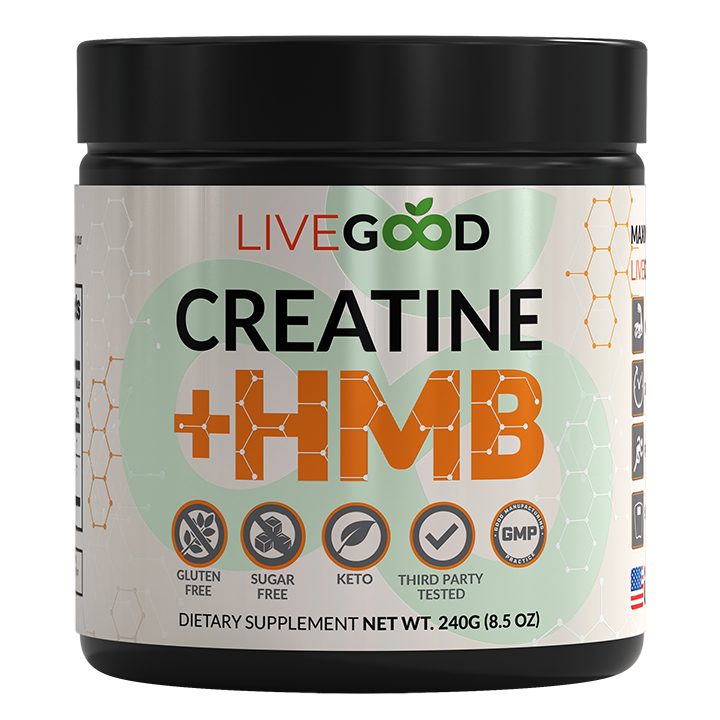
LiveGood Creatine + HMB provides 5 grams of creatine monohydrate and 3 grams of HMB per serving, with no fillers, flavors, or additives. Used alongside resistance training and adequate protein, the formula supports muscle energy, lean mass maintenance, and the energy needs of muscles, the brain, and the heart. It is $19.95 for members compared with $34.95 retail, reflecting LiveGood's commitment to "Highest Quality. Lowest Prices. Every Day."
What Actually Drives Fat Loss
Fat loss requires a sustained calorie deficit. You can create one by eating fewer calories, using more energy through activity, or combining both. The plan still needs to be realistic enough to maintain. A harsh diet that leaves you exhausted, hungry, and unable to train is rarely the most useful long-term approach.
Start with meals built around protein, vegetables, fruit, high-fiber carbohydrates, and portions that fit your energy needs. Protein is especially useful during a deficit because it supplies the amino acids needed to maintain and repair muscle. It can also make meals more filling.
Resistance training gives your body a reason to retain muscle. Aim for a routine that trains your major muscle groups and allows gradual progress. Walking and other aerobic activity can increase daily energy use and support cardiovascular fitness, but you do not need to punish yourself with endless cardio.
Sleep and stress management also affect how manageable the process feels. Poor sleep can increase hunger, reduce training quality, and make consistent food choices harder. These effects do not cancel the laws of energy balance, but they can make maintaining a deficit more difficult.
HMB belongs near the edge of this plan, not at its center. It may support lean mass maintenance for some people, particularly when muscle loss pressure is high. It does not replace the calorie deficit, protein, training, or recovery. Judge progress over several weeks using average body weight, waist measurements, and gym performance. Consistency is more useful than chasing a fast result or expecting one ingredient to transform your body composition.
Frequently Asked Questions
Does HMB help you burn fat?
No, HMB does not directly burn body fat. Its proposed benefit is helping limit muscle protein breakdown under stressful conditions such as calorie restriction, demanding training, or inactivity. If more lean mass is retained while a calorie deficit reduces fat, body composition may improve. The deficit caused the fat loss, not HMB.
Does HMB help with weight loss?
HMB is not a weight loss supplement and should not be expected to lower scale weight. Some research suggests it may support lean mass maintenance, which could help the quality of weight loss during a calorie deficit. Diet, activity, sleep, and consistency remain the main factors determining whether body weight decreases.
Can HMB preserve muscle in a calorie deficit?
HMB may help preserve lean tissue during a calorie deficit, but results are mixed and the benefit is not guaranteed. It may be more relevant during severe physical stress or when muscle loss risk is elevated. Resistance training, sufficient protein, and a manageable calorie deficit have a much stronger practical role.
How much HMB is used in research?
Many HMB studies use approximately 3 grams per day, often over several weeks. That amount describes common research protocols rather than individualized medical advice. Follow the serving directions on your product label. Talk to your doctor before use if you take prescription medication, are pregnant or breastfeeding, or have an existing medical condition.
Should you take HMB while cutting?
HMB can be considered while cutting if your priority is supporting lean mass maintenance, not accelerating fat loss. It makes the most sense after you have addressed protein, resistance training, recovery, and a sustainable calorie deficit. Experienced lifters may notice little difference, and research does not support treating HMB as essential for every cutting plan.