
How Long Do Focus Patches Take to Work?
 Written by Nauder Khazan
Ask AI about this article and Energy and Focus Patches





Focus patches may become noticeable in about 30-60 minutes, although some take longer and some produce no obvious feeling. Transdermal delivery is usually slower than swallowing an ingredient because it must cross the skin barrier, and the actual timing depends on the formula, placement and your skin. Here is how to set realistic expectations and get the clearest read on your patch.
Key Takeaways
- Plan for 30-60 minutes: This is a reasonable starting window, but some patches may take one or two hours to feel noticeable.
- Expect gradual delivery: Ingredients must move through the skin before reaching circulation, so a patch is not automatically faster than a pill.
- Look for caffeine: If caffeine is present, it is often the ingredient most likely to create a noticeable change in alertness.
- Choose the site carefully: Clean, dry, relatively hair-free skin helps the patch stay in full contact with your body.
- Do not judge by sensation alone: Vitamins, minerals and many botanical extracts may not produce an immediate feeling, even when used as directed.
What Transdermal Delivery Actually Means
A transdermal patch releases ingredients onto the skin so they can move through it over time. "Transdermal" simply means across the skin. The goal is for suitable molecules to pass through the outer layers and enter the small blood vessels beneath them.
That process is not instant. The outermost layer of your skin, called the stratum corneum, is designed to keep outside substances out and moisture in. An ingredient must leave the patch, dissolve within the skin's surface and pass through that barrier before it can reach circulation. This is why a patch may feel gradual rather than immediate.
Patch design matters too. Some patches hold ingredients in the adhesive, while others use a separate layer that releases them at a controlled rate. The concentration of an ingredient and its molecular properties affect how readily it can cross the skin. Small molecules with the right balance of water and fat solubility tend to move through more easily. Not every vitamin, mineral or botanical compound absorbs equally well through this route.
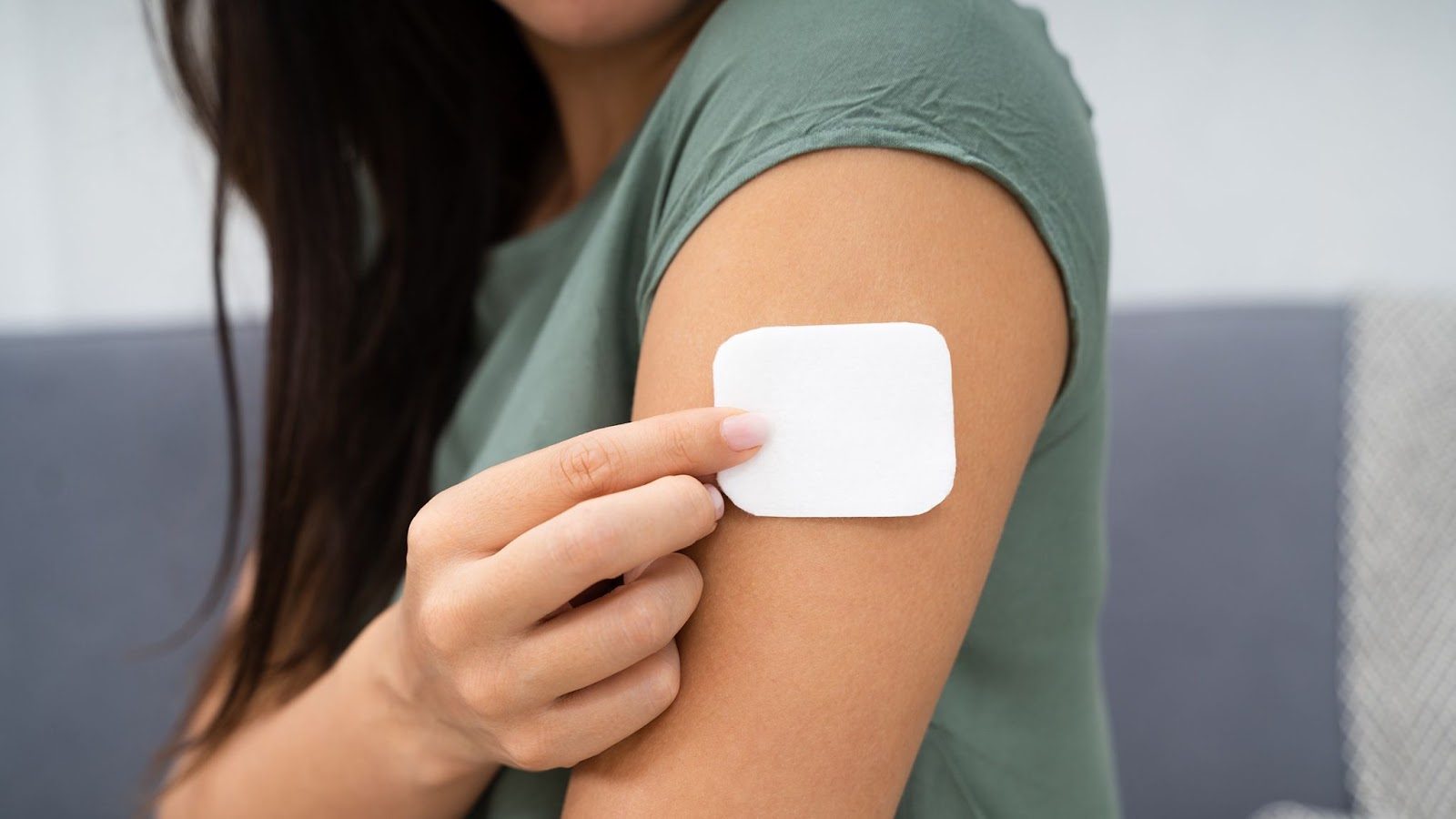
A focus patch releases suitable ingredients gradually as they move across the skin's protective outer layer.
By contrast, your digestive tract is built to absorb nutrients and other compounds. A swallowed ingredient still has to dissolve and pass through the gut, but that route can be faster for many substances. Avoid assuming that "bypasses digestion" means "works immediately." With a focus patch, the skin barrier is the main timing checkpoint.
A Realistic Time Window
For practical planning, apply a focus patch about 30-60 minutes before you want its support. If the label gives a specific onset estimate, use that as your starting point. Give the patch up to one or two hours before deciding that you cannot notice anything, unless the directions say otherwise.
Here is a realistic way to think about the timeline:
- During the first 15 minutes, the patch is adhering and ingredients are beginning to move toward the skin. A strong effect this early should not be expected.
- Around 30-60 minutes, some people begin noticing a gradual change in alertness or their ability to stay with a task.
- Over the next several hours, a properly designed patch may continue releasing ingredients while it remains attached.
- Near the label's maximum wear time, delivery may taper, and the patch should be removed as directed.

A 30-60 minute planning window gives a focus patch time to begin releasing its ingredients.
Caffeine, when included, is usually the ingredient most likely to create an obvious short-term sensation. You might recognize it as greater alertness or simply less temptation to drift away from a task. Even then, the amount delivered and the release rate matter. A patch is not guaranteed to feel as strong as coffee, an energy drink or a caffeine tablet.
Many other common patch ingredients do not act like stimulants. Vitamins and minerals support normal body functions, but taking them does not necessarily produce a noticeable feeling within an hour. Botanical extracts also vary widely, and evidence for complete skin absorption is limited for many supplement patch blends. A claimed wear time tells you how long to keep the patch on, not how quickly every ingredient reaches your bloodstream.
What Changes How Fast It Works
The formula is the biggest variable. Two products called "focus patches" can contain different ingredients, amounts, adhesives and delivery systems. That means they can have very different onset times. Check the product label rather than applying another brand's timing claim to the patch you have.
Your caffeine habits also matter. If a patch contains caffeine and you rarely use it, you may notice it more readily. If you regularly drink coffee or energy drinks, tolerance can make the same exposure feel subtle. That does not justify wearing extra patches. Use only the number listed on the label, since stacking patches could increase both ingredient exposure and skin irritation.
Skin condition can change delivery as well. Hydrated, healthy skin may behave differently from very dry, thick or irritated skin. Heat and heavy exercise can affect skin blood flow and sweating, but you should not use heating pads, wraps or other methods to force faster delivery. Extra heat can change absorption unpredictably and may loosen the adhesive.

Formula, skin condition, caffeine habits and daily routines can all change how quickly a patch feels noticeable.
Timing is also harder to judge when your day keeps changing. Sleep, food, hydration, stress, screen interruptions and the difficulty of your task can all influence how focused you feel. For a fair test, use the patch at a similar time on several comparable days and write down when you applied it, when you noticed anything and when the effect seemed to fade.
For ingredient details rather than timing, see what is in focus patches. Follow the label instead of changing the application schedule based on one unusually busy or tiring day.
Where You Put It Matters
Use a clean, dry and relatively hair-free area recommended on the product label. The upper arm, shoulder, upper back or torso may be practical choices when permitted by the directions. These areas tend to stay flatter and experience less rubbing than joints, hands or feet.
Full contact is the goal. Oil, lotion, sweat and dense hair can prevent the adhesive from sitting evenly against your skin. If part of the patch lifts, the usable contact area shrinks and delivery may become less consistent. Wash the site with mild soap and water, dry it completely and avoid applying skin products underneath the patch.
Do not place a focus patch on broken, sunburned, recently shaved, irritated or unusually sensitive skin. Damaged skin can absorb substances differently and may be more likely to react to the adhesive. You should also avoid repeatedly using the exact same spot. Rotating locations gives the skin time to recover.
Clean, dry and relatively hair-free skin helps a patch maintain consistent contact during wear.
Once applied, press the patch down according to its directions, especially around the edges. Do not cut it unless the manufacturer specifically says that is allowed. Cutting some patch designs can interfere with controlled release.
Apply it early enough to match the expected onset. For example, if you want support during a long work session beginning at 9 a.m., applying it around 8:15 to 8:30 a.m. gives it time to begin releasing ingredients. Remove it at the label's stated limit, even if you did not notice a clear effect.
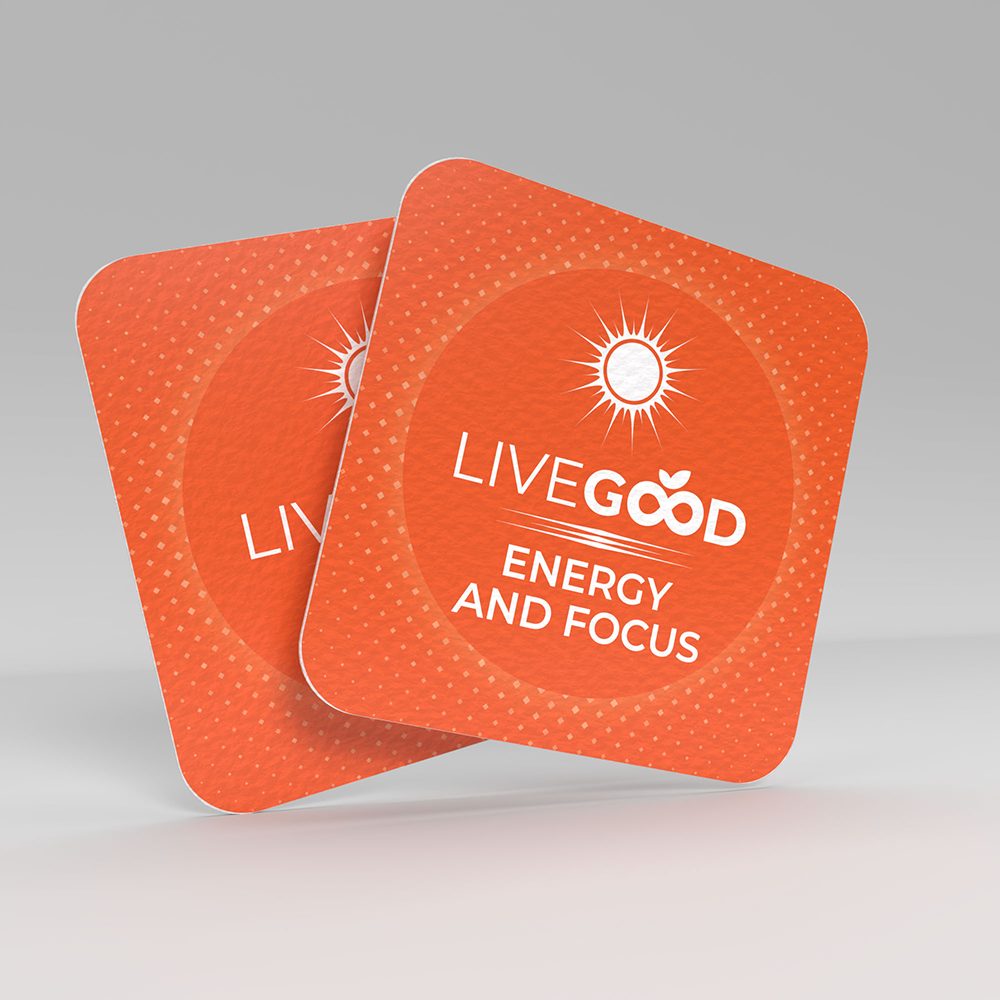
LiveGood Energy and Focus Patches are designed to deliver a blend of highly absorbable vitamins, minerals and botanical extracts through the skin to support a sustained energizing boost. Effects can start in about 30 minutes, and each patch may be worn for up to 8 hours as directed. The retail price is $29.95, while members pay $14.95, helping make everyday wellness more accessible. Highest Quality. Lowest Prices. Every Day.
When You Would Not Notice Anything
Not noticing a patch does not automatically tell you whether every ingredient was absorbed. The effect may be subtle, especially if the formula relies mainly on vitamins, minerals or non-stimulant botanical extracts. These ingredients do not necessarily create a clear "on" sensation.
The patch may also have poor contact with your skin. Lotion, body oil, sweat, hair or movement can lift the edges. An old, damaged or improperly stored patch may not perform as intended either. Check the package instructions for storage and expiration information.
Your starting state can hide small changes. Severe sleep loss, dehydration, skipped meals or constant interruptions may outweigh any modest support from a supplement. A patch cannot replace sleep, food, movement, hydration or a workable environment. For long work hours, pair it with scheduled breaks, a clear task list and fewer notifications.
Ingredient amounts are another limitation. A label may list appealing nutrients without making it clear how much can cross the skin. Research on transdermal delivery does not automatically prove that every over-the-counter focus patch delivers every listed ingredient effectively. Evidence for many multi-ingredient supplement patches remains limited, so honest expectations matter.
If the patch contains caffeine, tolerance may make the effect harder to notice. Do not respond by wearing two or three patches unless the label explicitly directs that use. More is not a reliable way to make a patch work faster.
Stop using the patch if you develop redness, swelling, itching or another concerning reaction. For a broader discussion, read about focus patch benefits and side effects. Talk to your doctor before use if you take prescription medication, are pregnant or breastfeeding, have kidney or liver conditions, or live with another existing medical condition.
Frequently Asked Questions
How long do focus patches take to work?
Many focus patches may become noticeable within 30-60 minutes, although the onset can extend to one or two hours. Timing depends on the ingredients, patch design, application site and your skin. Caffeine-containing patches are more likely to create an obvious short-term feeling than patches based only on vitamins, minerals or non-stimulant botanical extracts.
How long does a focus patch last?
A focus patch may be designed for several hours of gradual release, with some labels allowing wear for up to eight hours. The permitted wear time is not a guarantee that you will feel a steady effect for that entire period. Remove the patch by the stated limit and never wear it longer to compensate for a subtle response.
Where is the best place to put a focus patch?
The best location is a clean, dry, intact and relatively hair-free area allowed by the label, often the upper arm, shoulder, upper back or torso. Avoid lotion, oil, irritated skin and spots where clothing constantly rubs. Rotate sites between applications to reduce repeated exposure to the adhesive.
Do focus patches work faster than pills?
Focus patches do not generally work faster than pills because their ingredients must first cross the skin's protective outer layer. Swallowed ingredients must dissolve and pass through the digestive tract, but that route is built for absorption. The faster option depends on the specific ingredient, formulation and dose, not simply whether it comes as a patch or pill.
Why might a patch not seem to work?
A patch may feel ineffective because its ingredients produce subtle effects, the adhesive has poor skin contact, or caffeine tolerance reduces a noticeable response. Sleep loss, dehydration and distractions can also overpower a modest change. Follow the label, test it under similar conditions and do not add extra patches in an attempt to force a faster effect.