






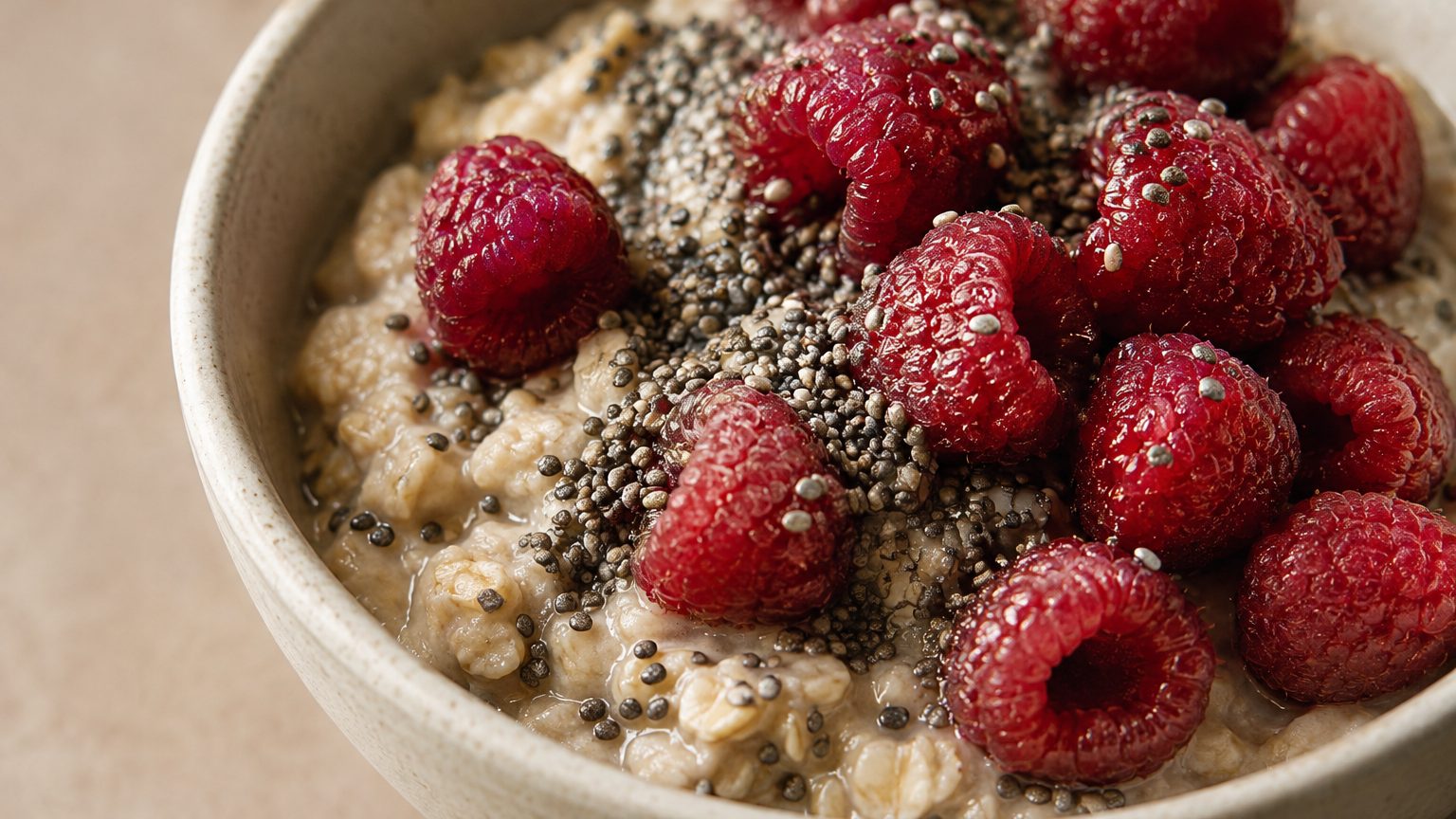
Most adult women need about 25 grams of fiber per day, while most adult men need about 38 grams. After age 50, those targets decrease to about 21 grams for women and 30 grams for men. You can meet the goal through fiber-rich foods first, then use a fiber supplement to help close a consistent gap.
Key Takeaways
- Daily targets: Most women need about 25 grams of fiber per day, while most men need about 38 grams.
- Food comes first: Beans, whole grains, berries, seeds, and vegetables provide fiber alongside other useful nutrients.
- Both types matter: Soluble and insoluble fiber support fullness, digestion, gut bacteria, and regularity in different ways.
- Increase gradually: Adding about 5 grams per week can reduce the likelihood of gas, bloating, and cramping.
- Supplements fill gaps: A fiber supplement can complement your meals when food alone regularly leaves you short.
- Water is essential: Drink adequate fluid whenever you increase fiber, especially when using concentrated fiber powders.
Your Daily Fiber Target
The Dietary Guidelines for Americans use a target of 14 grams of fiber for every 1,000 calories you eat. Based on typical calorie needs, that works out to about 25 grams per day for adult women and 38 grams for adult men through age 50. After 50, the general targets are about 21 grams for women and 30 grams for men.
These numbers are planning benchmarks, not universal limits. Your calorie needs, age, activity level, and health history can change the appropriate amount. Pregnancy and breastfeeding also affect nutrition needs, so discuss your personal target with your doctor.
A simple fiber per day calculator multiplies your daily calorie intake by 14, then divides by 1,000. For example, 1,800 calories multiplied by 14 gives a target of 25.2 grams. A calculator is only as useful as the calorie estimate entered, so the standard age and sex benchmarks are often easier for everyday planning.
Most people in the United States consume only about 15 to 16 grams daily. That leaves many women roughly 9 to 10 grams short and many men more than 20 grams short. Keeping a three-day food record can show whether you have a consistent gap or simply had one low-fiber day.
Treat the number as a food target first. Beans, lentils, whole grains, fruit, vegetables, nuts, and seeds deliver fiber together with vitamins, minerals, and plant compounds. Our beginner's guide to fiber explains how to recognize these sources and read fiber amounts on food labels.
Soluble and Insoluble Fiber
Dietary fiber is the part of plant food that your digestive enzymes do not fully break down. Instead of focusing on one type, aim to eat varied plant foods that provide a mixture of soluble and insoluble fiber.
Soluble fiber dissolves or disperses in water and may form a gel in the digestive tract. Psyllium, inulin, pectin, and beta-glucan are common examples. Some soluble fibers are also fermentable, meaning gut bacteria use them as a food source. This process produces compounds that help support the environment of the colon, although it can also cause gas when intake rises quickly.
Insoluble fiber does not form the same type of gel. It adds bulk and helps food move through the digestive system, supporting regularity. Wheat bran, pea hulls, vegetable skins, and the fibrous parts of whole grains are common sources.
The line between the two types is not always sharp. Oats, beans, fruit, vegetables, chia seeds, and whole grains often contain both in different proportions. You generally do not need separate soluble and insoluble targets. Meeting your total through a varied diet is more practical.
Both types can also support fullness because high-fiber meals tend to take longer to eat and digest. Fiber is not a quick fix, however. Regular intake, adequate water, movement, and a balanced eating pattern work together. Fiber also interacts with the microbes living in your digestive tract, a connection covered in our article on probiotics and gut health.
A 30-Gram Day
Getting 30 grams of fiber does not require an unusually restrictive menu. The following day combines familiar foods across several meals. Fiber amounts are approximate because varieties, serving sizes, cooking methods, and brands differ.
| Meal | Food and serving | Approximate fiber |
|---|---|---|
| Breakfast | 1/2 cup dry rolled oats | 4 g |
| Breakfast | 1 tablespoon chia seeds | 4 g |
| Breakfast | 1 cup blueberries | 3.5 g |
| Lunch | 1/2 cup cooked black beans | 7.5 g |
| Lunch | 1 slice whole-grain bread | 2 g |
| Dinner | 1 cup cooked broccoli | 5 g |
| Dinner | 1/2 cup cooked brown rice | 1.75 g |
| Snack | 1 medium orange | 3 g |
| Daily total | About 31 g |
This plan reaches the target by distributing fiber throughout the day rather than concentrating it in one meal. That approach is often more comfortable, particularly if your current intake is low. It also shows why serving size matters. A food can be rich in fiber, but you still need to consider the amount you actually eat.
You can make equivalent swaps without changing the basic pattern. Replace black beans with lentils or chickpeas, blueberries with raspberries or a pear, and brown rice with barley or another whole grain. Check nutrition labels because breads and cereals marketed as whole grain can vary substantially in fiber.
If you are trying to reach 25 grams, the breakfast, lunch, and broccoli in this example already provide about 26 grams. To learn how to get 30 grams of fiber a day, use the same framework: include a whole grain and seeds at breakfast, legumes at lunch, vegetables at dinner, and whole fruit as needed.
Using a Fiber Supplement
A fiber supplement is most useful when it fills a measurable gap between your usual food intake and your daily target. It should not replace beans, vegetables, fruit, or whole grains, which provide nutrients and plant compounds that isolated fiber may not contain.
Start by tracking several typical days. If you average 20 grams and your target is 25 grams, the gap is about 5 grams. If you average 16 grams and want to reach 30, trying to add all 14 grams immediately may create digestive discomfort. General research-based guidance is to increase total intake by roughly 5 grams per week while also increasing fluid.
Different supplemental fibers behave differently. Psyllium absorbs water and forms a gel, while inulin is readily fermented by gut bacteria. Fermentable fibers may cause more gas for some people, especially at first. Blends can contain several plant sources, so read the Supplement Facts panel rather than assuming every powder provides the same amount or type.
Always follow the product's labeled serving directions. If one full serving would represent a large jump from your current intake, ask your doctor or registered dietitian how to introduce it gradually rather than changing the directions on your own. Mix powder thoroughly and take it with the labeled amount of liquid. You can find more context in our overview of fiber supplement benefits.
If your food record shows a recurring gap, LiveGood Organic Fiber provides 8 grams of dietary fiber per one-scoop serving from ten organic plant-based ingredients. Follow the label: mix one scoop into 6 to 8 oz of water, juice, or a smoothie, take it between meals or 30 to 60 minutes before eating, and always have a full glass of water. It is designed to support fullness and digestion alongside fiber-rich meals, not replace them.
Increasing Fiber Gradually
Gas, bloating, and cramping often happen when you increase fiber faster than your digestive system and gut bacteria can adapt. Fermentable fibers such as inulin can be especially noticeable because bacteria break them down and produce gas in the process. These effects do not necessarily mean fiber is unsuitable for you, but they are a reason to slow the pace.
A common approach is to add about 5 grams of total daily fiber per week. For example, someone eating 15 grams might aim for roughly 20 grams before moving toward 25 grams. Hold at each step long enough to assess comfort instead of adding several high-fiber foods and a supplement on the same day.
Water matters because fibers such as psyllium absorb liquid. Spread fluids through the day and drink a full glass of water with a fiber supplement. Your needs vary with body size, activity, climate, and medical history, so there is no single fluid target that fits everyone.
There is no established maximum that applies neatly to every healthy adult. Too much fiber is often relative to what your body is accustomed to. Persistent bloating, significant cramping, loose stools, or difficulty passing stool can indicate that your intake rose too quickly, your fluid intake is inadequate, or a particular source does not agree with you.
Very high intake can also crowd out enough calories, protein, or other nutrients, particularly in people with smaller appetites. If symptoms are severe, continue despite slowing down, or include vomiting, intense pain, or an inability to pass stool or gas, contact a healthcare professional promptly.
Fiber and Medications
Fiber supplements can affect how quickly or completely some medications are absorbed. As a general precaution, take a fiber supplement at least two hours apart from medications unless your doctor or pharmacist gives you different instructions. Some prescriptions require a longer interval, so the medication's directions take priority over general advice.
Never swallow dry fiber powder. Psyllium and other water-absorbing fibers expand after contact with liquid, which is why thorough mixing and a full glass of water are essential. People with swallowing difficulties should speak with a healthcare professional before using powdered, capsule, or wafer forms of supplemental fiber.
Ask your doctor before adding a supplement if you have irritable bowel syndrome, diverticular disease, a history of intestinal narrowing or digestive surgery, or an unexplained change in bowel habits. The amount and type of fiber that feels comfortable can differ substantially in these situations. Medical guidance is also appropriate if you have kidney or liver conditions or another existing medical condition.
Pregnant or breastfeeding adults should review supplements with their doctor. Children and teenagers have age- and calorie-specific needs, so a pediatrician should guide supplement use rather than applying adult serving directions. Keep fiber powders away from children and pets unless an appropriate healthcare or veterinary professional has approved them.
Finally, review the entire ingredient list rather than looking only at the fiber total. Botanical blends can contain ingredients that interact with prescriptions or may not suit every person. A doctor or pharmacist can check the complete label against your medications and health history.
Frequently Asked Questions
How much fiber per day does a woman need?
Most adult women through age 50 need about 25 grams of fiber per day. After age 50, the general target is about 21 grams. These are planning benchmarks based on typical calorie needs, so pregnancy, breastfeeding, activity level, calorie intake, and medical conditions may change the appropriate amount. Ask your doctor about individual needs.
How can I hit 25 grams of fiber a day?
Build fiber into each meal instead of trying to get it all at once. For example, oats, chia, and berries can provide about 11 grams at breakfast, while half a cup of beans and whole-grain bread add roughly 9 grams at lunch. A cup of broccoli at dinner brings the day to approximately 25 grams.
What does 30 grams of fiber look like in a day?
Thirty grams can come from ordinary portions spread across the day. One example is rolled oats, chia seeds, and blueberries at breakfast, black beans and whole-grain bread at lunch, broccoli and brown rice at dinner, plus an orange. Exact amounts vary by product, variety, serving size, and preparation method.
What food is highest in fiber?
Legumes and seeds are among the most concentrated everyday fiber sources. One cup of cooked split peas can provide about 16 grams, while an ounce of chia seeds provides roughly 10 grams. Beans, lentils, raspberries, pears, bran cereals, and artichokes are also useful choices. Variety matters because different foods provide different fiber types and nutrients.
Is one apple a day enough fiber?
No, one apple does not provide an entire day's fiber. A medium apple with its skin generally has about 4 grams, compared with daily targets of approximately 25 grams for most women and 38 grams for most men through age 50. It can still make a useful contribution when combined with legumes, vegetables, seeds, and whole grains.
How much fiber per day should I eat to lose weight?
Use the standard daily target rather than aiming for an unusually high amount: about 25 grams for most women and 38 grams for most men through age 50. Fiber-rich foods can support fullness and a consistent eating routine, but fiber does not guarantee weight loss. Increase your intake gradually and pair it with adequate fluid.