
Should You Take Collagen Peptides Every Day?
 Written by Nauder Khazan
Ask AI about this article and Collagen Peptides






For most healthy adults, taking collagen peptides every day can be a reasonable choice if the product agrees with you and fits your goals. Daily use matches how most collagen trials are designed, but collagen should supplement your diet, not replace complete protein. Here is how to decide whether a daily routine makes sense for you.
Key Takeaways
- Daily use matches the research: Most collagen trials give participants a serving every day, so consistency is part of the tested routine.
- Cycling is not required: There is no established reason to schedule regular breaks if you tolerate collagen and follow the label.
- Complete protein still matters: Collagen lacks tryptophan and is low in leucine, so it should not replace protein-rich meals.
- The source affects allergy risk: Marine collagen commonly comes from fish, while bovine collagen comes from cattle.
- Results take time: Trials commonly evaluate changes after 8 to 12 weeks, and not everyone notices a meaningful difference.
Why Trials Use Daily Dosing
Most collagen research uses daily dosing because researchers need participants to follow a consistent routine. When the same amount is taken each day, it is easier to compare the collagen group with a placebo group. A placebo is an inactive look-alike used to help determine whether a measured change is likely related to the tested ingredient.

Hydrolyzed collagen is broken into smaller peptides that can be mixed into a consistent daily routine.
Collagen peptides are hydrolyzed collagen. Hydrolyzed means the collagen protein has been broken into smaller chains of amino acids called peptides. Your digestive system breaks these down further, and your body uses the resulting amino acids wherever they are needed. You cannot direct them only to your skin, joints or muscles.
Daily dosing does not prove that collagen must be taken seven days a week to have any value. Few trials directly compare daily use with taking it only a few times per week. It does mean that taking collagen sporadically is different from the routine researchers evaluated. If you want to judge whether it helps you, consistency gives you a clearer test.

The most useful time to take collagen is a time you can remember each day.
There is also no well-established advantage to morning versus evening use. Choose a time you can remember and follow the product's label directions. Mixing a powder into coffee, water, yogurt or a smoothie can make daily use easier. If it bothers your stomach, taking it with food may feel more comfortable. For a closer look at scheduling, see whether to take collagen before or after meals.
Daily use is therefore less about finding a perfect hour and more about repeating the same reasonable routine long enough to evaluate it.
Is There a Reason to Stop?
You generally do not need to cycle collagen by taking planned days, weeks or months off. Collagen is a dietary protein, not a stimulant that must be reset. Research has not established a cycling schedule or shown that regular breaks improve how collagen peptides work.
That does not mean you should take them indefinitely without checking whether they still make sense. Stop and review your routine if you develop hives, swelling, breathing trouble or other signs of an allergic reaction. Breathing difficulty or swelling of the face or throat requires urgent medical care. A lingering unpleasant taste, nausea, fullness or digestive discomfort may also be a practical reason to pause.

There is no established need to cycle collagen, but side effects are a reason to pause.
You might also stop if you have used collagen consistently for a fair trial and notice no benefit worth the cost or effort. Evidence for collagen supplements is mixed, products differ, and individual responses vary. A supplement does not earn a permanent place in your routine simply because it is popular.
Long-term daily use has not been studied as extensively as shorter periods lasting several weeks or months. Follow the serving directions rather than assuming more is better. Talk to your doctor before using collagen if you are pregnant or breastfeeding, have kidney or liver problems, have another existing medical condition, or take prescription medication. There is no well-established interaction between collagen itself and citalopram, for example, but your doctor or pharmacist should review the full ingredient label because formulas can contain more than collagen.
A daily supplement should support a sound diet and realistic routine. It should never make you feel locked into taking it when it causes problems or no longer serves a clear purpose.
The Protein Displacement Problem
Collagen counts toward the grams of protein shown on a nutrition label, but it is an incomplete protein. A complete protein supplies all nine essential amino acids. These are amino acids your body cannot make in adequate amounts, so you must obtain them from food.
Collagen lacks the essential amino acid tryptophan. It is also low in leucine, an essential amino acid that plays a major role in signaling muscle protein building. Collagen contains plenty of glycine and proline, two amino acids common in connective tissue, but that does not make it nutritionally interchangeable with eggs, dairy, fish, meat, soy or another complete protein.

Collagen can supplement dietary protein, but it should not replace complete protein foods.
The concern is not that a daily scoop of collagen automatically creates a deficiency. The problem appears when collagen displaces other food. For example, replacing a balanced breakfast with coffee and collagen may leave you short on complete protein, fiber, vitamins and total energy. The same can happen if you count every gram of collagen toward a muscle-focused protein goal and then eat less complete protein.
Think of collagen as an addition, not the foundation of your protein intake. Keep eating varied protein foods across the day. If you eat mostly plant-based foods, combining a range of legumes, soy foods, grains, nuts and seeds can help cover essential amino acid needs. Collagen itself comes from animals and is not vegan.
Your total diet also supplies vitamin C, zinc, copper and other nutrients involved in your body's normal collagen production. For more background on digestion, amino acids and realistic benefits, read what collagen peptides do for your health.
If your appetite is low or your protein needs are higher, ask a registered dietitian how collagen should fit into your total intake rather than using it as your main protein powder.
Source, Allergies and Sensitivities
The collagen source matters because collagen supplements are made from animal tissues. Bovine collagen comes from cattle and commonly supplies types I and III collagen. Marine collagen usually comes from fish skin or scales and is generally rich in type I collagen. Other products may use pork or chicken sources.
If you have a fish allergy, do not assume marine collagen is safe simply because it has been hydrolyzed. Processing breaks the protein into smaller pieces, but it does not guarantee that every allergy-triggering protein has been removed. Avoid the product unless your allergist specifically says it is appropriate. A shellfish allergy is different from a fish allergy, but marine products can have cross-contact risks, so read both the source statement and allergen warning.

Marine and bovine collagen come from different animal sources and carry different allergy considerations.
Bovine collagen also deserves attention. People with a diagnosed beef allergy or alpha-gal syndrome, an allergy to a sugar found in mammalian products, should ask their allergist before using cattle-derived collagen. The same source-checking rule applies to porcine collagen for pork allergies and chicken collagen for poultry allergies.

A clear source statement and full ingredient list help you choose a collagen product that fits your needs.
Some reactions are sensitivities rather than allergies. Collagen powders may cause fullness, an aftertaste or mild digestive discomfort in some people. Added flavors, sweeteners and other active ingredients can also be responsible. Check the entire ingredient list instead of assuming collagen is the only possible cause.
Source can matter for religious, cultural and dietary reasons as well. Look for a clear statement such as bovine, marine, porcine or chicken rather than relying on the collagen type alone. Types I, II and III describe forms of collagen, not necessarily the animal source.
Finally, buy from a company that clearly identifies what is in the formula. Transparent sourcing and specific ingredient amounts help you assess allergies, dietary fit and value without relying on vague claims.
How Long Before Anything Changes
Collagen is not likely to create an obvious overnight feeling. Studies commonly evaluate daily use over 8 to 12 weeks, although the exact period depends on what researchers measure. Some trials follow participants for longer. This is why taking one serving, or using a powder occasionally, tells you very little.
Research on hydrolyzed collagen has reported modest changes in measures such as skin hydration or elasticity in some groups. Other studies have examined joint comfort, physical function or body composition alongside exercise. Results are not uniform, and many trials are small, use different collagen preparations or have industry involvement. Collagen has not been shown to work for everyone, and it should not be presented as a treatment for wrinkles, joint conditions or any disease.
A defined 8-to-12-week trial makes it easier to evaluate subtle changes without expecting a quick fix.
Give your routine a defined evaluation period. Eight to 12 weeks is a practical window because it resembles many study periods and is long enough to establish a consistent habit. Take the label-directed serving, keep the rest of your routine reasonably stable, and decide in advance what you will assess. That might be nail brittleness, your perception of skin hydration or how comfortably you complete normal activity. Hair changes are especially difficult to judge quickly because hair grows slowly and is influenced by nutrition, hormones, stress and health conditions.
Photos or brief weekly notes are more useful than checking the mirror several times a day. Avoid changing five supplements at once, since you will not know which one affected your experience.
If nothing meaningful changes after a consistent trial, it is reasonable to stop. Taking more than the label recommends is not a reliable way to force a result. Sleep, sun protection, resistance exercise, adequate complete protein and a varied diet remain more important than any collagen schedule.
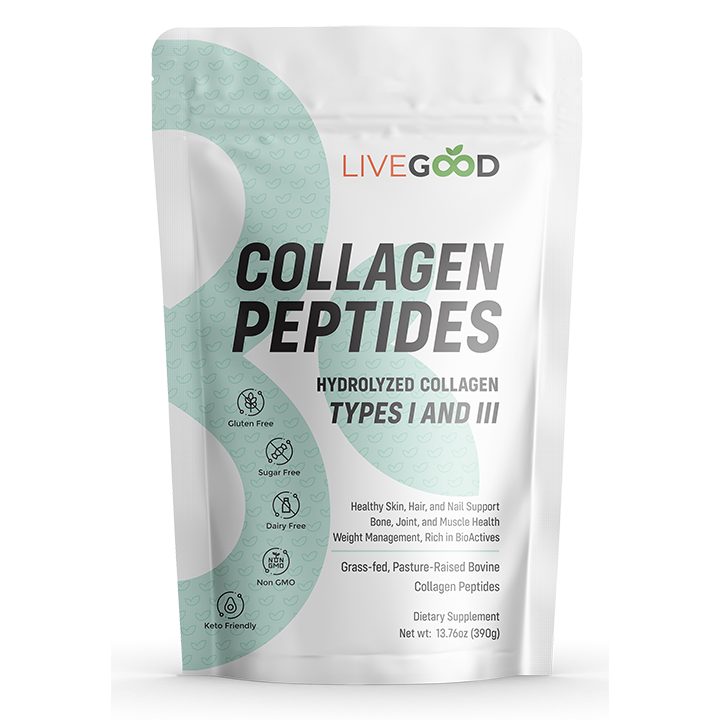
If you want a simple daily option, LiveGood Collagen Peptides provides hydrolyzed collagen types I and III and is the first and only collagen product that also includes Velositol, Polynol and ApresFlex. It supports skin elasticity, hair and nail growth, joint function, muscle and bone structure, and healthy weight management. Members pay $29.95 versus $49.95 retail, helping make wellness more accessible because it should not be a luxury. Use it as directed without replacing complete-protein foods.
Frequently Asked Questions
Is it good to take collagen every day?
Daily collagen can be a reasonable addition for healthy adults who tolerate it and continue eating enough complete protein. Consistent use also reflects how most collagen studies are conducted. It is optional, however, and the evidence varies by outcome and product. Follow the label, check the animal source for allergens, and speak with your doctor if you have a medical condition or take prescription medication.
Can you take too much collagen?
Yes, taking more collagen than directed can add unnecessary protein and calories and may cause fullness or digestive discomfort. There is no single established upper limit that applies to every product and person. Do not increase your serving just to copy a study. Follow the label, and ask your doctor about appropriate intake if you have kidney or liver problems or another medical condition.
Should you cycle collagen?
No established evidence says collagen must be cycled. Most trials use it continuously each day for a set number of weeks or months rather than alternating use and breaks. You can pause if it causes side effects, does not provide a worthwhile benefit, or makes it harder to afford or consume a balanced diet. A planned break is a personal choice, not a research-backed requirement.
Does collagen count as protein?
Collagen contributes to total protein grams, but it is not a complete protein. It lacks tryptophan and is low in leucine, so it should not replace foods that provide all nine essential amino acids. Keep complete or complementary protein sources in your meals, especially if you are older, active, recovering from exercise or eating fewer calories. Think of collagen as supplemental protein rather than your primary protein source.
How long until collagen does anything?
Allow roughly 8 to 12 weeks of consistent, label-directed use before deciding whether collagen offers a noticeable benefit for you. Some research periods are shorter or longer, depending on the outcome being measured. Changes can be subtle, and many people notice nothing clear. Track one or two realistic measures instead of relying on daily impressions, then stop if the routine does not provide enough value.