
What Is Magnesium Complex Good For?
 Written by Nauder Khazan
Ask AI about this article and Ultra Magnesium Complex






Magnesium complex is good for supporting normal energy production, muscle and nerve function, bone health, and hundreds of everyday processes in your body. The word "complex" means it provides more than one magnesium compound in a serving, often to balance absorption with digestive tolerance. Here is how to compare forms, find the real elemental dose, and stay within safe supplemental limits.
Key Takeaways
- Multiple forms in one serving: A magnesium complex combines two or more magnesium compounds rather than relying on one form.
- Form affects your experience: Different compounds vary in absorption, elemental magnesium content, and likelihood of causing loose stools.
- Elemental magnesium is what counts: The large number on the front of a bottle may describe the entire compound or blend, not the magnesium it provides.
- Food and supplements have different limits: Adults should generally stay at or below 350 mg of magnesium per day from supplements unless a clinician recommends otherwise.
- Daily use requires context: Kidney disease, prescription medicines, pregnancy, breastfeeding, and existing health conditions call for medical guidance.
What a Magnesium Complex Actually Is
A magnesium complex is a dietary supplement containing more than one magnesium compound in the same serving. Magnesium glycinate, gluconate, citrate, malate, and oxide are examples of compounds you may see on a label. Each one joins magnesium to another substance, such as an amino acid or organic acid, so it can be made into a stable supplement.
The word "complex" does not describe a special form of magnesium found in the body. It also does not automatically mean the supplement is stronger, more effective, or better absorbed. It simply tells you that the formula combines forms. A two-form product and a six-form product can both be called magnesium complexes.
This distinction matters because the compound's total weight is not the same as its elemental magnesium. Elemental magnesium is the actual amount of the mineral provided. The rest of the compound is the substance attached to it. That is why a bottle advertising a "1,000 mg magnesium complex" may provide much less than 1,000 mg of elemental magnesium.

A magnesium complex combines multiple magnesium compounds, but the elemental amount on the Supplement Facts panel is what counts.
When comparing products, turn the bottle around and read the Supplement Facts panel. Look for a line that says "Magnesium" followed by an amount in milligrams. The forms usually appear beside it in parentheses. If you want a closer look at two commonly combined forms, see magnesium gluconate vs. glycinate.
Why Blend More Than One Form
Manufacturers blend magnesium forms because every compound has a different practical profile. Some dissolve and absorb more readily than others. Some supply more elemental magnesium by weight. Others may be easier on the digestive system at a label-directed serving.
Bioavailability means how much of a nutrient is absorbed and becomes available for your body to use. Magnesium glycinate and magnesium gluconate are commonly selected for their bioavailability and digestive tolerance. Magnesium oxide contains a relatively high proportion of elemental magnesium, but it is generally absorbed less efficiently and is more likely to have a laxative effect. Magnesium citrate is reasonably well absorbed, but it can also loosen stools in some people.
A thoughtful complex may combine forms to provide a useful elemental dose without depending entirely on a compound that causes digestive discomfort. However, including more forms does not guarantee better results. There is limited direct research showing that a blend is consistently superior to a well-formulated single form at the same elemental dose.

Different magnesium forms can vary in absorption, elemental content, and digestive tolerance.
Your choice should come down to the elemental amount, the forms used, your digestive response, and whether the label is transparent. A long list of compounds is not useful if the product hides the actual magnesium amount behind a vague proprietary blend. If you are deciding between a blend and glycinate alone, read Ultra Magnesium vs. magnesium glycinate for a practical comparison.
What Magnesium Supports in the Body
Magnesium is an essential mineral, meaning your body needs it but cannot make it. It takes part in more than 300 enzyme-driven reactions. Enzymes are proteins that help chemical processes happen efficiently throughout your cells.
One major role is energy production. Magnesium helps your body turn carbohydrates, fats, and proteins from food into usable cellular energy. It is not a stimulant, so taking more should not be expected to create an immediate burst of energy. Its role is to support the normal chemistry behind energy metabolism.
Magnesium also supports normal muscle contraction and relaxation. Nerves use it as part of the signaling system that carries messages between your brain and body. It contributes to normal heart rhythm, protein production, electrolyte balance, and the maintenance of bones and teeth. These are normal structure and function roles, not promises that a supplement will treat symptoms or medical conditions.

Magnesium supports normal energy metabolism, muscle function, nerve signaling, and bone maintenance.
You may see magnesium promoted for anxiety, insomnia, cramps, or weight loss. Evidence for these uses is mixed, depends on the population and form studied, and does not support treating those conditions on your own. Correcting a true deficiency may help restore normal function, but more magnesium is not automatically better when your intake is already adequate.
Food remains the foundation. Pumpkin seeds, almonds, beans, whole grains, spinach, and other leafy greens provide magnesium along with fiber and other nutrients. As UCLA Health explains, many adults fall short of recommended intake, but a food-first approach is still a sensible place to begin.
Working Out the Elemental Dose
The elemental dose is the number you need when comparing magnesium products or checking your daily supplemental intake. Do not use the largest number on the front label without confirming what it represents.
Start with the Supplement Facts panel and follow these steps:
- Find the serving size. A serving might be one capsule, two capsules, or another amount.
- Find the line labeled "Magnesium." The milligram amount on this line is normally the elemental magnesium per serving.
- Read the forms in parentheses. A label might say "Magnesium 200 mg (as magnesium glycinate and magnesium gluconate)." In that example, the serving supplies 200 mg of elemental magnesium in total, not 200 mg from each form.
- Check the percentage Daily Value. The adult Daily Value for magnesium is 420 mg. A product providing 210 mg would show about 50% Daily Value, allowing for label rounding.
- Add magnesium from every supplement you use. Include multivitamins, electrolyte powders, sleep blends, antacids, and stand-alone magnesium products.
If the front says "magnesium complex 1,000 mg" but the Supplement Facts panel lists 150 mg of magnesium, count 150 mg toward your supplemental intake. The remaining weight comes from the substances attached to magnesium. Do not add the weights of glycinate, gluconate, or other compounds and treat the result as elemental magnesium.
Calculating elemental magnesium from raw compound weights is unreliable for most shoppers. The percentage changes by compound and may also depend on its chemical form and water content. A clear Supplement Facts declaration is safer than trying to reverse-engineer the blend.
Check serving size and elemental magnesium before comparing the numbers shown on supplement labels.
How Much Is Too Much
For adults, the tolerable upper intake level for magnesium from supplements and medications is 350 mg per day. A tolerable upper intake level is the highest daily amount unlikely to cause harmful effects for most people. This limit was set mainly because larger supplemental amounts increasingly cause diarrhoea, nausea, and abdominal cramping.
The 350 mg limit applies to supplemental magnesium, not magnesium naturally present in food. For example, magnesium from beans or pumpkin seeds does not count toward that supplemental ceiling. It still counts toward your overall nutritional intake.
This is different from the recommended dietary allowance, which describes the average total amount needed from food and supplements. Adult recommendations vary by age and sex, generally ranging from 310 to 420 mg per day. You can therefore meet a total requirement while taking less than 350 mg from supplements because food supplies the rest. The upper limit is a safety ceiling, not a target.
Daily magnesium complex can be appropriate for many healthy adults when the elemental dose stays within the label directions and the supplemental limit. Check every product in your routine so you do not accidentally stack several sources. If loose stools appear, do not assume that discomfort means the supplement is "detoxing" your body. It is a common dose-related side effect.
Kidney disease is the key contraindication because impaired kidneys may not remove excess magnesium effectively. A dangerous buildup can affect muscles, breathing, blood pressure, and heart rhythm. Talk to your doctor before using magnesium if you have kidney or liver problems, another medical condition, are pregnant or breastfeeding, or take prescription medicine. Magnesium can interact with certain antibiotics, osteoporosis medicines, and other drugs, sometimes by reducing their absorption.
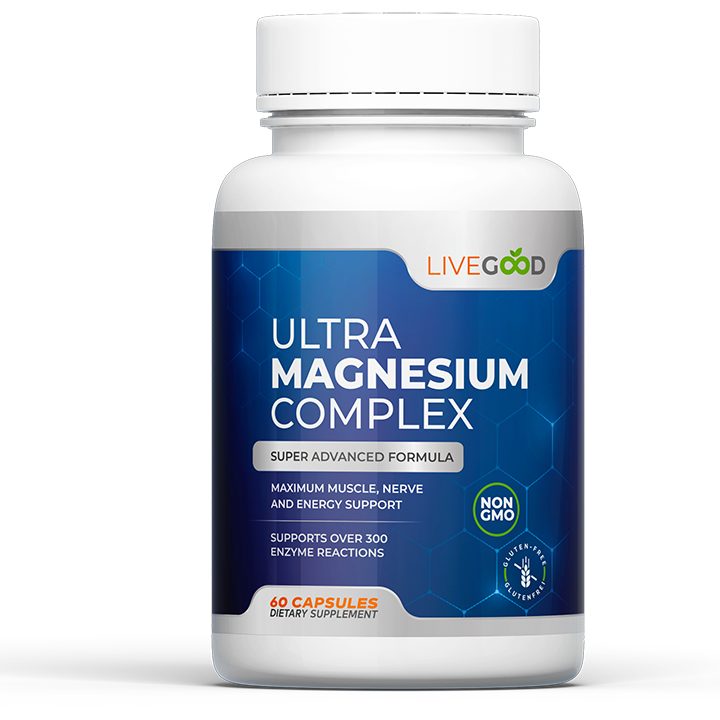
Ultra Magnesium Complex, LiveGood's number one seller, is formulated with the two most bioavailable forms of magnesium, magnesium glycinate and magnesium gluconate. They were selected because magnesium is involved in over 300 biochemical reactions in the body every day, and most people are not getting enough, even on a balanced diet. Check its elemental magnesium and follow the label directions. It costs $9.95 for members versus $19.95 retail, helping make daily wellness more accessible.
Frequently Asked Questions
What is magnesium complex good for?
Magnesium complex supports normal energy production, muscle and nerve function, bone maintenance, and electrolyte balance. Its defining feature is that it combines multiple magnesium compounds in one serving. The blend may be designed to balance absorption and digestive tolerance, but its usefulness still depends on the forms, elemental magnesium dose, your diet, and your individual needs.
Is magnesium complex better than a single form?
Magnesium complex is not automatically better than a single form. A transparent blend can offer a useful balance of absorbable forms and digestive tolerance, while one suitable compound may work just as well for some people. Direct research comparing complexes with equivalent single-form doses is limited. Focus on elemental magnesium, label clarity, form, serving size, and how your digestive system responds.
Is it safe to take magnesium complex every day?
Daily magnesium complex is generally safe for many healthy adults when used as directed and kept within the 350 mg supplemental upper limit. That ceiling does not include magnesium from food. Speak with your doctor first if you have kidney or liver disease, take prescription medicines, have an existing medical condition, or are pregnant or breastfeeding.
What are the side effects of magnesium complex?
The most common side effects are diarrhoea, nausea, and abdominal cramping, especially at higher supplemental doses. Some forms are more likely to loosen stools than others. Stop use and seek medical help for severe weakness, confusion, breathing difficulty, or an abnormal heartbeat. People with impaired kidney function face a greater risk of dangerous magnesium buildup.
When should you take magnesium complex?
Take magnesium complex at the time recommended on its label and at a time you can maintain consistently. Taking it with food may reduce stomach discomfort, although product directions vary. Morning versus evening usually matters less than consistency and tolerance. If you take prescription medicine, ask your doctor or pharmacist whether magnesium needs to be separated from it.