
What Essential Oils Are Good for Sleep
 Written by Nauder Khazan
Ask AI about this article and Essential Oils (Therapeutic Grade)





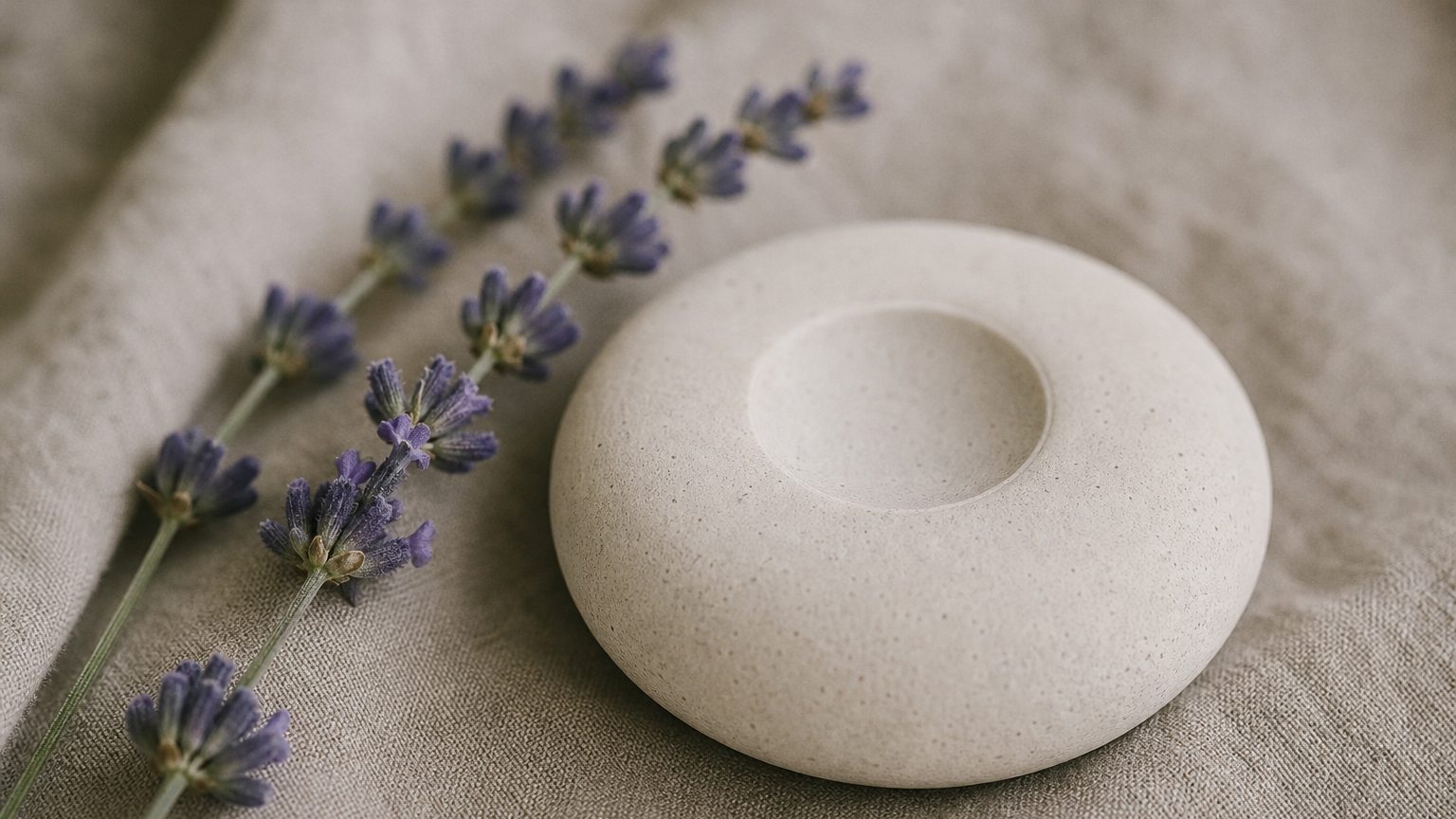
Lavender is the best-supported answer to what essential oils are good for sleep, while bergamot, Roman chamomile, cedarwood and clary sage have more limited evidence. These oils may support a relaxing bedtime environment, but none is proven to make everyone fall asleep quickly. How you use the aroma, and whether you use it consistently, matters as much as the oil you choose.
Key Takeaways
- Lavender leads: Lavender has the most human research for supporting sleep quality and bedtime relaxation.
- Evidence varies: Chamomile, bergamot, cedarwood and clary sage are promising, but their direct sleep research is limited.
- Inhalation is simplest: Use a diffuser according to its label or inhale the aroma from a passive scent source.
- Dilution matters: Never apply undiluted essential oil to your skin, bathwater, bedding or pillow.
- Routine comes first: Treat aroma as a consistent wind-down cue rather than a quick solution for poor sleep.
What Research Actually Shows
Essential oils contain volatile aromatic compounds, meaning compounds that evaporate easily and produce a noticeable scent. When you inhale them, odor signals reach brain regions involved in memory, emotion and arousal. This gives aroma a plausible role in creating a calming bedtime environment, but a plausible mechanism is not the same as proof that an oil will make you sleep.
Lavender has the strongest research base. A 2014 systematic review of inhaled essential oils found that most included studies reported some sleep benefit, with lavender appearing most often. However, the researchers also identified small samples, inconsistent methods and a need for better trials.
Later reviews have reached a similar conclusion. Aromatherapy may support perceived sleep quality, but studies frequently rely on participants rating their own sleep. They also use different oils, concentrations, delivery methods and populations, making direct comparisons difficult.
A pleasant scent can also shape expectations. If you associate lavender with winding down, that learned connection may become part of the effect. This does not make the experience meaningless, but it does mean researchers cannot always separate the oil's chemistry from the calming ritual around it.
The honest answer is that no essential oil has been proven to work quickly or consistently for everyone. Lavender is the best-supported first choice, while most alternatives have less direct human evidence.
Best-Supported Essential Oils
The following oils are reasonable options based on human research, traditional aromatic use and scent profile. They are not equal in evidence quality, so the list starts with the most studied choice.
-
Lavender: Research on lavender suggests that inhaled aroma may support perceived sleep quality and relaxation. It has a soft floral and herbal scent, and it is the clearest starting point if you want an oil that has been studied directly rather than mainly as part of a blend.
-
Bergamot: Bergamot has a fresh citrus aroma with floral notes. Small aromatherapy studies suggest it may support relaxation, but sleep studies often combine bergamot with other oils. That makes it difficult to know how much bergamot contributes by itself.
-
Roman chamomile: Roman chamomile smells sweet, fruity and slightly herbal. It appears frequently in bedtime blends, but direct trials of inhaled chamomile alone remain sparse. Much of its reputation comes from traditional use or research involving blends, massage and other forms of chamomile.
The best choice among these oils is not necessarily the one with the strongest smell. A scent you genuinely enjoy at a low level is more practical than an intense fragrance that becomes distracting. If lavender feels too floral, bergamot or Roman chamomile may offer a more appealing bedtime cue without requiring you to force a preference.
Other Oils Worth Considering
Several other oils appear in sleep blends, although their direct evidence is weaker than lavender's. Consider them alternatives based on scent preference, not proven substitutes.
-
Cedarwood: Cedarwood has a dry, warm and woody aroma. Cedrol, one of the aromatic compounds found in some cedar oils, has been examined in small studies, but researchers have not established a reliable bedtime effect across different cedarwood species and products.
-
Clary sage: This oil has an earthy, herbal and mildly sweet scent. Research on clary sage has explored relaxation-related responses, but evidence connecting inhalation directly with better sleep remains limited. It may suit you if you prefer an herbal aroma rather than a floral one.
-
Sandalwood: Sandalwood provides a rich, woody scent that some people find grounding. Laboratory and animal research has examined alpha-santalol, one of its major compounds, but that evidence cannot establish what inhaled sandalwood does for human sleep.
-
Mandarin: Mandarin offers a softer citrus scent than many other citrus oils. It has a long history in relaxing aromatic blends, but there is little high-quality research showing that mandarin alone changes sleep quality or the time it takes to fall asleep.
You may also see frankincense, neroli, vetiver, ylang-ylang and vanilla in nighttime blends. These can create an enjoyable atmosphere, but marketing often runs ahead of sleep-specific evidence. Treat blends as scent combinations rather than assuming that more ingredients produce a stronger result.
Choosing The Right Oil
Start with scent preference, then consider evidence and safety. An aroma that feels pleasant in a store may become overpowering in a closed bedroom, so subtlety matters. Stronger fragrance does not mean a stronger sleep effect.
Choose lavender if research support is your main priority. Consider Roman chamomile if you want a sweeter aroma, bergamot or mandarin if you prefer citrus, and cedarwood or sandalwood if floral scents do not appeal to you. Clary sage may work better for someone who enjoys distinctly herbal notes.
Product labels should provide the botanical name, because common names can cover multiple species with different chemical profiles. For example, Roman chamomile and German chamomile are not interchangeable oils. Cedarwood may come from several species, while true sandalwood differs from products marketed with similar names.
Packaging and storage matter as well. Essential oils degrade with exposure to heat, light and air. Look for oil in a tightly closed, dark glass bottle, and follow the product's storage instructions. An old or oxidized oil may smell different and be more likely to irritate skin.
Avoid choosing solely from words such as "sleep," "calm" or "night" on the label. Those names describe the intended experience, not the quality of supporting research. A simple, single-ingredient oil also makes it easier to learn which aroma you enjoy and identify the cause if irritation occurs.
How To Use Essential Oils
For most adults, inhalation is the simplest way to add essential oils to a bedtime routine. Add oil to a compatible diffuser only as directed by the oil and diffuser labels. Run it during a quiet wind-down period rather than assuming it must operate throughout the night, and keep the room comfortably ventilated.
A passive option avoids dispersing fragrance continuously. Place the amount permitted by the product label on an aromatherapy stone, scent strip or similar item designed for essential oils. Keep wet oil away from your face, eyes, pillowcase, painted furniture and fabrics that could become stained.
For topical use, dilute the essential oil with a carrier oil, such as jojoba or fractionated coconut oil, according to label directions. Apply only to an appropriate area of intact skin, such as a pulse point, after a patch test. Oil and water do not mix, so dropping undiluted essential oil directly into bathwater can leave concentrated droplets against your skin.
Use one method at first. That approach helps you judge whether the scent is comfortable without filling your room and applying the same oil to your body at once. For broader preparation and handling details, see how to use essential oils.
If lavender is the scent you want to make part of your wind-down, Lavender is a third-party tested, Therapeutic Grade Premium Essential Oil priced at $9.95 for members and $12.95 retail. Follow the label and diffuse it during the same quiet pre-bed period each night, or dilute it with a carrier oil before applying it to pulse points. The goal is a consistent aroma cue that supports a calming bedtime ambiance, not a quick fix.
Essential Oil Safety
Essential oils are concentrated substances, and natural does not mean irritation-free. Do not swallow them unless a qualified healthcare professional specifically directs you to use a product formulated for that route. Keep them out of your eyes, nose and other sensitive areas.
Never apply undiluted essential oil to your skin. Follow the product's dilution and application directions, and test a small area first. Stop using it if you notice burning, redness, itching, headache, nausea or breathing discomfort. A patch test reduces uncertainty, but it cannot guarantee that a later reaction will not occur.
Some citrus oils, including certain forms of bergamot, can be phototoxic. Phototoxic means the oil can increase skin sensitivity to ultraviolet light and contribute to a skin reaction after sun exposure. This concern relates mainly to topical use, and the label should explain any sun precautions. A bergapten-free or FCF bergamot has had specific light-sensitive compounds reduced, but you should still follow its directions.
Keep bottles secured away from children and pets. Diffused oils can also affect household members who cannot leave the room. Ask your doctor before use during pregnancy or breastfeeding, for children, or if you have an existing medical condition, kidney or liver condition, fragrance sensitivity, or take prescription medicine. Ask a veterinarian before using or diffusing essential oils around pets.
Do not use aroma to cover up persistent sleep difficulties. If poor sleep continues, interferes with your day or changes suddenly, speak with a healthcare professional about possible causes and appropriate next steps.
Make Aroma Part Of Routine
Essential oils are more likely to be useful as a repeated environmental cue than as a one-night intervention. Choose a brief, predictable wind-down sequence and use the same subtle aroma at roughly the same point in that sequence. Over time, your brain may associate the scent with the transition from activity to rest.
For example, lower the lights, put away stimulating screens, prepare the room and then use your chosen aroma according to its label. Keep your wake time reasonably consistent and make the bedroom dark, quiet and comfortably cool. These habits have more reliable support than any individual fragrance.
Change one variable at a time. If you start a new oil, alter your bedtime and add several other products on the same evening, you will not know what helped or disrupted your routine. Track the oil, delivery method, bedtime, approximate time to fall asleep and how rested you feel in the morning for one or two weeks.
Supplements sometimes appear in the same bedtime conversation, but they require separate evidence and safety considerations. If you are evaluating magnesium, review the differences among forms of magnesium for sleep rather than treating it as interchangeable with aromatherapy.
Consistency does not mean continuing with a scent you dislike. If an aroma feels distracting, causes discomfort or makes your room feel stuffy, stop and try a lower-intensity method or a different oil. A comfortable routine is more valuable than forcing a popular ingredient to work for you.