
Peppermint Oil Uses and Benefits
 Written by Nauder Khazan
Ask AI about this article and Essential Oils (Therapeutic Grade)





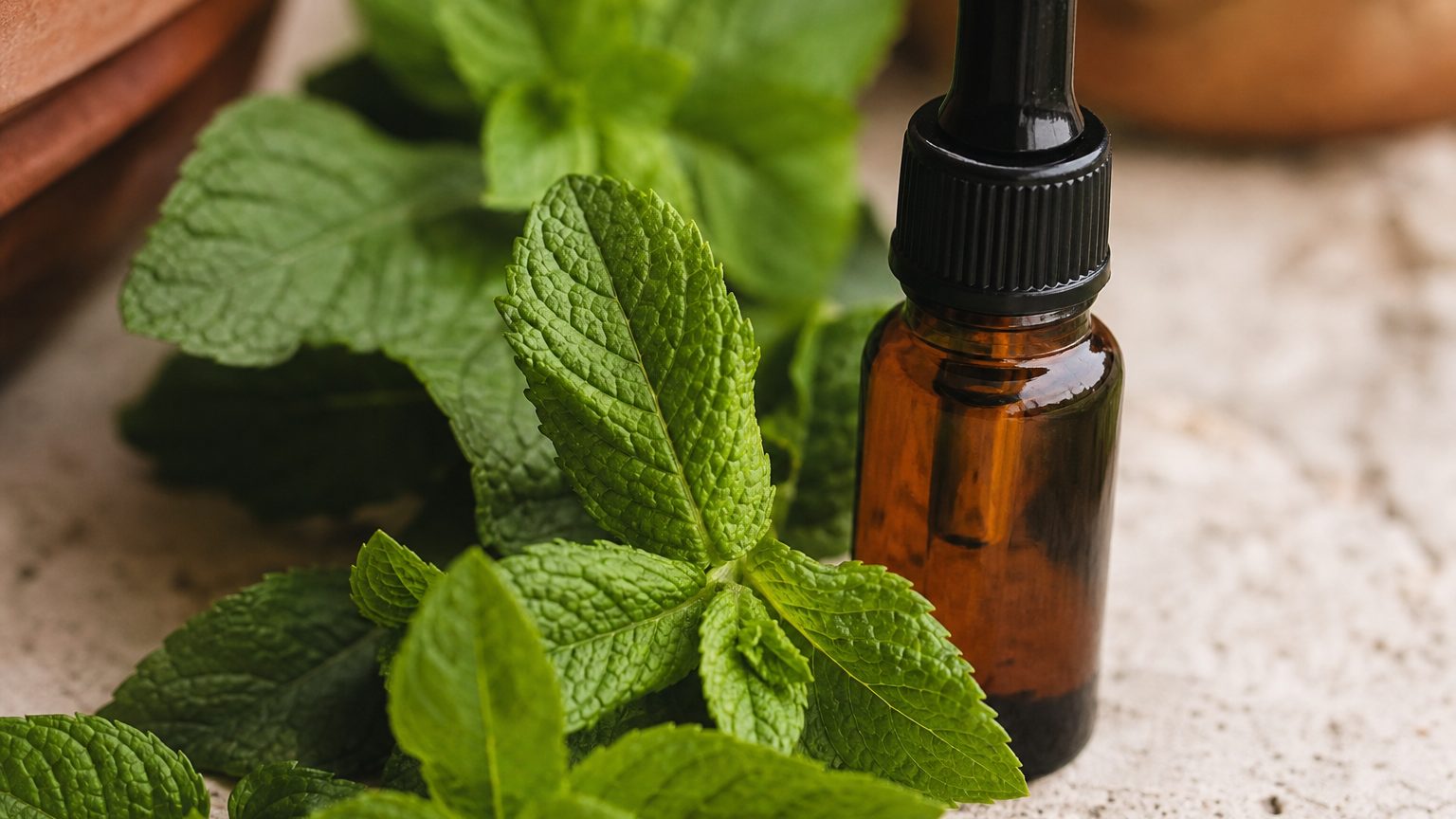
Peppermint oil uses range from creating a fresh room aroma to supporting a cooling massage or scented hair-care routine. Its concentrated menthol-rich fragrance makes it versatile, but safe dilution and realistic expectations matter.
Key Takeaways
- Aromatic use: Peppermint oil can create a crisp atmosphere that feels refreshing and stimulating.
- Topical use: Properly diluted peppermint oil provides a temporary cooling sensation on the skin.
- Limited evidence: Small studies of peppermint aroma are promising, but results do not establish broad wellness benefits.
- Form matters: Essential oil, peppermint extract and enteric-coated capsules are different products and cannot be used interchangeably.
- Safety first: Follow the label, dilute for topical use and keep peppermint oil away from eyes, children and pets.
Peppermint Oil Basics
Peppermint essential oil is a concentrated mixture of aromatic compounds from the peppermint plant, Mentha x piperita. Producers generally obtain the oil by distilling the plant. Menthol and menthone are two of its best-known natural components, although the precise composition varies with growing and production conditions.
Menthol activates cold-sensitive receptors in your skin and airways. This creates a cooling perception without actually lowering your skin or body temperature. That distinction helps explain why peppermint can feel intense even in a small, properly diluted amount.
Peppermint essential oil is not the same as peppermint extract. Extract is usually a less concentrated flavoring made with alcohol, water or both. Enteric-coated peppermint oil capsules are another distinct product. Their coating delays release until the capsule has moved beyond the stomach, and they should not be replaced with bottled essential oil.
Essential oils are also different from fixed oils, which do not evaporate quickly and are often used as carrier oils. CBD oils, for example, typically combine a hemp extract with a fixed carrier oil. You can read more about that distinction in what people use CBD oil for. Ingestible food powders are a separate category again, as explained in this overview of red superfood powder.
Finally, the term "therapeutic grade" does not have a standardized federal definition for essential oils. Look beyond that phrase and consider the ingredient list, intended route of use, label directions and available testing information.
Personal Peppermint Oil Uses
These four peppermint oil uses focus on aroma and properly diluted topical application. None requires swallowing the oil.
1. Create a refreshing atmosphere
Peppermint's sharp aroma can make a workspace or living area feel fresh and stimulating. Add it to a compatible diffuser only as directed by the diffuser and oil labels, and keep the room ventilated. Research on inhaled peppermint aroma has explored attention, perceived alertness and mental fatigue, but studies tend to be small and their results are not fully consistent.
2. Support a cooling massage
Diluted peppermint oil can add a cooling sensation to a massage routine. Menthol creates that sensory effect by activating cold receptors, not by changing tissue temperature. Use only a label-approved carrier oil and dilution method, and never assume that stronger concentration produces a better experience.
3. Add fragrance to hair care
Peppermint oil is sometimes added to scalp and hair products for its clean scent and cooling feel. Laboratory and animal research has generated interest in hair growth, but strong human evidence is lacking. It is more accurate to view peppermint as a cosmetic fragrance ingredient than as a proven way to change hair growth.
4. Complement a skincare routine
A properly formulated peppermint product can provide fragrance and a temporary cooling sensation. Peppermint oil does not suit every skin type, particularly sensitive or already irritated skin. Use it only when the product label permits topical application, perform a patch test and avoid the eye area, lips and broken skin.
Peppermint Oil Uses at Home
Peppermint oil's volatility, meaning it evaporates readily, makes it useful for short-lived household fragrance. It also means its aroma will fade and require appropriate reapplication according to the label.
5. Freshen indoor spaces
A diffuser can spread peppermint aroma through a room without applying it to your body. Follow the device capacity and operating instructions rather than guessing how much oil to add. More oil can make the fragrance uncomfortable and increase the chance of eye, throat or skin irritation.
6. Add scent while cleaning
Peppermint oil may give a homemade or commercial cleaning product a fresh smell, but scent is not the same as disinfection. Do not rely on peppermint oil to remove harmful microorganisms. Never mix it casually with household cleaners, and spot-test label-approved preparations because essential oils can affect paint, plastics, wood finishes and other surfaces.
Oil and water also separate. A water-based peppermint spray needs a suitable formulation rather than a few drops floating on top, which can create uneven concentrations. Follow an established product label instead of improvising mixtures.
7. Discourage some insects temporarily
Laboratory research suggests peppermint's volatile compounds may discourage certain insects for limited periods. Results depend on the species, concentration, surface and environment, so a household scent is not equivalent to a registered repellent.
Evidence for using peppermint oil against rats or mice in real homes is especially weak. Do not rely on it instead of sealing entry points, storing food securely and using qualified pest-control help. Peppermint oil can also pose risks to pets, so consult your veterinarian before using it in an animal's environment.
What Peppermint Research Shows
The most useful way to interpret peppermint research is to identify the exact formulation and route. Findings from a capsule cannot establish what happens when you inhale diffuser vapor, and a study of a skin cream cannot tell you whether a homemade mixture is safe.
Researchers have studied peppermint aroma for alertness, attention and perceived fatigue. Some small trials report favorable short-term changes, while others find limited or inconsistent effects. Differences in oil composition, exposure time, study size and testing methods make firm conclusions difficult. Peppermint aroma may support a refreshing environment, but it is not a substitute for sleep, hydration, movement or breaks from demanding work.
Enteric-coated peppermint oil capsules have also been studied in digestive contexts. That research applies to standardized oral formulations, not to bottled aromatherapy oil. Capsules have their own directions, side effects and interaction concerns, and they should not be opened or replaced with drops of essential oil.
Topical menthol research supports a cooling sensory effect. Evidence for broader claims involving skin, hair or physical performance remains limited or depends on multi-ingredient products. Research on an ingredient also does not prove that every peppermint product will produce the same result. Concentration, purity, accompanying ingredients and how you use it all matter.
This formulation-first approach is useful for all essential oils. The broader guide to using essential oils explains the main routes without assuming that research from one route applies to another.
How to Use Peppermint Safely
Start by reading the bottle's intended uses. An oil labeled for diffusion may not have directions for skin application, and neither use establishes that it is suitable for ingestion. Do not swallow peppermint essential oil unless the specific product is designed for that route and your healthcare professional has confirmed it is appropriate.
For aromatherapy, use a compatible diffuser and follow both labels. Place the device in a ventilated location where children and pets cannot reach it. Stop if the aroma causes discomfort, and do not run a diffuser continuously simply because the scent has become less noticeable to you.
For topical application, dilute peppermint oil with a label-approved carrier oil. Follow the stated dilution directions rather than using a universal online recipe, since products and intended applications differ. Patch-test the diluted mixture on a small area and wait before broader use. Wash it off if you notice persistent burning, redness or itching.
Avoid your eyes, ears, nostrils, lips, genital area and broken or freshly shaved skin. Wash your hands after handling the oil. If you want to use peppermint in a bath, remember that essential oil does not dissolve in water. Use only a label-approved dispersing method, and take care because oils can make the tub slippery.
Pregnant or breastfeeding adults, people with kidney or liver conditions, and anyone managing an existing medical condition should ask a doctor before use. Consult a healthcare professional about prescription interactions and use involving children. Ask a veterinarian before diffusing or applying essential oils around any pet.
If peppermint fits your routine, LiveGood Peppermint is described as Therapeutic Grade Premium Essential Oils and is priced at $8.95 for members versus $12.95 retail. Follow its label for diffusion or diluted topical use, start with a well-ventilated setting, and patch-test before wider skin application. Used consistently and carefully, peppermint can support a fresh atmosphere or cooling personal-care routine without replacing healthy daily habits.
Side Effects and Cautions
Peppermint oil's concentration is the reason a small amount smells powerful, and it is also the reason careless use can cause problems. Possible topical reactions include burning, redness, itching and rash. Inhalation can irritate the eyes, nose or throat, particularly in an enclosed room or at an excessive concentration.
Never apply undiluted peppermint oil directly beneath the nose or over a large area of skin. Avoid heating essential oil or placing it near flames because it can be flammable. If oil enters your eye, rinse with clean, lukewarm water and contact a poison control center or healthcare professional for guidance.
Swallowing an aromatherapy essential oil can cause serious unwanted effects. Do not induce vomiting after accidental ingestion. Contact Poison Control in the United States at 1-800-222-1222, or use your local poison information service if you live elsewhere. Seek urgent help for severe symptoms.
Medication interactions depend partly on the peppermint formulation. Enteric-coated capsules may behave differently if taken with products that affect stomach acid, while concentrated peppermint compounds may influence how some medications are processed. Ask your doctor or pharmacist before combining any oral peppermint product with prescription or over-the-counter medication.
Children and pets can be more sensitive to concentrated aromatic compounds. Keep the bottle secured and never assume that a product safe for an adult is appropriate for a child, dog, cat or other animal. For pet exposure, contact a veterinarian or animal poison service promptly.
Choosing and Storing Peppermint Oil
Choose a product that clearly names peppermint, lists its intended uses and provides readable safety directions. A dark glass bottle can help limit light exposure, while a secure flow restrictor reduces accidental spills. Certifications and third-party testing can provide useful manufacturing information, but they do not eliminate the need to follow the label.
LiveGood Peppermint is listed as Cruelty Free, Gluten Free, GMP Certified, Keto Friendly, Non GMO, Soy Free, Third Party Tested and Vegan. Those claims apply to this specific product, not automatically to every essential oil or every product from the brand.
Store peppermint oil upright with the cap tightly closed in a cool, dry and dark location. Keep it away from heat, direct sunlight, flames and humid bathroom storage. Place it somewhere children and pets cannot access, preferably in a secured cabinet rather than on an open shelf.
Discard the oil if the aroma changes significantly, the bottle is damaged or the label's storage or shelf-life guidance indicates that it is no longer suitable. Oxidation, a chemical change caused by exposure to oxygen, can alter an essential oil over time and may increase the likelihood of skin sensitivity. Good storage cannot make an old oil last indefinitely, but it can help maintain quality throughout the labeled period.