
Black Seed Oil Capsules vs Liquid
 Written by Nauder Khazan
Ask AI about this article and Premium Black Seed Oil - 5% Thymoquinone





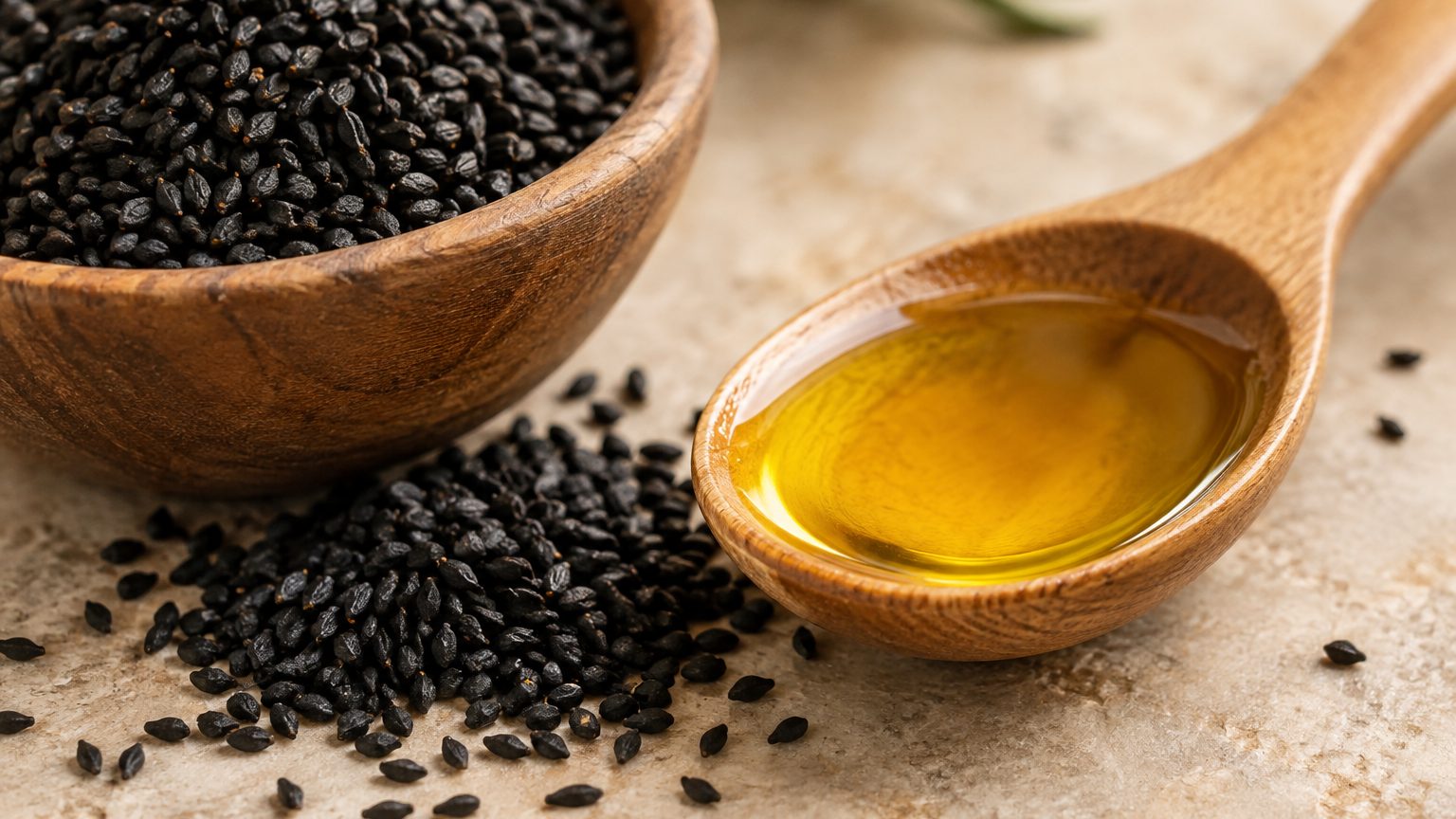
Black seed oil capsules offer better taste masking and dose consistency, while liquid oil offers more flexibility and is often less expensive per gram. Your best choice depends on the thymoquinone concentration, serving size, dietary preferences and how consistently you will take it.
Key Takeaways
- Same core oil: Capsules and liquid generally contain oil from Nigella sativa seeds, but concentration and quality can differ.
- Taste matters: Softgels avoid the pungent, peppery black seed oil taste that makes liquid difficult for some people.
- Compare concentration: Check both the milligrams of oil and the standardized percentage of thymoquinone, often shortened to TQ.
- Servings differ: Two 500 mg softgels provide 1,000 mg of oil, while a teaspoon of liquid provides roughly 4,500 mg.
- Dietary limits: Many black seed oil softgels contain gelatin, so you should not assume that capsules are vegan.
- Consistency wins: Choose the form you can take regularly according to its label rather than chasing the largest serving.
Same Oil, Different Formats
Black seed oil capsules and liquid black seed oil generally start with the same ingredient: oil pressed from black cumin seeds, scientifically known as Nigella sativa. You may also see capsules described as black cumin oil tablets, although most are actually softgels filled with liquid oil rather than compressed tablets.
The format changes how you experience and measure the oil. Softgels provide a premeasured serving, travel easily and conceal the strong flavor. Liquid lets you adjust the amount more precisely, mix it with food or apply an appropriately labeled product topically, but you must measure each serving yourself.
Packaging also affects exposure to air, light and heat, which can gradually oxidize oils. Oxidation is the chemical breakdown that can change an oil's flavor and quality. An intact softgel limits the oil's exposure until you swallow it, while a liquid bottle admits some air each time it opens. Dark bottles, secure caps and proper storage still matter for either format.
Other meaningful differences include dietary suitability and cost. Softgel shells frequently contain gelatin, so they may not fit a vegan or vegetarian diet. Liquid oil avoids the shell and is often cheaper per gram, although the lowest price does not necessarily mean the best value.
Concentration can matter more than format. Thymoquinone is a naturally occurring compound in black seed oil, and its level varies widely among oils. Review what thymoquinone is before comparing a standardized capsule with an unstandardized liquid solely by total oil weight.
Capsules Offer Measured Convenience
The primary advantage of black seed oil capsules is consistency. If a label lists two 500 mg softgels per serving, you receive 1,000 mg of oil without using a spoon or estimating a partial serving. This makes capsules convenient for travel and for routines built around breakfast or another daily meal.
Softgels also solve the black seed oil taste issue. Liquid oil has a concentrated, pungent and peppery flavor that some people tolerate easily and others strongly dislike. A softgel keeps that flavor out of your mouth, although you may still notice an aftertaste or burp afterward.
There are tradeoffs. Capsules may cost more per gram because their price includes the shell and manufacturing process. They also provide less serving flexibility because you can only adjust the amount by whole softgels. Larger softgels can be difficult for some people to swallow.
Read three parts of the label before buying:
- Oil per serving: Look for the milligrams of Nigella sativa or black cumin seed oil, not merely the total capsule weight.
- Thymoquinone percentage: A standardized percentage gives you a more useful comparison than vague terms such as premium strength.
- Other ingredients: Check whether the shell contains gelatin, glycerin or other ingredients that affect your dietary preferences.
Third-party testing can add useful quality information when the manufacturer specifically states that testing occurred. It does not mean every tested product has the same thymoquinone level or serving size. For a broader discussion of the ingredient rather than its format, see the evidence behind proposed black seed oil benefits.
Liquid Offers More Flexibility
Liquid black seed oil gives you direct control over the serving amount. You can measure it with an appropriate measuring spoon, begin with the label-directed amount and take it with food. Some people mix it into yogurt or another cool food to soften the peppery taste.
Avoid adding it to a hot pan or using it as a high-heat cooking oil. Heat, air and light can affect delicate oils, and cooking also makes it harder to know how much you consumed. Follow the product's storage directions, close the bottle promptly and use a clean measuring utensil.
Liquid may offer better value if you compare products by the cost per gram of oil. To calculate that figure, divide the bottle price by the total grams it contains. That calculation only compares the amount of oil, however. It does not account for thymoquinone concentration, testing, extraction method or freshness.
Some people also choose liquid because it does not require a gelatin shell. You should still inspect the complete ingredient list because a liquid product may include flavoring, carrier oils or other ingredients. Do not assume that every bottle is vegan, cold-pressed or third-party tested unless its record says so.
Topical use is another possible distinction, but only use an oil on your skin if its label allows that use. Undiluted botanical oils can irritate sensitive skin, so follow the label and consider testing a small area first. Oral softgels should not be cut open and repurposed unless the manufacturer specifically provides those directions.
Dose Equivalence Needs Context
Black seed oil dosage cannot be compared accurately by counting capsules versus teaspoons. You need to compare the actual weight of the oil and, when available, its standardized thymoquinone concentration.
Two 500 mg softgels contain 1,000 mg, or 1 gram, of black seed oil. A teaspoon of liquid contains roughly 4.5 grams, although the exact amount depends on the oil and how it is measured. That means a teaspoon may provide about four and a half times as much total oil as a 1,000 mg softgel serving.
It does not automatically provide four and a half times as much thymoquinone. Raw oil concentrations vary substantially and may be below 1%, while some capsule products use oil standardized to a stated percentage. A smaller amount of standardized oil can therefore contain a different amount of thymoquinone than a larger serving of unstandardized liquid.
Research on Nigella sativa oil has commonly used 1 to 3 grams of oil per day. Examples include 500 mg capsules taken two or three times daily, while some studies used approximately a teaspoon of liquid. These study amounts describe ingredient research, not a universal recommendation and not evidence that any particular finished product will produce the same outcome.
Follow your product's directions rather than copying a study protocol. Different extracts, concentrations and study populations make direct comparisons unreliable. Do not combine capsule and liquid servings merely to match the largest quantity used in research.
If you are comparing black seed oil with another oil supplement, remember that they contain different fats and active compounds. This black seed oil vs fish oil comparison explains why their serving sizes are not interchangeable.
Choose Based on Your Routine
Choose capsules if taste, portability and a premeasured serving are your main priorities. They are particularly practical if the pungent black seed oil taste would otherwise stop you from using the product consistently. Check that you can swallow the softgel comfortably and that gelatin fits your dietary preferences.
Choose liquid if you want flexible measurement, prefer to avoid softgel shells or want to compare products on cost per gram. Liquid may also suit you if you already take oils with yogurt or another cool food and do not mind measuring each serving. A marked measuring spoon is more reliable than an ordinary kitchen spoon.
Regardless of format, use this comparison checklist:
- Compare milligrams or grams of oil per labeled serving.
- Look for a stated thymoquinone percentage rather than relying on descriptive marketing terms.
- Review the complete ingredient list, including the capsule shell.
- Confirm testing, extraction and dietary claims from the specific product's label.
- Calculate the price per serving and, where useful, the price per gram.
- Consider whether you will realistically take the format every day.
Neither format is inherently stronger. A concentrated, standardized capsule may provide more thymoquinone than a larger amount of weak liquid, while a concentrated liquid could exceed an ordinary capsule. The label provides the only useful basis for comparing specific products.
Consistency matters more than choosing the theoretically perfect format. Supplements can support a well-rounded routine, but they do not replace nutritious food, movement, sleep or medical care.
If you prefer a measured serving without the peppery taste, LiveGood Premium Black Seed Oil provides 1,000 mg of black cumin seed oil standardized to 5% thymoquinone in two softgels. Take two softgels daily with water, best with food, as directed on the label. The gelatin softgels are not vegan. The product is cold-pressed and third-party tested, with a member price of $14.95 and retail price of $34.95.
Consider Safety and Interactions
Black seed oil can cause digestive discomfort, nausea or an unpleasant aftertaste in some people. Skin irritation or an allergic response is also possible. Stop using it and seek appropriate medical guidance if you experience a concerning reaction.
Black seed oil may interact with blood thinners and medications used to manage blood sugar or blood pressure. If you take any prescription medication, ask your doctor or pharmacist before using either capsules or liquid. A standardized concentration does not remove the possibility of an interaction.
You should also consult your doctor before use if you have an existing medical condition, including a kidney or liver condition. Speak with your doctor if you are pregnant, planning pregnancy or breastfeeding. Safety information is limited for these groups, and concentrated supplements should not be treated like ordinary culinary amounts.
Tell your surgical team about all supplements you use before a planned procedure. Your clinician can tell you whether and when to stop taking a particular product. Do not rely on a general online timeline because medication use, procedure type and individual risk differ.
Keep black seed oil away from children and pets, and do not give it to them without guidance from an appropriate healthcare professional or veterinarian. Follow the product label for storage and serving directions, and do not exceed the labeled amount unless your clinician recommends otherwise.
For more detail on digestive effects, sensitivity and medication considerations, review black seed oil side effects. Choosing capsules instead of liquid can improve taste and measurement, but it does not eliminate the ingredient's safety considerations.
Frequently Asked Questions
What's the benefit of black seed oil capsules?
Black seed oil capsules provide a measured serving while concealing the oil's pungent, peppery taste. Softgels are portable and limit the oil's exposure to air until opened in the digestive tract. Potential drawbacks include gelatin shells, higher cost per gram and less flexibility than liquid. Research concerns the Nigella sativa ingredient, not a guarantee from every capsule product.
Who should not take black seed oil capsules?
Anyone with a relevant medical condition or possible medication interaction should speak with a doctor before taking them. This includes people using blood thinners or medication for blood sugar or blood pressure, as well as those with kidney or liver conditions. Medical guidance is also appropriate before surgery, during pregnancy or breastfeeding, and for anything involving children.
Is it safe to take black seed oil capsules every day?
Daily use may be appropriate for some adults when they follow the product label, but safety depends on personal health and medication use. Possible effects include digestive discomfort, nausea, aftertaste or sensitivity. Do not assume that a natural ingredient is risk-free. Ask your doctor about daily use if you take prescriptions, have an existing condition, or are pregnant or breastfeeding.
Are black seed oil capsules as good as oil?
Capsules can be as useful as liquid when the oil amount and thymoquinone concentration are comparable. The format itself does not determine quality or strength. Capsules offer taste masking and measured servings, while liquid offers flexible measurement and may cost less per gram. Compare milligrams of oil, standardized thymoquinone percentage, testing and additional ingredients.
How many black seed oil capsules should I take?
Take only the number listed in your specific product's directions because capsule strength and thymoquinone concentration vary. Research has often used 1 to 3 grams of Nigella sativa oil daily, but those study amounts are not universal dosing advice. Do not copy a study protocol or combine formats without discussing it with a qualified healthcare professional.