
Choosing Cold Pressed Black Seed Oil
 Written by Ben Glinsky
Ask AI about this article and Premium Black Seed Oil - 5% Thymoquinone





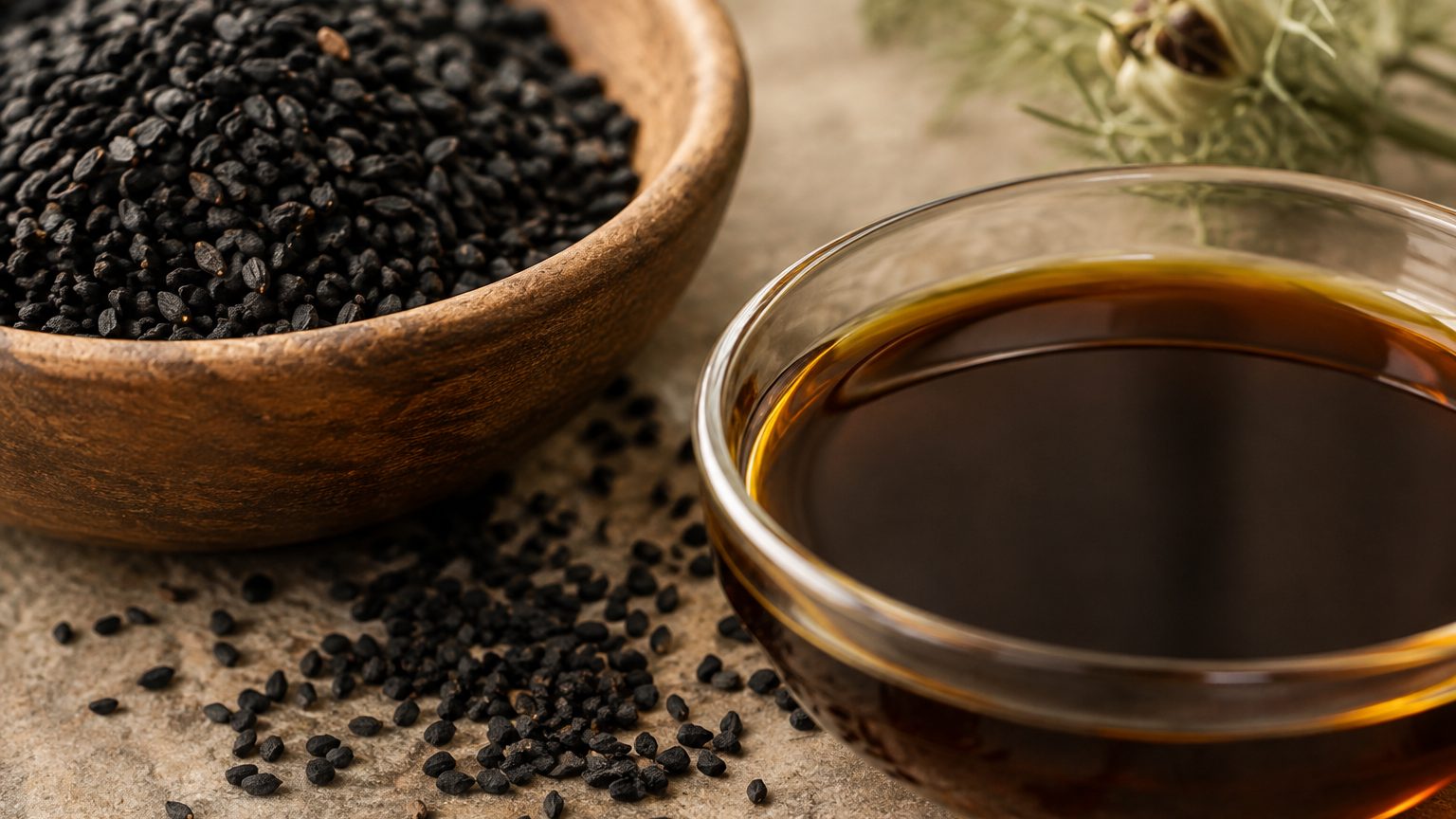
The best cold pressed black seed oil has a disclosed thymoquinone percentage, clear Nigella sativa labeling, protective packaging and credible third-party testing. Cold pressing matters, but it is only one part of black seed oil quality, so compare potency, oil quantity, freshness and testing before comparing prices.
Key Takeaways
- Check TQ first: A disclosed thymoquinone percentage tells you more about potency than broad premium claims.
- Verify the species: The label should identify the source as black cumin seed oil, Nigella sativa.
- Confirm cold pressing: Mechanical extraction avoids solvent processing and helps preserve sensitive natural compounds.
- Look for testing: Third-party testing should assess thymoquinone content and potential contaminants.
- Compare true value: Calculate price per gram of oil and, when possible, price per milligram of thymoquinone.
- Protect freshness: Dark glass, opaque softgels and proper storage limit exposure to light, air and heat.
Why Black Seed Oils Vary
Black seed oils vary because Nigella sativa is an agricultural ingredient, not a single uniform substance. Seed genetics, growing region, weather, harvest timing and storage before pressing can all affect the finished oil. Seeds grown in Egypt, Turkey, India or Ethiopia may develop different chemical profiles, but country of origin alone does not prove that one bottle is better.
Thymoquinone, usually shortened to TQ, is one of the best-known naturally occurring compounds in black seed oil. Its concentration can vary substantially among oils. Research on the ingredient often measures or standardizes TQ because simply reporting a large number of milligrams of oil does not show how much TQ that oil provides.
Extraction and freshness add two more variables. High temperatures, prolonged exposure to oxygen and poor storage may degrade sensitive compounds. Cold pressing can reduce unnecessary processing, while dark glass or an opaque softgel can protect the oil after production. A clear bottle left under bright retail lights is less protective, even if its front label looks impressive.
These differences explain why shopping only by serving size or bottle price can be misleading. One product might provide more oil but disclose nothing about TQ. Another might contain less oil yet use a standardized concentration. If you want context on what the ingredient may support rather than how to shop for it, see the broader guide to black seed oil benefits.
Understanding Thymoquinone Percentage
Thymoquinone percentage indicates how much of the black seed oil is standardized to TQ by weight. For example, 1,000 milligrams of oil standardized to 5% TQ supplies 50 milligrams of TQ mathematically: 1,000 x 0.05 = 50. A percentage without the oil amount is incomplete, and an oil amount without the percentage does not reveal TQ content.
Commercial descriptions commonly use a rough potency ladder. Oils testing below 0.5% TQ sit at the lower end, while 1% is often described as decent. Concentrations of 2% to 3% are sometimes called therapeutic grade by researchers and sellers, and 5% is near the top of what is commonly sold. These are not government-defined grades, however, and the word therapeutic does not mean a product is approved to treat a condition.
A higher number is not automatically the right choice for every person. It indicates concentration, not a guaranteed result, and human studies have used different preparations, amounts and timelines. Research on TQ cannot establish that every finished black seed oil product will deliver the same findings.
Also check whether the number is a minimum standardized percentage, a typical batch result or an unsupported marketing statement. A brand should be able to connect its percentage to testing. If no TQ amount appears anywhere on the label or product documentation, you cannot reliably calculate potency or compare value. For a closer explanation of the compound and its role in the oil, read what thymoquinone is.
Cold Pressed Versus Solvent Extracted
Cold pressed black seed oil is produced through mechanical pressure without deliberate heating or solvent extraction. The purpose is to separate oil from the seeds while limiting processing that could alter volatile and heat-sensitive compounds. Mechanical pressing can still create some friction and warmth, so the phrase does not necessarily mean the oil remained at one precisely controlled temperature.
Solvent extraction uses a processing solvent to pull more oil from the seed material. Manufacturers can subsequently remove the solvent and refine the oil, but this method may involve more processing than mechanical pressing. A vague phrase such as pure oil does not tell you which extraction method was used.
Cold pressed is a useful buying criterion, not proof of overall superiority by itself. Poor seeds can produce poor cold-pressed oil, while careless bottling and long storage can reduce freshness after extraction. Look for a product that combines cold pressing with identified Nigella sativa seed oil, a disclosed TQ percentage, protective packaging and testing.
Do not confuse cold pressed with organic. Cold pressed describes extraction, while organic describes agricultural production under a certification standard. A product can be cold pressed but not certified organic, organic but not cold pressed, both or neither. If organic sourcing matters to you, look for the specific certifying body rather than an unofficial leaf graphic or the word natural. For this particular oil, verified TQ content may provide more useful potency information than organic status alone.
Capsules Versus Liquid Oil
Capsules and liquid black seed oil can contain the same core ingredient, but they create different buying and use considerations. Liquid oil lets you see the oil and adjust the amount according to label directions. It also exposes the contents to air whenever you open the bottle, and its strong, peppery flavor may be difficult for some people.
Softgels offer a premeasured serving, mask the flavor and limit repeated exposure of the oil to oxygen and light. They are often more convenient for a consistent routine. However, you should check the capsule ingredients if you avoid animal-derived gelatin or have dietary restrictions. A product can contain high-quality oil without being vegan.
Neither format is automatically more potent. Compare the milligrams of actual black cumin seed oil and the standardized TQ percentage, not the size of the softgel or liquid bottle. A liquid oil with no disclosed TQ cannot be fairly compared with a standardized capsule using bottle volume alone.
Convenience also affects consistency. If you dislike the taste of liquid oil, a lower-priced bottle offers little practical value if you rarely use it. Conversely, liquid may suit someone who prefers fewer capsule ingredients. Follow the chosen product's directions rather than converting between liquid and capsules on your own. If you use prescriptions, have an existing medical condition, are pregnant or breastfeeding, or have kidney or liver concerns, ask your doctor before use. Review potential black seed oil side effects as part of the decision.
Use This Label Checklist
A reliable label should let you identify what the product contains, how it was made and how its stated potency was verified. Start with the Latin name Nigella sativa. Terms such as black cumin, black caraway and black seed are sometimes used inconsistently, so the botanical name reduces ambiguity.
Use this checklist before buying:
- TQ percentage: Look for a specific standardized thymoquinone percentage, not simply high potency.
- Oil per serving: Find the milligrams of black cumin seed oil, then note how many capsules or teaspoons make one serving.
- Extraction method: Confirm that cold pressed appears in the product documentation rather than assuming it from the oil's color.
- Seed origin: Treat origin as traceability information, not a stand-alone quality ranking.
- Independent testing: Look for third-party verification of TQ and testing for contaminants such as heavy metals and microbes.
- Protective packaging: Favor dark glass for liquids or opaque, sealed packaging for softgels.
- Freshness information: Check the lot number, expiration or best-by date and storage directions.
- Other ingredients: Review carrier oils, flavorings, preservatives and capsule materials.
For organic black seed oil, verify an actual certification rather than relying on general natural or clean-label language. Organic certification can address how the seeds were grown, but it does not establish TQ potency, freshness or contaminant results.
Third-party tested is also more useful when the claim has scope. Ideally, testing confirms identity, TQ concentration and contaminant limits. A certificate of analysis, or COA, is a batch-specific laboratory document that can provide this detail. If a seller will not explain what was tested, treat the badge as incomplete information.
For a measured capsule option, LiveGood Premium Black Seed Oil provides two softgels per serving with 1,000 mg of Nigella sativa oil standardized to 5% thymoquinone. Take two softgels daily with water, best with food, following the label directions. The catalog lists it as cold-pressed and third-party tested, supporting a consistent black seed oil routine. The gelatin-containing softgels are not vegan.
Calculate Price and Potency
Bottle price alone cannot identify the best black seed oil value. First calculate total grams of oil by multiplying oil per serving by the number of servings, then divide the price by that total. Remember that 1,000 milligrams equals one gram.
You can also estimate total TQ when both the oil quantity and standardized percentage are disclosed:
Total oil in mg x TQ percentage = total TQ in mg
The LiveGood label lists 1,000 mg of black cumin seed oil per serving, 30 servings and 5% TQ. That equals 30,000 mg, or 30 grams, of oil per container. At 5%, the container provides a calculated 1,500 mg of TQ, with 50 mg per labeled serving.
At the $14.95 member price, the calculation is about $0.50 per gram of oil and about $0.010 per milligram of TQ. At the $34.95 retail price, it is about $1.17 per gram of oil and about $0.023 per milligram of TQ. These calculations describe labeled ingredient value, not expected results.
Use the same method across black seed oil brands, but only compare like with like. A cheaper liquid may look favorable per gram while offering no verified TQ percentage. A concentrated oil may cost more per gram yet less per milligram of TQ. Also account for shipping, serving size and whether the advertised price requires membership or repeat delivery. Price calculations should clarify the label, not replace checks for extraction, freshness and third-party testing.
Store Black Seed Oil Properly
Black seed oil quality can decline after production because light, heat and oxygen encourage oxidation. Oxidation is a chemical change that can affect an oil's aroma, flavor and composition. Protective packaging and sensible home storage help maintain quality through the date printed on the container.
Keep liquid oil tightly closed in a cool, dark place unless its label specifically directs refrigeration. Avoid storing it beside a stove, on a sunny windowsill or in a hot vehicle. Do not pour unused oil back into the bottle, since that can introduce moisture or other material.
For softgels, keep the container closed and away from heat and direct light. Leave any moisture-absorbing packet in place, but do not consume it. Avoid moving softgels into a clear organizer for long-term storage because the original container provides the lot number, expiration date and storage instructions.
Before buying, consider whether the container size matches how quickly you will use it according to the label. A large liquid bottle may have a lower price per ounce, but that advantage weakens if the oil sits open for a long period. Check the seal when the product arrives and follow the printed best-by date rather than judging freshness from appearance alone.
Discard oil that has been stored contrary to its directions or shows an unexpected change in odor, taste or capsule integrity. If you are uncertain whether a product is still suitable, contact the manufacturer rather than increasing the amount or continuing past its labeled date.
Frequently Asked Questions
Who makes the best cold pressed black seed oil?
No single manufacturer is objectively best for every buyer. Compare black seed oil brands by disclosed TQ percentage, Nigella sativa identification, cold-pressed extraction, third-party testing, protective packaging and freshness information. A recognizable brand name or high oil dosage cannot substitute for these details, and this guide does not rank brands.
How can you tell if black seed oil is real?
Check for the botanical name Nigella sativa, a specific amount of black cumin seed oil and traceable manufacturer information. Stronger evidence includes batch testing for identity, thymoquinone and contaminants. Color and peppery flavor can vary by seed and processing, so appearance or taste alone cannot confirm authenticity.
What thymoquinone percentage should black seed oil have?
A disclosed and verified percentage is more useful than an unsupported high-potency claim. Commercial tiers commonly describe under 0.5% as low, 1% as decent, 2% to 3% as higher concentration and 5% as near the top of commonly sold oils. These are not regulatory grades or guarantees of a particular outcome.
Is organic black seed oil better?
Organic black seed oil is not automatically more potent or fresher. Verified organic certification addresses agricultural practices, while TQ testing, cold pressing, packaging and storage provide different quality information. If choosing between products, confirm the organic certification but also compare TQ percentage, oil quantity and independent testing.
What is organic black seed oil used for?
Organic black seed oil is generally used as a dietary supplement or topical oil, depending on its label. Research on Nigella sativa suggests its natural compounds may support antioxidant activity and normal immune function, but organic status does not create those properties or guarantee potency. Use the product only as directed.
Does cold pressed black seed oil need refrigeration?
Not always, so follow the storage directions on the specific label. Most products should remain tightly closed in a cool, dark location away from direct sunlight and heat. Refrigeration may be recommended for some liquid oils after opening, while softgels are commonly stored at controlled room temperature.