
Can You Use Essential Oils in Candles?
 Written by Nauder Khazan
Ask AI about this article and Essential Oils (Therapeutic Grade)





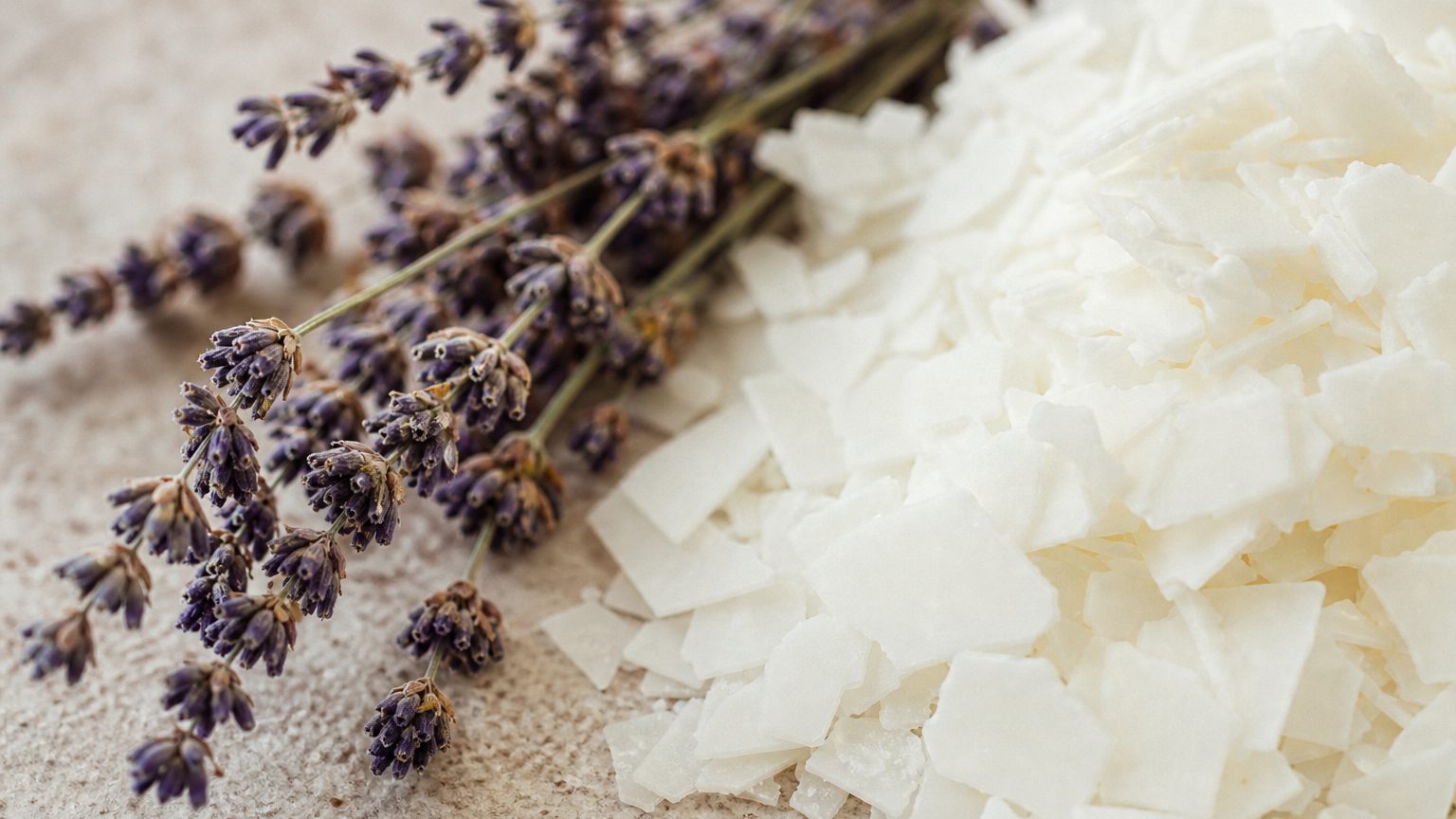
Yes, you can use some essential oils in candles, but only when the oil is documented as suitable for candle making and tested with your specific wax, wick and container. Do not assume that an oil intended for a diffuser or topical use will work safely in heated wax. Never drip essential oil onto a finished or burning candle.
Key Takeaways
- Conditional yes: You can use essential oils in candles only when the oil supplier confirms that the oil is suitable for candle making.
- Check documentation: Look for candle-use guidance and current International Fragrance Association documentation, not just a general purity claim.
- Measure by weight: Follow the wax manufacturer's fragrance limit and weigh the oil instead of counting drops.
- Never add later: Do not drip essential oil onto a finished, burning or recently extinguished candle.
- Test every formula: Wax, wick, container and oil all affect scent, soot, flame behavior and surface temperature.
Candle use depends on formulation
Yes, you can use some essential oils in candles, but the answer is not an unconditional yes. An essential oil that works in a diffuser or diluted topical blend may smell weak, change character or behave poorly when heated in wax.
Essential oils contain volatile aromatic compounds, meaning compounds that evaporate readily. Candle making subjects those compounds to prolonged heat during production and repeated heating during use. Delicate aromatic components may evaporate before the candle is lit, while others may smell different near a flame.
This is why an oil's pleasant scent straight from the bottle does not predict its candle performance. Candle makers describe scent from an unlit candle as "cold throw" and scent released while burning as "hot throw." An oil can have a strong cold throw but little hot throw, or it can develop an unexpected aroma when heated.
A bottle labeled as pure, premium or therapeutic grade is not automatically approved for candles. "Therapeutic grade" does not have a universal regulatory definition, and purity testing answers a different question from candle compatibility. You still need documentation addressing heated wax and the intended level of use.
You should also distinguish between adding oil during candle production and dripping oil onto a completed candle. A properly formulated candle distributes its aromatic ingredient throughout the wax. Oil placed on the candle surface or wick can create concentrated fuel near the flame, so it should never be used as a shortcut for refreshing the scent.
For broader non-candle applications, see how to use essential oils. Candle making requires its own compatibility checks and burn testing beyond ordinary aromatherapy directions.
Choose oils with candle documentation
Start with the oil supplier, not a list of popular candle scents. Ask whether the exact oil and batch type are intended for candle making, because botanical species, plant part, extraction method and natural composition can affect performance.
Request current International Fragrance Association, or IFRA, information covering the intended candle application. IFRA Standards establish use restrictions for certain fragrance ingredients based on product category. Essential oils contain many naturally occurring constituents, and some of those constituents may have limits even when the oil is completely natural.
A Safety Data Sheet, usually shortened to SDS, provides handling, storage and hazard information. It is useful, but an SDS alone does not prove that an oil performs well or is appropriate at a particular concentration in a candle. You need both safety documentation and application-specific guidance.
Avoid using an oil in candles if:
- The supplier recommends it only for diffusers or diluted topical use.
- The bottle contains carrier oil, water, alcohol or an unidentified blend.
- The supplier cannot provide composition and candle-use information.
- The oil smells oxidized, unusually sharp or different from when it was opened.
- The supplier specifically excludes heated or combustible applications.
There is no reliable universal list saying that every citrus, spice, floral or herbal oil is either safe or unsafe. Cold-pressed citrus oils may lose brightness under heat, and some delicate floral oils may provide little hot throw. Strong spice oils can also be difficult to balance. These are reasons to verify and test them, not proof that every oil in the category must be rejected.
Store oils tightly closed, away from heat and direct light, and follow the stated shelf-life guidance. Oxidation, which is chemical change caused by exposure to oxygen, can alter both aroma and handling characteristics.
Add oils by weight
Begin with a wax designed for container or molded candles and identify the wax manufacturer's maximum fragrance load. Fragrance load is the amount of aromatic material that the wax is designed to hold. It is a limit, not a target, and more oil does not automatically create a stronger candle.
Measure essential oil with a scale rather than counting drops. Drop sizes vary by bottle insert, oil thickness and temperature. If a formula needs to be expressed as a percentage, divide the weight of the oil by the weight of the wax and multiply by 100. Keep that percentage within both the wax manufacturer's limit and the oil supplier's candle-use guidance.
Melt wax using the equipment and indirect-heating method recommended by its manufacturer. Keep essential oil containers away from open flames and other ignition sources. Add the oil only at the wax maker's specified mixing temperature, then stir for the recommended time so it disperses evenly.
Use a wick and heat-resistant container approved for that wax. After pouring, allow the candle to cool and cure for the period specified by the wax supplier. Curing gives the wax structure time to settle, and testing too early can produce misleading scent and burn results.
Make a small test batch whenever you change the essential oil, concentration, wax, dye, wick, container diameter or supplier. Record weights, temperatures, mixing time and observations. This turns candle making into a repeatable process rather than guesswork.
For candle projects, choose an oil only after its supplier confirms candle use, follow your wax maker's fragrance limit, add it at the specified temperature and test a small batch before lighting. LiveGood Essential Oils are Therapeutic Grade Premium Essential Oils, Third Party Tested, with a member price of $29.95 vs retail $69.95, and they can support a calming ambiance through label-directed aromatherapy. Those product facts do not establish candle suitability, so request candle-specific documentation before using them in wax.
Burn testing reveals problems
A successful candle needs more than a pleasing scent. The wax, oil, wick and container operate as one system, so every formula needs a controlled burn test before regular use, gifting or sale.
Place the cured test candle on a stable, heat-resistant surface away from drafts, children, pets and combustible materials. Follow the wick manufacturer's trimming instructions, and never leave the candle unattended. Do not test several unfamiliar formulas closely grouped together, since heat from neighboring candles can distort the results.
During each test, observe the flame height, melt pool, visible smoke, soot around the container and changes in scent. A melt pool is the liquid wax surrounding the wick while the candle burns. Also watch for wick mushrooming, which is a carbon buildup resembling a small cap at the wick's tip.
Stop using the candle if the flame becomes unusually high, it produces persistent smoke or soot, the container appears damaged, or the surface becomes excessively hot. Do not solve these signs by adding more oil or trimming a burning wick. Extinguish the candle safely and revise the formula after it has cooled.
Test through the candle's full usable life, not only its first lighting. The container can become hotter as the flame moves lower, and wick behavior can change as less wax remains. Keep written results for each session so you can compare one adjustment at a time.
Flash point information does not replace burn testing. Flash point is the lowest test temperature at which vapors may ignite under specified laboratory conditions. It helps guide storage and handling, but it does not tell you whether a finished candle will have a stable flame, suitable scent or acceptable container temperature.
Essential and fragrance oils differ
Essential oils and candle fragrance oils are not interchangeable terms. Essential oils are concentrated aromatic materials obtained from plants, commonly through distillation or cold pressing. Fragrance oils are formulated aromatic blends that may contain synthetic ingredients, natural materials or both.
A candle fragrance oil is often designed and tested specifically for heated wax. That can provide stronger or more consistent hot throw, a wider scent selection and better stability across batches. Essential oils vary naturally with harvest, climate, plant variety and extraction, which can make candle results less predictable.
Using essential oils does not automatically make a candle smoke-free or "toxin-free." Any candle can produce soot when the wick is too large, the formula is overloaded, the flame is disturbed by drafts or the candle is burned incorrectly. Both essential oils and fragrance oils release volatile compounds as they evaporate and burn.
Your choice depends on your priorities. A documented candle fragrance oil may be the more practical option if you want dependable scent strength and straightforward formulation guidance. A candle-compatible essential oil may suit you if botanical origin matters more and you accept that the aroma may be lighter or change with heat.
An unscented candle is also a valid choice, especially if you or someone in your household prefers less airborne fragrance. Good candle practice depends more on compatible materials, careful measurement and testing than on whether the scent source is natural or synthetic.
Never substitute one oil for another at the same percentage without checking its documents. Each aromatic ingredient can have different restrictions and can change how the wick and wax perform.
Use scented candles responsibly
Burn a scented candle only according to the candle and container directions. Keep it within sight, away from drafts and on a clear, heat-resistant surface. Extinguish it before leaving the room, going to sleep or allowing the flame to approach the container's stated stopping point.
Ventilation matters because fragrance can accumulate in a small enclosed space. Use one candle at a time while evaluating a new formula, and discontinue use if the aroma becomes unpleasant or causes discomfort. Do not use a candle to cover persistent smoke, mold, chemical or other unexplained household odors. Find and address the source instead.
Never apply candle wax or candle fragrance mixtures to your skin. Essential oils used in wax are formulated for a different route of use, and the finished candle may contain dyes, additives or concentrations unsuitable for topical application. Likewise, do not pour diffuser blends, massage oils or bath oils into candle wax unless their supplier explicitly documents candle compatibility.
If you are pregnant or breastfeeding, take prescription medication, or have an existing medical condition, ask your doctor before introducing concentrated aromatic products into your routine. Ask a pediatrician before using essential oils around children. For homes with birds or other pets, consult your veterinarian about aromatic product use and give animals space to leave the room.
The practical rule is simple: use only documented candle materials, measure them accurately and treat every new combination as untested until it completes a full burn evaluation. Essential oils can provide botanical fragrance, but they do not remove the need for ordinary fire safety or careful formulation.