
How Much Protein Per Day?
 Written by Ben Glinsky
Ask AI about this article and Whey Protein Isolate - With Colostrum





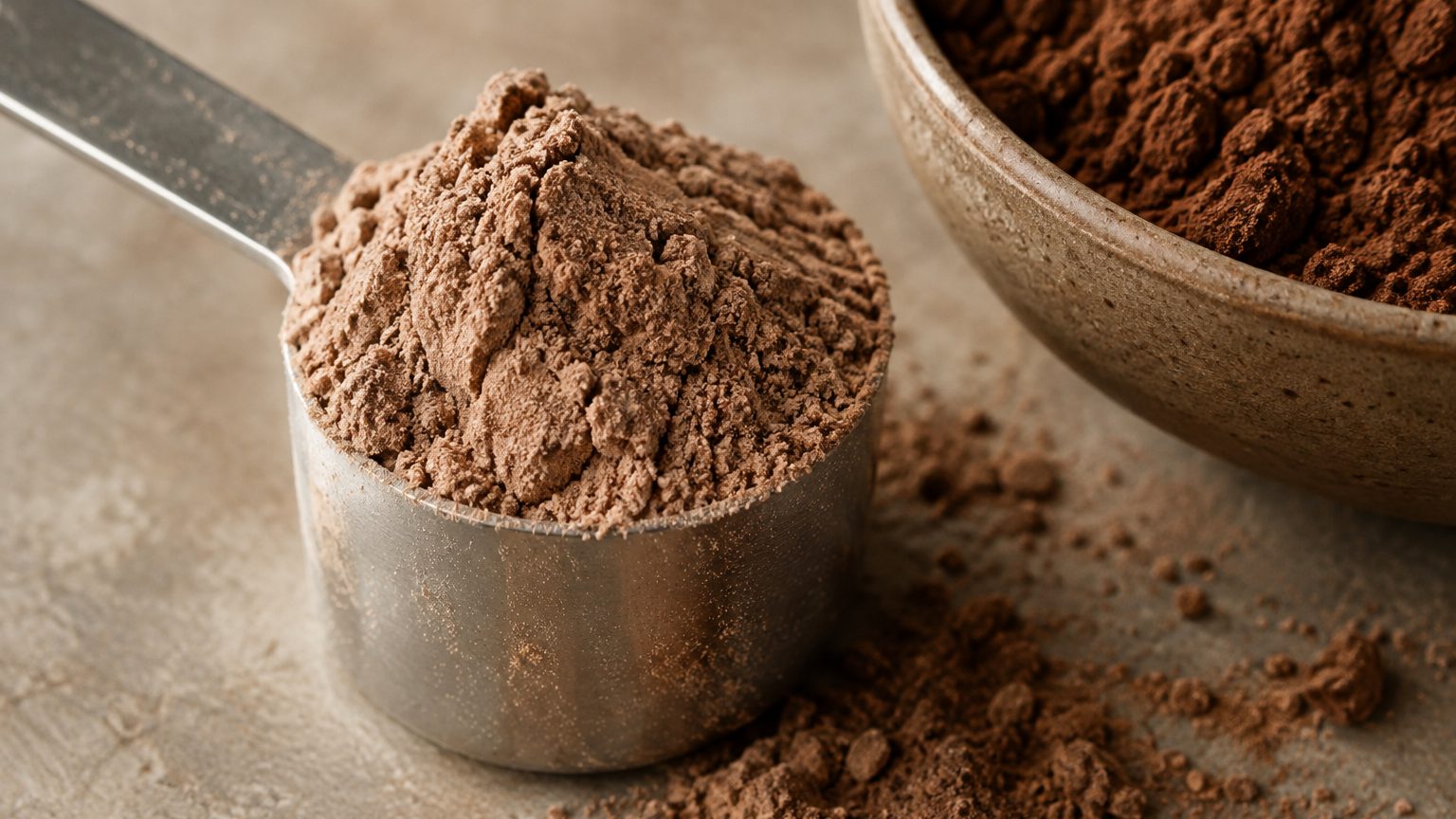
Most adults need at least 0.8 grams of protein per kilogram of body weight per day, while people who train often use 1.2 to 1.6 grams per kilogram. Higher targets, up to about 2.2 grams per kilogram, may suit some people training during a calorie deficit. Your best number depends on your weight, activity, age, diet and health.
Key Takeaways
- Baseline target: The protein Recommended Dietary Allowance is 0.8 grams per kilogram of body weight per day.
- Active range: People who train often aim for 1.2 to 1.6 grams per kilogram, depending on their goals and routine.
- Powder fills gaps: Count protein powder toward your daily total rather than treating it as additional protein you must consume.
- Scoop math: Two scoops of LiveGood Whey Protein Isolate weigh 52.42 grams and provide 40 grams of protein.
- Meal distribution: Spreading 20 to 40 grams across meals generally makes more sense than saving most of your protein for one sitting.
- Health matters: Ask your doctor about protein intake if you have kidney or liver conditions, take prescriptions, or are pregnant or breastfeeding.
Start With Three Numbers
The first number to know is 0.8 grams of protein per kilogram of body weight per day, equal to about 0.36 grams per pound. This is the Recommended Dietary Allowance, or RDA, established to cover the basic needs of nearly all healthy adults. It is a baseline intended to prevent inadequate intake, not necessarily an ideal target for building or maintaining muscle during regular training.
Sports nutrition research gives active people a broader range. A 2017 International Society of Sports Nutrition position stand supports about 1.4 to 2.0 grams per kilogram for people who exercise. For a practical starting point, 1.2 to 1.6 grams per kilogram works for many recreationally active adults. A 2018 meta-analysis led by researcher Robert Morton found that the muscle-building benefits associated with resistance training tended to level off around 1.6 grams per kilogram.
Intakes up to about 2.2 grams per kilogram may be used during a calorie deficit, particularly by trained people trying to maintain lean mass. This is not a requirement for everyone trying to manage weight. Your total calories, resistance training, sleep and food quality still matter.
Older adults are often advised to consider about 1.0 to 1.2 grams per kilogram to support muscle maintenance with age. Women use the same weight-based calculation as men, although body weight, activity, age and life stage can produce different totals. Protein quality also matters because your body needs nine essential amino acids that it cannot make on its own.
Calculate Protein By Weight
To calculate grams of protein per day by weight, divide your weight in pounds by 2.2 to estimate kilograms. Multiply that result by your chosen protein target. For example, a 150-pound person weighs about 68 kilograms, so the calculation is 68 x 0.8 for the RDA or 68 x 1.6 for an active target.
| Body weight | Approx. kilograms | At 0.8 g/kg | At 1.6 g/kg |
|---|---|---|---|
| 130 lb | 59 kg | 47 g/day | 94 g/day |
| 150 lb | 68 kg | 54 g/day | 109 g/day |
| 175 lb | 79 kg | 64 g/day | 127 g/day |
| 200 lb | 91 kg | 73 g/day | 145 g/day |
| 225 lb | 102 kg | 82 g/day | 163 g/day |
These figures are starting points, not pass-or-fail cutoffs. A 175-pound adult with little activity may begin near 64 grams, while someone at the same weight who lifts regularly might aim closer to 127 grams. Someone training during a calorie deficit could discuss a higher target with a qualified professional.
For another worked example, a 70-kilogram man or woman would need 56 grams at the RDA, 84 grams at 1.2 grams per kilogram, and 112 grams at 1.6 grams per kilogram. At 2.2 grams per kilogram, the total would be 154 grams.
Track a few normal days before changing your diet. That gives you a more useful picture than estimating from one unusually high-protein meal. Count protein from meat, fish, eggs, dairy, soy, beans, lentils, grains, nuts, seeds and any protein powder you use.
Decide How Much Powder
Protein powder should fill the difference between what you eat and your daily target. It does not need to provide most of your protein. Whole foods can also supply fiber, fats, carbohydrates, vitamins and minerals that a protein-focused powder may not provide in the same amounts.
Suppose your target is 110 grams and your meals provide about 90 grams. One scoop containing 20 grams of protein closes that gap. If your meals provide 70 grams, two 20-gram scoops would bring the day to 110 grams. If food already supplies 110 grams, you do not need a shake simply because you exercised.
LiveGood Whey Protein Isolate has a serving size of 1 scoop, weighing 26.21 grams, with 20 grams of protein. Therefore:
- 1 scoop equals 26.21 grams of powder and 20 grams of protein.
- 2 scoops equal 52.42 grams of powder and 40 grams of protein.
- The powder's total weight is not the same as its protein content.
This distinction answers both how much protein powder per day and how many scoops of protein powder per day. Many people land at one or two scoops because their remaining gap is 20 to 40 grams, but your actual gap may be smaller or larger. Scoop sizes and protein amounts vary across brands and formulas, so always calculate from the product's Nutrition Facts rather than assuming every scoop supplies 20 grams.
If you use plant protein, apply the same gap-based approach and check its label. This plant protein scoop guide explains why serving size, total powder weight and grams of protein are separate numbers.
Spread Protein Across Your Day
Your daily total matters, but distributing protein can give your muscles several opportunities to use amino acids. Research on protein commonly supports servings of about 20 to 40 grams per meal for muscle protein synthesis, the process your body uses to build and repair muscle proteins. Body size, age and the meal's protein quality influence where you fit within that range.
Leucine is an essential amino acid that helps signal muscle protein synthesis. Research often uses meals providing roughly 2.5 to 3 grams of leucine. LiveGood Whey Protein Isolate lists 2,157 milligrams, or 2.157 grams, of leucine per scoop. Other foods eaten with the shake can contribute additional leucine and protein.
Two scoops at once provide 40 grams of protein. That is not automatically too much for a healthy adult, but it may be more than you need at one sitting if the rest of the meal is already protein-rich. Splitting two scoops between meals can make your distribution more even. See the detailed discussion of whether two scoops of whey at once are too much.
Protein immediately after exercise can be convenient, but the opportunity is not limited to a strict 30-minute window. A meal or shake before training also contributes circulating amino acids afterward. Focus first on meeting your daily total, then place a serving near your workout if that timing is comfortable and helps you stay consistent.
If food tracking shows a 20-gram gap, mix 1 scoop of Whey Protein Isolate in water or your favorite smoothie, after training or whenever it fits your day. Each 26.21-gram scoop provides 20 grams of protein, 100 calories and 2,157 milligrams of leucine. It supports lean muscle as part of consistent training and a balanced diet. Follow the label and count the scoop toward your daily protein total.
Choose Whey Or Plant Protein
Whey and plant protein can both help you close a protein gap. Whey protein isolate comes from milk and naturally provides all nine essential amino acids. LiveGood Whey Protein Isolate is made with grass-fed whey protein isolate sourced from US farms and is listed as grass fed, pasture raised, Non GMO, gluten free, soy free and third-party tested, with 1 g of total sugar per scoop.
Its ingredient list includes amylase, lactase, lipase and protease. These are digestive enzymes, meaning proteins that help break down components of food. Lactase helps break down lactose, but the product still contains milk. Anyone with a milk allergy should not assume that an isolate or a lactose-free certification makes a milk-derived product appropriate. If dairy digestion is your main concern, read more about whether whey protein isolate is easier to digest.
Plant protein may suit someone who follows a vegan diet or prefers to avoid dairy. LiveGood Complete Plant-Based Protein combines organic pea and hemp protein, includes vanilla plus 26 vitamins and minerals, and is certified organic, vegan, Non GMO, gluten free, soy free and third-party tested. Its label directs you to mix 1 scoop in water or your favorite smoothie at least once daily. Use the current package label for its grams of protein per scoop when calculating how much it adds to your day.
Neither option makes a balanced diet unnecessary. Compare the protein per serving, ingredient list, allergens, taste and how the product fits your digestion and food preferences. Then select the smallest number of servings needed to close your measured protein gap.
Know When Protein Is Excessive
Yes, you can eat more protein than you need, although there is no single cutoff that applies to every person. Extra protein still supplies calories. If it regularly pushes your intake above your energy needs, it can make weight management harder even if the protein comes from a high-quality source.
Very high protein intake can also crowd out foods that provide fiber, healthy fats and varied carbohydrates. A day built mostly around shakes and meat may reach an impressive protein number while missing fruits, vegetables, legumes and whole grains. Think about the entire food package rather than evaluating meals by protein alone.
Research in healthy adults has not shown that commonly studied higher-protein diets harm healthy kidneys. That finding does not apply to everyone. People with kidney disease may need an individualized amount and should follow their doctor's instructions instead of using a fitness formula. Anyone with kidney or liver conditions, another existing medical condition, or prescription interactions to consider should speak with a doctor before substantially changing protein or supplement intake.
Protein shakes also do not replace normal fluid intake. Drink according to your needs, activity and environment rather than assuming that more protein requires an extreme amount of water. Persistent digestive discomfort can be a sign to reduce the serving, change the food or powder source, and discuss the issue with a healthcare professional.
Pregnancy and breastfeeding can change protein needs, so ask your doctor for a personal target. The same applies to children's protein intake. For most healthy adults, the sensible approach is to choose a research-based range, meet it consistently with varied foods, and use powder only for the portion that food does not conveniently cover.
Frequently Asked Questions
How many grams is 2 scoops of protein powder?
Two scoops of LiveGood Whey Protein Isolate weigh 52.42 grams and provide 40 grams of protein. That calculation comes from its label serving of one 26.21-gram scoop with 20 grams of protein. Other powders use different scoop sizes and protein concentrations, so check the specific Nutrition Facts rather than applying these numbers to every product.
How many grams of whey protein per day?
There is no universal daily amount of whey protein because whey should fill the gap between food and your total protein target. If you need 110 grams per day and food supplies 90 grams, 20 grams from whey would close the gap. Follow the product label, and ask your doctor before changing intake if you have kidney or liver conditions.
Is 100g of protein a day a lot?
One hundred grams may be appropriate, low or high depending on your body weight and activity. It equals about 1.47 grams per kilogram for a 150-pound adult, which falls within a commonly researched range for active people. For a much smaller sedentary adult, it may be more than needed, while a larger trained person may need more.
Is 30g of protein a day too much?
Thirty grams per day is not too much for most healthy adults and may fall below the basic RDA for many body weights. Thirty grams in one meal is also within the commonly researched 20-to-40-gram range. Needs vary, however, and anyone following a medically prescribed protein restriction should use the amount provided by their doctor.
Are 4 eggs a lot of protein?
Four large eggs provide roughly 24 to 28 grams of protein, depending on their exact size. That can supply a substantial portion of one meal, but whether it is a lot depends on your daily target and the rest of the meal. Eggs also contribute fat and other nutrients, so count the complete food rather than protein alone.
Do I need more protein when sick?
Not automatically, because protein needs depend on the illness, its severity, appetite and your doctor's care plan. Some medical situations can change energy and protein needs, while kidney or liver conditions may require specific limits. If you are ill, recovering from a procedure or struggling to eat, ask your doctor or a registered dietitian for an individualized target.