
How Many Scoops of Plant Protein Powder Per Day?
 Written by Ben Glinsky
Ask AI about this article and Organic Complete Plant-Based Protein





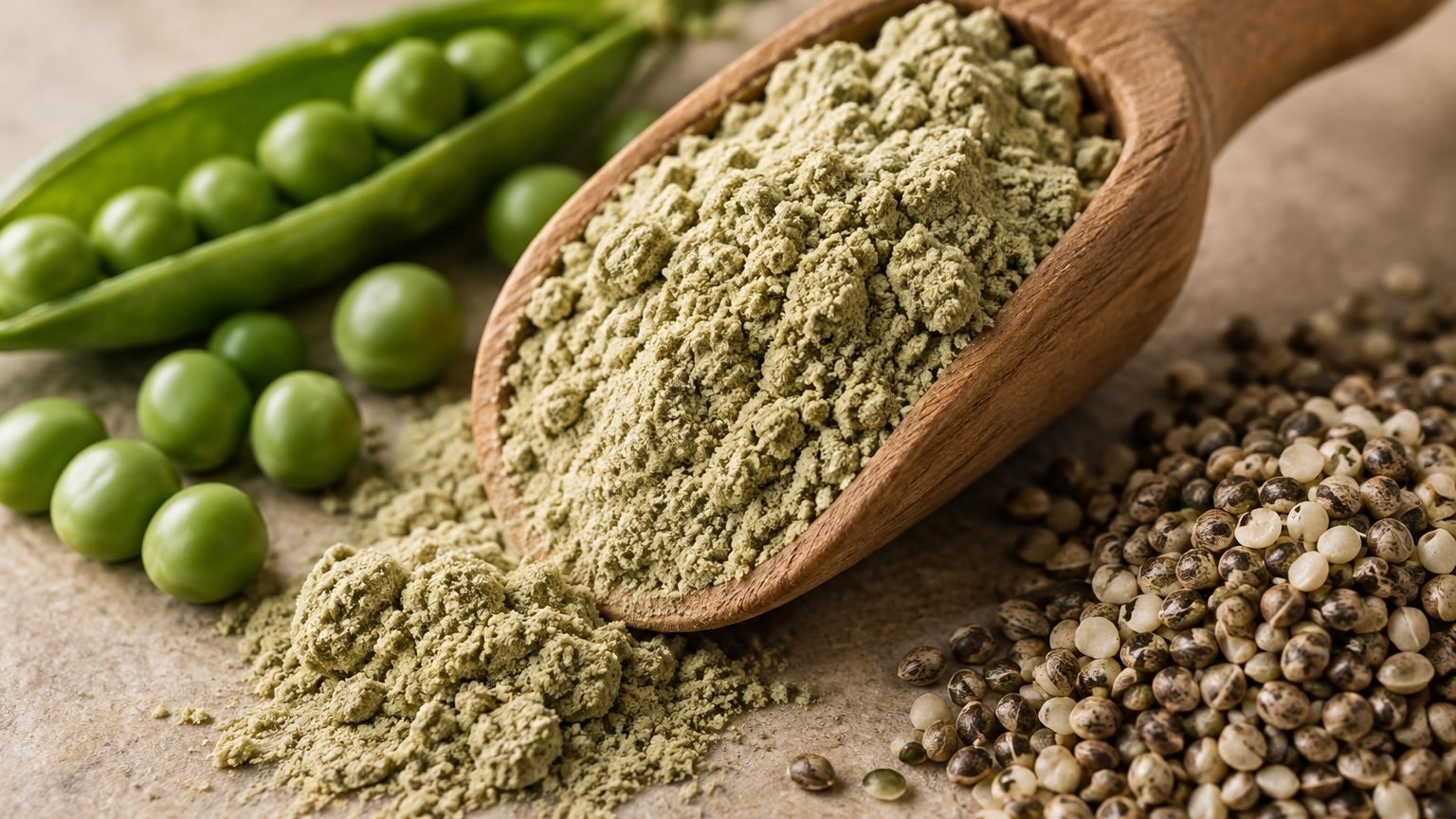
The number of scoops depends on your daily protein target minus what food already covers, and for most people that is 1 to 2 scoops a day. If you use plant protein powder, calculate by grams of protein rather than scoop size, follow the label and adjust for your diet, activity and goals.
Key Takeaways
- Typical amount: Most people use 1 to 2 scoops daily, but your food-to-target protein gap determines the right amount.
- Count protein grams: Check how many grams of protein a serving provides because scoop size alone tells you very little.
- Food comes first: Use powder to fill a gap rather than replacing most of your meals with shakes.
- Goals change needs: Training and a calorie deficit can affect your protein target, but neither automatically requires more scoops.
- Check the label: A second scoop also doubles every other ingredient in the formula, including added vitamins and minerals.
Start With Your Protein Target
To work out how many scoops of plant protein powder per day you need, begin with your total daily protein target. The Recommended Dietary Allowance for a generally healthy, minimally active adult is 0.8 grams per kilogram of body weight, or about 0.36 grams per pound. This is a baseline intended to cover basic needs, not necessarily an ideal target for every active person.
Research and sports nutrition guidance commonly place active adults around 1.2 to 2.0 grams per kilogram, or about 0.55 to 0.91 grams per pound, each day. Where you fit within that broad range depends on your training, age, calorie intake and goals. These figures provide research context, not a prescription.
Next, estimate how much protein you already get from meals and snacks. Subtract that amount from your target, then divide the remaining grams by the grams of protein in one labeled serving.
For example, a 70-kilogram active adult using a target of 1.2 grams per kilogram would aim for about 84 grams daily. If food provides 60 grams, the remaining gap is 24 grams. Whether that equals one scoop or more depends entirely on the powder's nutrition label.
Food should provide most of your protein when practical because foods such as beans, lentils, tofu, tempeh, nuts and seeds also contribute fiber, fats and other nutrients. Powder offers convenience, but it should support a varied diet rather than become the foundation of every meal. If you are pregnant or breastfeeding, take prescriptions, or have kidney, liver or another existing medical condition, ask your doctor before changing your protein intake.
Check Protein Per Scoop
A scoop measures powder volume, not protein. One brand's scoop might hold a very different amount from another brand's scoop, and the powder can settle during shipping. That is why the nutrition label's grams of protein per serving matter more than the physical scoop size.
First, check whether the serving size is one scoop or multiple scoops. Then find the grams of protein in that serving. If a serving uses two scoops and supplies 24 grams of protein, for example, each scoop contributes about 12 grams. Do not assume every scoop contains the 20 to 30 grams commonly associated with some powders.
Plant formulas can vary because they may use pea, hemp or blends of several protein sources. Pea and hemp blends can provide all nine essential amino acids, meaning the amino acids your body cannot make on its own. Combining sources can also create a more balanced amino acid profile.
Leucine deserves attention if muscle support is your goal. Leucine is an essential amino acid that helps signal muscle protein synthesis, the process of building new muscle proteins. Plant powders can provide less leucine gram for gram than whey, so a somewhat larger plant protein serving may sometimes be needed to match the leucine in a whey serving. Compare the labels rather than assuming equal scoop counts. The basic food-gap calculation is otherwise the same for plant and whey protein.
LiveGood's Organic Complete Plant-Based Protein lists one scoop as one serving, and its directions say to mix 1 scoop in water or your favorite smoothie at least once daily. Follow that label rather than borrowing directions from a different powder.
Scoops for Building Muscle
If you are asking how many scoops of protein powder per day to build muscle, the answer still starts with your total daily intake. Research suggests that gains from higher protein intake tend to level off around 1.6 grams per kilogram daily for many people doing resistance training, although individual needs vary and some research ranges extend higher.
One scoop may be enough if protein-rich meals already bring you close to your target. Two scoops can be practical when your diet leaves a larger gap, particularly on busy training days. More scoops do not automatically produce more muscle, especially once you already consume enough total protein and calories.
Distribution also matters. Rather than putting all supplemental protein into one large shake, you can spread protein across meals and snacks. Research often examines meal amounts around 0.25 to 0.4 grams per kilogram, depending on the person and situation. Treat that as context for planning total food and supplement intake, not as a required product dose.
Plant protein can support resistance-training nutrition when it provides adequate protein and essential amino acids. You can read more about whether pea protein supports muscle building and how plant protein compares with whey. Whey may provide more leucine per gram, but a well-formulated plant blend can still fit a muscle-focused routine.
Your training remains the main stimulus. Protein powder supports convenient intake, while progressive resistance exercise, adequate energy, sleep and consistency do the larger job.
Scoops for Weight Management
How many scoops of protein powder per day to lose weight is not a fixed number. Protein does not create fat loss by itself, and adding shakes on top of your normal diet also adds calories. Sustainable weight management depends on your overall calorie intake, food choices, activity and habits.
During a calorie deficit, adequate protein can support feelings of fullness and help maintain lean mass, especially alongside resistance training. One scoop may help fill a protein gap in a meal or snack without requiring extensive preparation. A second scoop only makes sense if your daily food log shows that you still fall short of your protein target and the added calories fit your plan.
Pay attention to what you mix with the powder. Water adds no meaningful calories, while large amounts of nut butter, sweetened plant milk, syrups and other smoothie ingredients can substantially change the total. That does not make those foods inherently unsuitable, but they should be counted as part of the full meal.
Powder should not replace most whole foods. Vegetables, fruit, legumes, whole grains, nuts and seeds contribute fiber and dietary variety that a shake cannot fully reproduce. If you need practical ideas, these plant protein recipes for a calorie deficit show how powder can fit into complete meals and snacks without relying on shakes alone.
Scoops for Beginners
For beginners, start with one labeled serving per day if food alone does not meet your target. This lets you evaluate the powder's taste, texture and digestive fit before deciding whether another serving would be useful. Follow the product directions rather than filling an unmarked scoop by eye.
Track your usual meals for several days before adding a second scoop. You do not need perfect numbers, but a rough estimate will reveal whether you have a consistent protein gap. If one scoop closes that gap, more is unlikely to add a meaningful benefit.
Plant powders may contain fiber, gums, sweeteners or multiple plant ingredients. Increasing these suddenly can lead to temporary bloating, gas or changes in bowel habits for some people. Mixing the powder thoroughly, drinking it more slowly and avoiding an abrupt jump from zero to several servings may improve tolerance.
Two scoops of protein powder a day can be reasonable when split across the day and used to meet an established need. However, count everything in the formula, not only protein. LiveGood's formula includes 26 added vitamins and minerals, so taking a second scoop also doubles those ingredients. Review the Supplement Facts panel before doubling a serving, particularly if you also take a multivitamin or use fortified foods.
Choose a Consistent Time
Your total protein intake across the day usually matters more than hitting a narrow post-workout window. Consuming protein reasonably close to resistance exercise is convenient and may support recovery, but you do not lose the value of a workout because you missed a precise 30-minute cutoff.
You can take plant protein before exercise if it feels comfortable, after exercise as part of a meal, or between meals to cover a shortfall. If a full shake feels heavy before training, use it afterward or allow more time for digestion. Spreading two servings between different meals may also feel better than drinking both at once.
LiveGood's own guidance is: "Most studies support consuming protein within 30 minutes of exercise, however, some literature supports taking protein before a workout. Our recommendation is to do what makes you and your body feel the best. We love mixing the protein into a delicious smoothie with the LiveGood Super Greens right after a workout or just as an afternoon snack."
Organic Super Greens adds greens to that smoothie, not protein, so count only the protein powder toward your daily target.
If a plant-based option fits your routine, Organic Complete Plant-Based Protein is built on organic pea and hemp protein, covers all nine essential amino acids and adds 26 vitamins and minerals, with one scoop per serving. Mix one scoop in water or your favorite smoothie at least once daily, as directed, after training or at another consistent time that fills your food-to-target gap. Check the full label before adding a second scoop. It is $39.95 for members versus $49.95 retail.
Signs You Use Too Much
There is no universal scoop count that becomes excessive for every adult. Three or four scoops could fit one person's calculated needs but oversupply another person who already gets plenty of protein from food. Look at the complete pattern instead of treating the scoop number as a safety threshold.
A practical warning sign is that shakes regularly displace balanced meals. If powder crowds out fruits, vegetables, legumes, whole grains and healthy fats, you may get enough protein while missing dietary variety. Persistent bloating, nausea, constipation, loose stools or feeling overly full can also suggest that the amount or formula does not suit you.
Review your total calories and all added ingredients. Several scoops may make it harder to maintain a planned calorie intake. With fortified powders, multiple servings can also push your intake of certain vitamins and minerals much higher than expected. LiveGood's 26 added vitamins and minerals make that label check especially relevant before increasing the serving count.
Another sign is that you cannot explain why you need each scoop. Calculate your target, subtract food protein and use powder only for the remaining gap. If the arithmetic calls for one serving, taking three because more seems better offers no clear advantage.
For the narrower question of doubling powder in one sitting, see whether two scoops of protein is too much. The article discusses whey, but the same principles of total intake, label serving size and digestive tolerance apply to plant powder. Consult your doctor before using high protein intakes if you take prescriptions or have kidney, liver or another existing medical condition.