
Shilajit Benefits: What Research Shows
 Written by Nauder Khazan
Ask AI about this article and Himalayan Shilajit & Organic Sea Moss





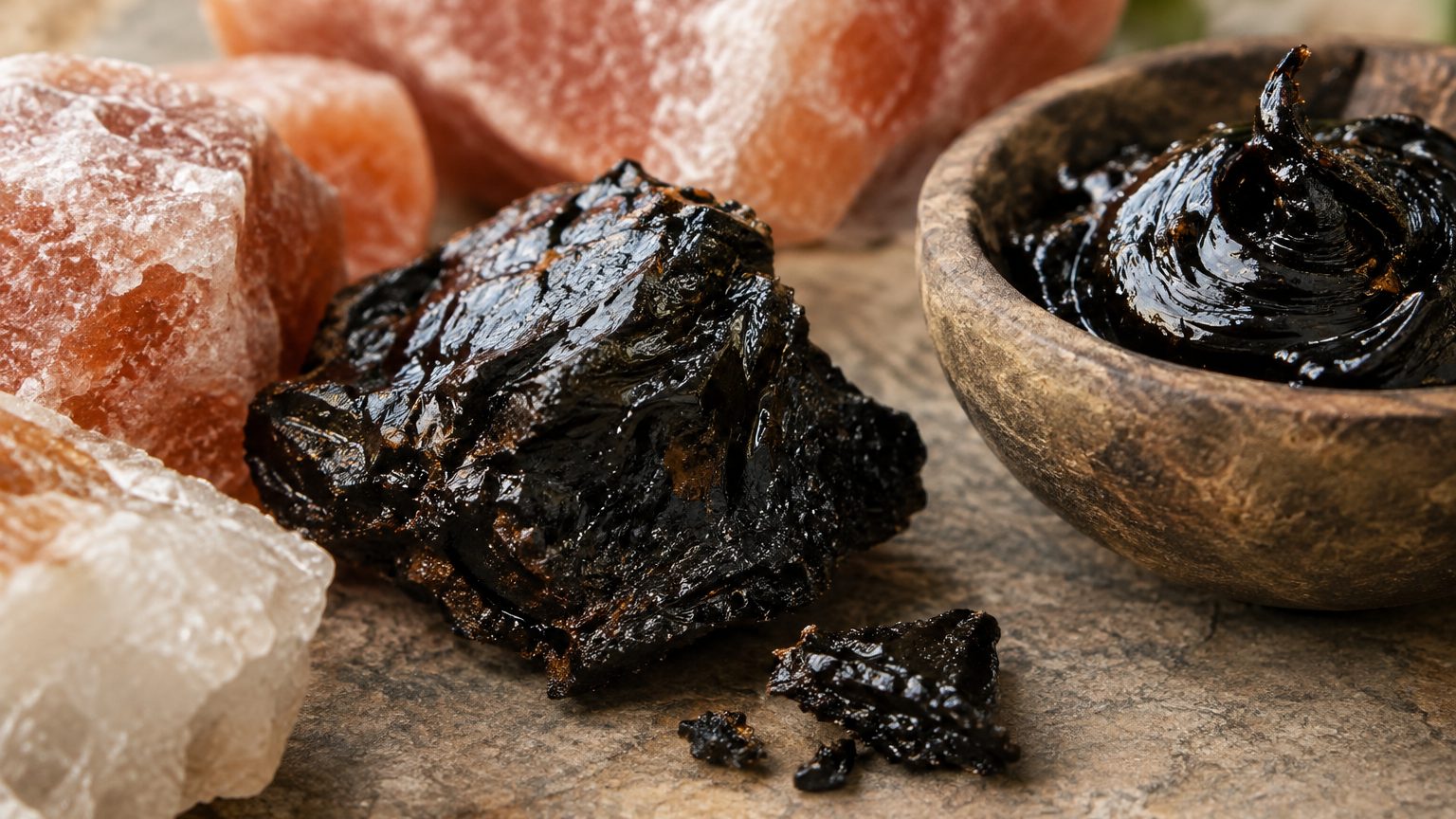
Shilajit may support energy, muscle performance, and male hormone balance, but human research remains small and limited. The strongest practical reasons to be selective are purification and heavy metal testing, not dramatic marketing promises.
Key Takeaways
- Evidence is limited: Small human trials suggest possible benefits for testosterone, fatigue, and muscle performance, but larger studies are needed.
- Quality matters most: Raw or poorly purified shilajit may contain lead, arsenic, or other unwanted contaminants.
- Men dominate research: Shilajit is marketed to everyone, but most human studies have enrolled men.
- Fulvic acid differs: Its laboratory properties do not prove that every fulvic acid supplement provides the same effects in people.
- Follow the label: Capsules provide a measured serving, while pea-sized resin recommendations can vary considerably.
What Shilajit Is
Shilajit is a dark, tar-like substance that seeps from rock in the Himalaya and other mountain ranges. It forms over centuries as plant material decomposes and interacts with rock, microorganisms, pressure, and temperature. Himalayan shilajit describes its geographic source, but origin alone does not establish purity or potency.
Its complex composition includes trace minerals, fulvic acid, and compounds called dibenzo-alpha-pyrones. Fulvic acid is a mixture of small organic acids created as plant matter breaks down. Dibenzo-alpha-pyrones are naturally occurring compounds being studied for their possible roles in cellular energy and protection from oxidative stress, which is an imbalance between reactive molecules and the body's ability to manage them.
Shilajit is sold as sticky resin, powder, liquid extract, and capsules. Resin is often presented as the most traditional form, but its texture does not guarantee authenticity. Capsules can offer more consistent measurement, although their quality still depends on the source, purification process, ingredient standardization, and contaminant testing.
Purified and raw shilajit are not interchangeable. Raw material may contain soil, microorganisms, or heavy metals collected from its environment. A dark color, smoky taste, or mountain origin cannot tell you whether a product has been properly purified. Before comparing forms or prices, look for clear serving information, the percentage of fulvic acid when provided, and credible third-party testing.
What Research Actually Shows
Research on shilajit suggests several possible benefits, but the human evidence is not yet strong enough to support sweeping conclusions. Many claims come from laboratory or animal studies, which can help researchers identify promising mechanisms but cannot establish what will happen in your daily routine.
One frequently cited 2016 trial by Pandit and colleagues enrolled 75 healthy men. Participants taking 250 mg of purified shilajit twice daily for 90 days had higher total testosterone than the placebo group. That result is interesting, but it came from one relatively small study in men within a particular age range. It does not show that every shilajit product has the same composition, that results appear quickly, or that shilajit addresses a medical hormone concern.
Small studies have also reported changes in fatigue scores. However, differences in study populations, extracts, and outcome measures make it difficult to translate those findings into a predictable benefit for a healthy adult. If low energy persists or changes suddenly, speak with your doctor rather than assuming a supplement is the answer. You can also compare shilajit with other natural caffeine alternatives that support an energy routine without relying on a stimulant.
A 2019 study examined muscle-strength retention after a fatiguing exercise protocol. The results suggested that shilajit might help some participants maintain muscular performance, but this was not the same as proving larger muscles, greater athletic ability, or better results for every user. Overall, current shilajit benefits are plausible rather than conclusive. Trials are generally small, product-specific, and too short to establish long-term outcomes.
Shilajit for Men and Women
Shilajit for men is commonly promoted around testosterone, energy, fertility, sexual performance, and physical growth. The evidence supports a much narrower statement: one 90-day trial of a specific purified extract found higher total testosterone in healthy men. It did not establish that shilajit supports fertility, changes adult body size, or produces the same response in men with a medical hormone condition.
Men should also consider the difference between general wellness and a persistent symptom. Low energy, reduced exercise capacity, or sexual concerns can have many causes. A supplement should not replace medical evaluation, prescribed care, adequate sleep, resistance training, or balanced nutrition. The men's vitality supplement guide explains how to assess similar ingredients without treating marketing claims as clinical evidence.
Shilajit for women contains the same compounds, but women have been underrepresented in human research. You should not assume that findings from a small trial in healthy men transfer directly to women. Evidence is also insufficient for claims about female hormone balance, fertility, skin appearance, or reproductive wellness.
Women who are pregnant or breastfeeding should avoid using shilajit unless their doctor specifically approves it. Anyone with an existing medical condition or questions related to hormones should speak with a qualified clinician. The practical conclusion is the same for men and women: product quality and realistic expectations matter more than gendered marketing.
Fulvic Acid Explained
Fulvic acid is not one single molecule. It is a variable mixture of small organic compounds created during the breakdown of plant material. Its exact makeup depends on the original plant matter, soil, water, location, and processing method. This variation is one reason findings from one extract cannot automatically be applied to every shilajit supplement.
Many proposed fulvic acid benefits come from laboratory and animal research. In those settings, fulvic compounds have shown antioxidant activity, meaning they can interact with reactive molecules under specific experimental conditions. Researchers have also studied possible effects involving the gut environment and nutrient transport. These early findings help form hypotheses, but they do not prove that taking fulvic acid produces a meaningful health outcome in people.
You may see claims that fulvic acid carries minerals into cells or dramatically improves absorption. The chemistry behind mineral binding is real, but that does not establish a broad absorption benefit for every nutrient or every person. Human digestion, supplement formulation, dose, and existing nutrient status all affect the outcome.
A standardized extract can make comparison easier. For example, an extract listed as 50% fulvic acid provides more information than a label that lists only a proprietary shilajit blend. The percentage still does not tell you whether the material is free from contaminants or whether it matches an extract used in a clinical study. Standardization, purification, and third-party testing answer different quality questions, so you should look for all three where possible.
Side Effects and Quality
Potential shilajit side effects may include digestive discomfort or sensitivity to the product, although safety reporting in small studies is limited. Stop using it and seek appropriate medical advice if you experience an unexpected reaction. More importantly, raw or poorly processed shilajit can carry unwanted substances from the rock and soil where it forms.
Lead, arsenic, and other heavy metals are the central quality concern. Indian and Canadian authorities have issued warnings about some Ayurvedic products containing unsafe heavy metal levels. Purification should reduce contamination, while third-party testing provides an independent check of the finished material. Neither a high price nor a Himalayan origin is a substitute for those controls.
When comparing products, check whether the company identifies the shilajit amount, fulvic acid standardization, serving size, and testing practices. Be cautious with products that rely on resin appearance, vague statements about ancient use, or unusually broad promises. A certificate of analysis can be helpful when it clearly matches the product and batch, although availability and test scope vary.
Avoid shilajit during pregnancy or breastfeeding unless your doctor advises otherwise. People with iron overload, also called hemochromatosis, or gout should not use it without medical advice. Speak with your doctor before use if you take prescriptions, have a kidney or liver condition, have another existing medical condition, or are considering it for a child. If a formula also contains sea moss, ask your doctor about its iodine content, especially if you have thyroid questions or take thyroid medication.
How to Take Shilajit
How to take shilajit depends on its form and label. Resin directions sometimes use a pea-sized amount, but that visual estimate is imprecise because pea sizes, resin density, and product concentration vary. Do not assume that a spoonful or piece of one resin equals the same amount of another. Use the manufacturer's measured directions rather than copying a serving from a different product.
Capsules provide a defined amount per serving. The Himalayan Shilajit and Organic Sea Moss label lists 2 vegetable capsules per serving and 30 servings per container. Each serving contains shilajit (asphaltum, 50% fulvic acid) 500 mg and organic Irish sea moss (Chondrus crispus) 500 mg, with vegetable capsule and organic Nu-Flow as the other ingredients.
The label directs you to take 2 capsules daily with a glass of water, preferably on an empty stomach. Morning use is practical for consistency, but research has not established a universally superior time of day. If taking a supplement on an empty stomach causes discomfort, ask your doctor or pharmacist for individualized guidance rather than changing the serving on your own.
Do not use the 250 mg twice-daily serving from the 2016 testosterone study as a universal instruction. That serving applied to a particular purified research extract. Different products may vary in concentration and composition, so follow the label and do not exceed its directions.
If you prefer a measured combination, Himalayan Shilajit and Organic Sea Moss provides 500 mg of 50% fulvic acid shilajit and 500 mg of organic Irish sea moss per 2-capsule serving to support a daily vitality routine. Take 2 capsules with water, preferably on an empty stomach, as directed on the label. Whatever brand or form you choose, use its measured serving rather than estimating resin by sight.
Shilajit and Sea Moss
Shilajit and sea moss are paired because they provide different nutritional components, not because human trials have established a special synergy between them. Shilajit supplies fulvic compounds and trace minerals. Sea moss is a red seaweed that can provide iodine and soluble fiber, including carrageenan. The amount of iodine in seaweed can vary substantially by species, growing location, and processing.
Iodine helps maintain normal thyroid hormone production when consumed in an appropriate amount, but more is not automatically better. If you take thyroid medication or have a thyroid condition, discuss sea moss with your doctor before using a combination formula. That conversation matters more than generalized lists of sea moss benefits.
The featured formula is Vegan, Soy Free, Gluten Free, Third Party Tested, and Heavy Metal Tested. Its listed price is $15.95 for members and $34.95 at retail. Those details help you compare serving size, dietary preferences, testing, and cost, but they do not change the limits of the ingredient research.
For a focused product comparison, see Shilajit and Sea Moss: What to Know Before Buying. If you are considering a larger supplement stack, taking sea moss, shilajit, and ashwagandha together requires extra attention to overlapping ingredients, label directions, and individual tolerability. Adding more ingredients does not guarantee stronger support, so introduce supplements thoughtfully and keep the rest of your routine consistent.
Frequently Asked Questions
Are there any benefits of shilajit?
Shilajit may support energy, muscle performance, and healthy male hormone balance, but the evidence is preliminary. Small human trials have reported changes in testosterone, fatigue scores, and strength retention. These studies used specific purified extracts and had limited participant numbers, so they do not prove that every shilajit supplement will provide the same results.
Does shilajit increase testosterone levels?
One small trial found higher total testosterone in healthy men taking 250 mg of purified shilajit twice daily for 90 days. That finding does not establish a universal effect, and it should not be treated as evidence that shilajit addresses a hormone condition. Speak with your doctor if you have symptoms or concerns involving testosterone.
How should men use shilajit?
Men should follow the serving directions on the specific product rather than copying a dose from a study or another brand. Capsules provide a measured serving, while pea-sized resin estimates can be inconsistent. Do not exceed label directions, and consult your doctor first if you take prescriptions or have an existing medical condition.
Are shilajit benefits different for women?
Shilajit contains the same compounds regardless of who uses it, but women are underrepresented in human trials. Findings from studies in healthy men cannot automatically be applied to women. Evidence does not currently establish benefits for female hormone balance, fertility, or skin appearance. Pregnant or breastfeeding women should avoid it unless their doctor approves its use.
How long does shilajit take to work?
There is no established timeline for shilajit benefits. The testosterone study lasted 90 days, while other research has used different durations and outcomes. That does not mean everyone should expect a noticeable result at 90 days. Follow the label, monitor your response, and do not use more in an attempt to get faster results.
What are the main shilajit side effects?
Shilajit may cause digestive discomfort or an individual sensitivity, but human safety data remain limited. The larger concern is contamination in raw or poorly purified material, including lead and arsenic. Choose a purified, third-party-tested product, and ask your doctor before use if you take prescriptions, have a medical condition, or have iron overload or gout.