
Benefits of Drinking Greens in the Morning
 Written by Nauder Khazan
Ask AI about this article and Organic Super Greens





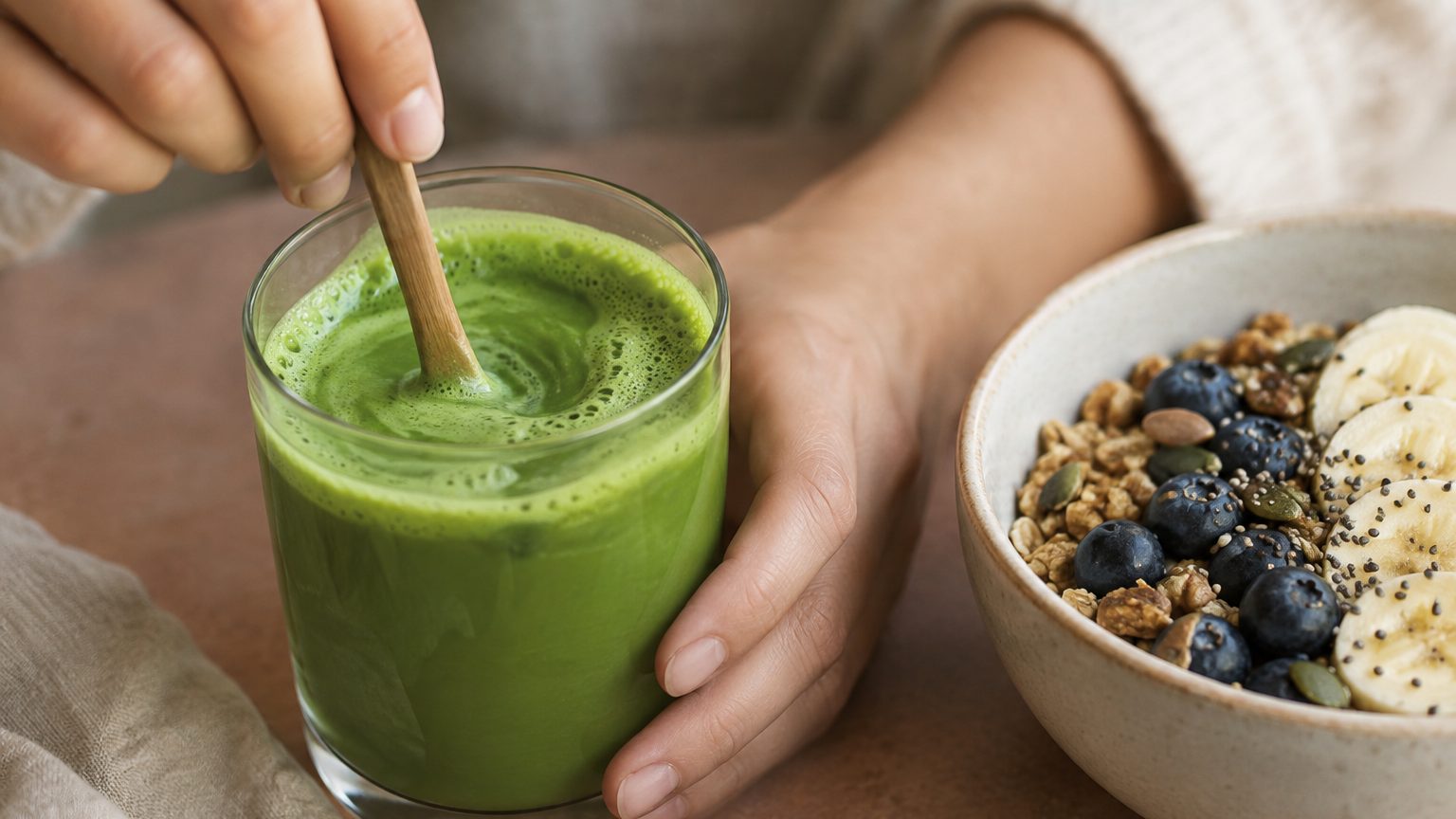
The main benefit of drinking greens in the morning is that it gets done, since a fixed early slot makes consistent use more likely. A greens powder can add a modest amount of fiber and concentrated plant ingredients to your morning, but it is not breakfast, a detox, or a replacement for vegetables.
Key Takeaways
- Consistency comes first: A fixed morning cue makes it easier to use greens powder regularly.
- Modest nutrition: One scoop contributes some fiber, iron, B vitamins, and concentrated plant ingredients, not a complete meal.
- Flexible timing: You can drink greens before breakfast, with food, or in a smoothie based on how your stomach responds.
- Coffee can coexist: There is no general rule against having greens and coffee in the same morning, although spacing may support plant-based iron absorption.
- Expect gradual changes: Most people should not expect a dramatic feeling from the first scoop or first week.
- Whole foods still matter: Greens powder supports a varied diet rather than replacing fruits, vegetables, protein, or other meals.
Morning Supports Consistent Use
The practical advantage of drinking super greens in the morning is not that your body suddenly uses every ingredient better before noon. The advantage is behavioral: mornings usually contain repeatable cues, such as turning on the kettle, making coffee, preparing breakfast, or filling a water bottle.
A habit becomes easier to repeat when you attach it to something you already do. Behavioral researchers often call this a habit anchor, meaning an existing action that prompts a new one. Mixing greens while the coffee brews requires less memory and decision-making than trying to fit it into a changing afternoon.
This matters because research on greens powders generally examines repeated use over a set period, not occasional scoops. The research category remains limited, formulas vary substantially, and findings from one powder cannot automatically be applied to another. Still, any potential contribution depends on actually taking the product with reasonable consistency.
Morning use may also help on days that begin without vegetables. A scoop can introduce dried grasses, algae, greens, and fruit or vegetable powders early in the day. That does not cancel out a low-produce diet, but it can make plant variety part of your routine before schedules become unpredictable.
For a broader look at the category, including realistic uses and limitations, see what greens powder actually does for you. The morning-specific benefit is simpler: a reliable cue makes the habit easier to maintain.
What One Scoop Contributes
The LiveGood Organic Super Greens label lists one scoop as about 11.7 grams, with 30 servings per container. Each scoop provides 35 calories, 6 grams of carbohydrate, 2 grams of dietary fiber, under 1 gram of protein, and 15 milligrams of sodium. It also lists 2.6 milligrams of iron, or 14% of the Daily Value, plus smaller amounts of niacin, riboflavin, and thiamin.
Two grams of fiber is a useful start, but it is far below the commonly recommended daily range of about 25 to 38 grams for adults. Similarly, 35 calories and under 1 gram of protein do not make the powder a breakfast. You still need food that supplies adequate energy, protein, fiber, and other nutrients.
The largest ingredients are organic alfalfa at 2,600 milligrams, wheat grass at 1,755 milligrams, spirulina at 1,600 milligrams, agave inulin at 1,200 milligrams, and apple cider vinegar powder at 800 milligrams. Inulin is a prebiotic fiber, which means it can be used by certain microorganisms in your digestive tract.
The blend also contains coconut water powder, barley grass, oat grass, chlorella, elderberry, matcha, moringa, spinach, broccoli, and smaller quantities of other plant and mushroom ingredients. KSM-66 organic ashwagandha extract appears at 100 milligrams, which is a small part of the overall scoop. That ingredient listing alone does not establish a noticeable outcome.
A long ingredient list can add variety, but it does not equal several servings of whole vegetables. Many ingredients appear in modest quantities, and processing removes the structure, water, and chewing experience provided by whole produce.
Empty Stomach and Coffee
Drinking greens on an empty stomach is generally tolerable for many adults, but it is not required. Some people experience temporary gas, bloating, nausea, or stomach discomfort, particularly when they are not accustomed to inulin or take apple cider vinegar powder without food.
If your stomach feels comfortable, you can have greens powder before breakfast. If it does not, move the drink alongside or after breakfast rather than assuming discomfort is a sign that the powder is working. You can also follow the label directions and avoid using more than directed in an attempt to speed up results.
The full morning-versus-evening and empty-stomach considerations are covered in this guide to the best time to take a greens powder. In practice, the best routine is one you tolerate and can repeat.
You can also have greens powder and coffee in the same morning. There is no general rule saying that the two cannot be part of one routine. However, coffee and tea contain compounds that can reduce absorption of non-heme iron, the form of iron found in plant sources. Because this greens powder lists 2.6 milligrams of iron per scoop, someone who is paying close attention to iron intake may prefer to space coffee and greens apart.
The product also contains matcha green tea powder. Matcha naturally contains some caffeine, although the label does not state how much caffeine the finished serving provides. If you are caffeine-sensitive or combining it with coffee, ask LiveGood about the amount before deciding how it fits your morning.
Pair Greens with Your Morning
Greens powder before breakfast is only one option. Taking it with breakfast may be more comfortable if fiber or acidic ingredients bother your stomach, and it helps reinforce the idea that the drink supports a meal rather than replacing one.
A protein shake is another practical choice. LiveGood suggests mixing its Organic Super Greens into a protein smoothie, which combines the greens blend with a more substantial source of protein and calories. Flavor and texture vary depending on the other ingredients, so start with familiar combinations rather than adding several new ingredients at once. These super greens smoothie recipes offer simple mixing ideas.
If you exercise in the morning, you can drink greens separately from your workout nutrition. A greens powder is not automatically a pre-workout because it may not provide meaningful amounts of carbohydrates, protein, electrolytes, or a clearly stated caffeine dose. If you are considering combining products, review the cautions around mixing super greens with pre-workout.
Water is the simplest option. The label directs you to mix one scoop into water or a smoothie at least once per day. LiveGood also suggests water over ice in place of soda or juice. Because powdered plant ingredients can settle, stir or shake the drink again while you are drinking it rather than leaving the last portion concentrated at the bottom.
Expect Subtle Early Changes
What happens when you drink greens every morning is usually less dramatic than marketing language suggests. You may not feel anything specific after the first serving, and an immediate sensation is not a reliable measure of nutritional value.
During the first several days, the most noticeable difference may simply be the new routine. Your drink tastes different, the powder may settle, and preparation adds a small step to breakfast. If you are not used to prebiotic fiber, you may also notice temporary gas or changes in bowel habits.
Over the following weeks, some people report more regular digestion after adding fiber to their routine. Two grams per scoop is still modest, so the rest of your diet remains the main source of fiber. Water intake, whole grains, legumes, fruits, and vegetables all contribute.
A morning greens habit may also act as a positive cue for other choices. Preparing one plant-based drink can remind you to pack fruit, add vegetables to lunch, or drink water. That is a behavioral effect of the routine, not evidence that the powder transforms the rest of your diet.
Research on greens powders is still thin compared with research on whole dietary patterns. Products also use different ingredients and amounts, making broad conclusions difficult. Do not expect a sudden energy surge, rapid body changes, or a detox effect. Evaluate the habit by whether it is sustainable, fits your diet, and helps you consistently add a modest source of plant ingredients.
Build a Repeatable Routine
A useful greens powder morning routine should require as few decisions as possible. Choose one location, one mixing method, and one cue that already happens nearly every day.
- Put a clean glass or shaker near your kettle, coffee maker, or breakfast supplies the night before.
- Mix the label-directed serving while your coffee brews or before you prepare breakfast.
- Use cold water, water over ice, or a smoothie based on your taste and stomach comfort.
- Stir or shake thoroughly, then keep stirring as you drink because plant powders settle.
- Take it at approximately the same point in your routine, even if the clock time changes.
- Keep eating breakfast when you need one, since the greens drink is not a meal.
If mornings vary, anchor the powder to an action rather than an exact time. For example, use it after filling your water bottle or before washing your breakfast dishes. This makes the routine more resilient on weekends, travel days, and rushed mornings.
Avoid making the process too elaborate. A seven-ingredient smoothie may be enjoyable when you have time, but plain cold water can be easier on a busy weekday. Consistency usually benefits from having both a preferred method and a fast backup method.
If you want a label-directed option for this habit, Organic Super Greens is mixed as one scoop in water or a smoothie at least once per day. Prepare it beside an existing morning cue, keep stirring as you drink, and pair it with breakfast if an empty stomach feels uncomfortable. The listed price is $19.95 for members and $34.95 retail, and the product is intended to support, not replace, a varied diet.
Understand the Limits and Cautions
Greens powder is not a substitute for whole fruits and vegetables. Whole produce provides water, larger and more varied amounts of fiber, and a food structure that affects chewing, fullness, and digestion. This greens powder and whole produce comparison explains why the two should complement rather than replace each other.
A scoop is also not breakfast. With 35 calories, under 1 gram of protein, and 2 grams of fiber, it cannot provide the energy and macronutrients most people expect from a meal. Add it to an appropriate breakfast or smoothie instead of using the green color as evidence that the drink is nutritionally complete.
Possible side effects include gas, bloating, loose stools, nausea, or stomach discomfort. Inulin may be especially noticeable if your usual fiber intake is low. Starting the routine with food and following the label directions may improve tolerance, but ongoing or significant symptoms are a reason to stop and speak with your doctor.
The label carries a gluten free seal and also states: "Contains: Wheat, Tree Nuts (Coconut Water Powder)." The wheat statement relates to wheat grass, but anyone with a wheat allergy or celiac disease should ask LiveGood and their doctor for clarification before using the product. Anyone with a tree nut allergy should also review the coconut water powder warning with their doctor.
Talk with your doctor before use if you are pregnant or breastfeeding, have a kidney or liver condition, have an existing medical condition, or take prescription medication. This is especially relevant for blood thinners because leafy green ingredients may contain vitamin K, even though the label does not list a vitamin K amount. Your doctor can assess the entire formula against your medication and health history.
The realistic goal is not to replace meals or produce. It is to make a modest, convenient addition to a morning routine you can maintain.