
Copper Peptides for Skin, Explained
 Written by Nauder Khazan
Ask AI about this article and Ageless Renewal





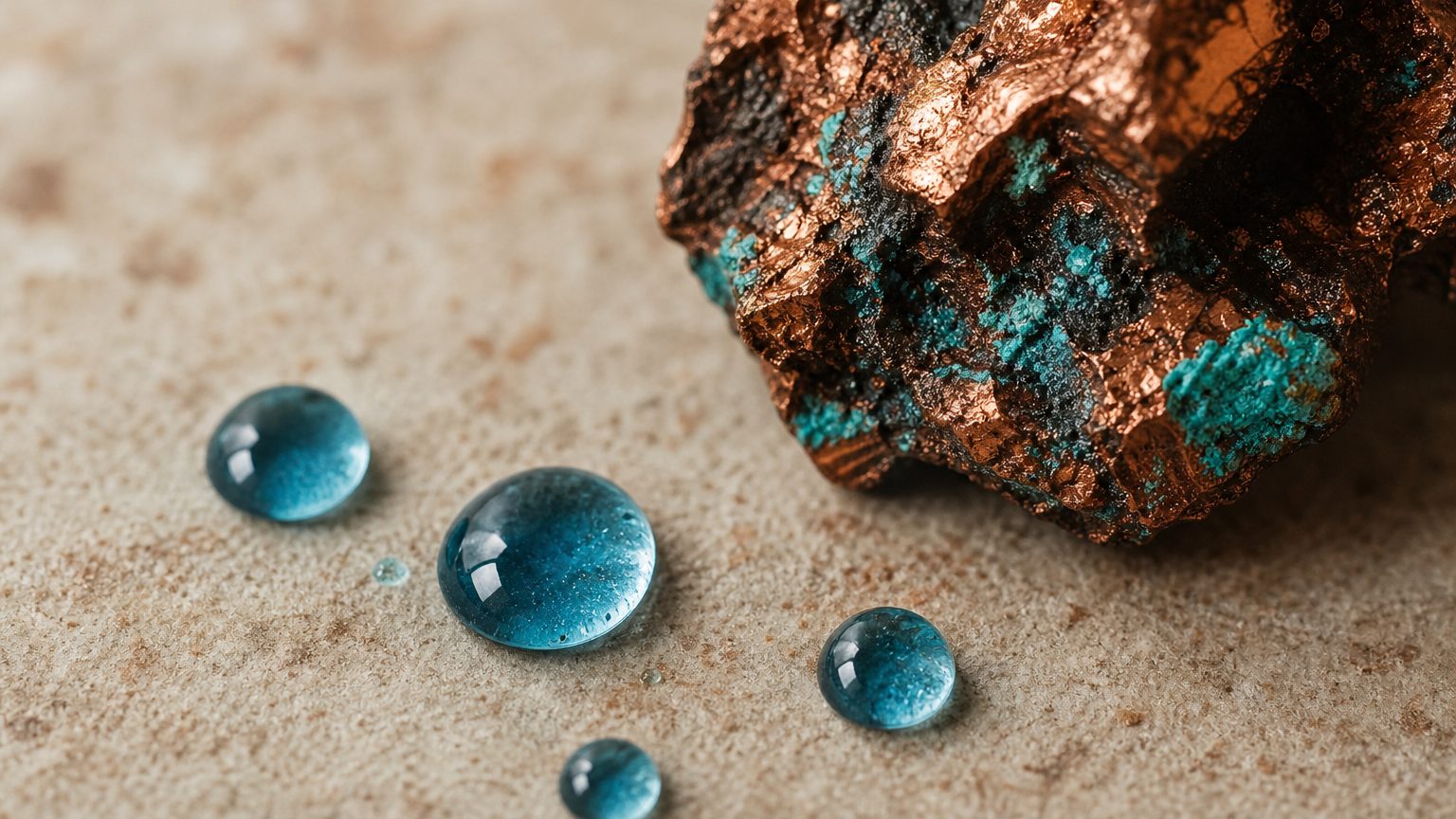
Copper peptides for skin may support firmness, elasticity and a smoother appearance, but the clinical evidence remains limited. Most research focuses on GHK-Cu, also called copper tripeptide-1, and does not prove that every copper-containing serum works the same way. Consistent use, gentle layering and realistic expectations matter more than chasing quick results.
Key Takeaways
- Potential support: Research on copper peptides suggests they may support collagen-related processes and firmer-looking skin.
- Limited trials: Human studies tend to be small, short and specific to one formulation.
- Check ingredients: Copper tripeptide-1, GHK-Cu and copper salts are not interchangeable names.
- Layer gently: Apply a copper peptide serum after cleansing and before moisturizer.
- Expect gradual change: Visible improvements, if they occur, generally require consistent use for several weeks.
- Watch irritation: Introduce one active product at a time and stop if persistent redness, itching or swelling develops.
What Copper Peptides Are
Peptides are short chains of amino acids, the small building blocks used to make proteins. A copper peptide forms when a peptide binds, or chelates, a copper ion. Chelation means that the peptide holds the mineral in a stable chemical complex.
The best-known cosmetic example is GHK-Cu, short for glycyl-L-histidyl-L-lysine copper. On an ingredient list, it usually appears as copper tripeptide-1. GHK occurs naturally in the body, while the copper-bound form has been studied for its role in skin maintenance and repair signaling.
Copper peptides are often described as carrier peptides because they can carry copper to biological processes that use it. Copper contributes to enzymes involved in collagen and elastin organization, antioxidant defenses and normal connective tissue maintenance. Collagen provides structure, while elastin helps skin return to its original shape after stretching.
This does not mean topical copper automatically becomes new collagen. A finished formula must keep the ingredient stable, deliver it into the relevant layers of skin and contain an effective amount. Those details are rarely disclosed on cosmetic labels.
Copper tripeptide-1 also differs from copper glutamate, copper PCA and other copper salts. Those ingredients may supply copper or serve other formulation purposes, but they are not GHK-Cu. Marketing phrases such as copper complex or copper technology do not tell you which form is present, so the ingredient list provides the clearest starting point.
Evidence Has Clear Limits
Laboratory research on GHK-Cu suggests that it can influence signals involved in collagen, elastin and glycosaminoglycan production. Glycosaminoglycans are water-binding molecules that help maintain the skin's supportive matrix. These findings provide a plausible reason to study copper peptides in topical skincare, but results from isolated cells or reconstructed skin cannot predict exactly what you will see in a mirror.
Some small human studies of copper peptide creams have reported improvements in measurements such as skin density, thickness, elasticity or the appearance of fine lines after several weeks. However, the evidence base has significant limitations. Studies often involve relatively few participants, use proprietary formulas and compare products that differ in more than one ingredient. Some older studies also provide limited information about randomization, blinding or independent replication.
This makes copper peptides promising rather than proven. Research on the ingredient does not establish that every serum containing it will produce the same outcome. Concentration, packaging, pH, supporting ingredients and regular use can all influence performance.
Claims about skin tightening also need context. A topical cosmetic may support a firmer or more elastic appearance, but it cannot create the degree of structural change associated with a medical procedure. Hydration alone can temporarily make fine lines look softer, which can be valuable but should not be mistaken for permanent remodeling.
If copper peptides help your skin, expect subtle changes rather than an overnight transformation. Many cosmetic studies assess outcomes around 8 to 12 weeks. Take photos in similar lighting every four weeks if you want a more objective comparison, and keep the rest of your routine stable.
Use Copper Peptides Consistently
Follow the directions for your specific formula because concentrations and bases vary. Unless the label says otherwise, apply a copper peptide serum to clean skin before heavier creams or oils. A practical routine is cleanser, hydrating toner or essence if you use one, copper peptide serum, moisturizer and broad-spectrum sunscreen in the morning.
For a closer look at where different textures belong, use this skincare layering order. The main principle is to apply lighter, water-based products before thicker products, while allowing each layer to settle without vigorously rubbing the skin.
More is not necessarily better. Use the label amount and avoid applying extra product in hopes of faster results. If your skin reacts easily, patch test the serum on a small area and introduce it separately from other new products. You can then increase use only within the label directions if your skin remains comfortable.
Copper peptide products may be labeled for morning use, evening use or both. Timing is less important than consistency and compatibility with the rest of your routine. Morning use should always sit beneath sunscreen. Evening use may be simpler if you already use an acidic antioxidant serum in the morning.
Do not apply a cosmetic serum to broken or severely irritated skin unless a qualified professional directs you. Avoid the eye area unless the formula specifically says it is suitable there. If pilling occurs, use smaller amounts, give each layer time to settle or move one of the products to a different routine.
If you want a lightweight copper-containing serum, Ageless Renewal uses copper glutamate, which is not the same ingredient as GHK-Cu or copper tripeptide-1. Apply 1-2 pumps of serum to the skin and gently pat in on the face or another area, avoiding contact with the eyes, as the label directs. It is Cruelty Free and Vegan and is designed to support firmer-looking, radiant skin within a consistent moisturizing and sun-protection routine.
Mixing Advice Needs Nuance
Lists of ingredients that you must never combine with copper peptides often sound more certain than the evidence allows. Compatibility depends on the exact formulas, their pH, ingredient stability and your skin's tolerance. A combination that works in a professionally formulated product may not behave the same way when you layer two separate serums.
Pure vitamin C, listed as L-ascorbic acid, is commonly formulated at a low pH. There are theoretical concerns that layering it directly with copper peptides could affect stability or activity, but direct clinical evidence showing that the combination damages skin or makes both ingredients useless is scarce. If you want a cautious approach, use vitamin C in the morning and copper peptides at night.
Retinoids, alpha hydroxy acids and beta hydroxy acids create a different issue. The main practical concern is cumulative irritation rather than a clearly proven chemical conflict. Starting several active products together makes it difficult to identify which one caused dryness, stinging or peeling. Alternate routines or introduce one product at a time.
Copper peptides and retinol are not direct substitutes. Retinoids have a larger body of human evidence for supporting smoother texture and reducing the visible signs of sun-related aging, but they can also be more irritating. Copper peptides may suit someone seeking a gentler supportive option, although they are not proven superior. Ask your doctor before using retinoids during pregnancy or breastfeeding.
If a manufacturer specifically advises against a combination, follow that direction. Formulators understand the stability testing completed on their own product, while general mixing charts cannot account for every serum on the market.
Side Effects Can Occur
Many people tolerate topical copper peptides, but gentle does not mean risk-free. Possible reactions include temporary stinging, redness, itching, dryness or small bumps. These symptoms may come from the peptide, another ingredient in the formula or the combined intensity of your routine.
Online reports that copper peptides ruined someone's skin cannot establish what caused the reaction or whether the effect was permanent. A person may have introduced multiple products, used too much, applied the serum over an impaired skin barrier or reacted to a preservative or fragrance. Personal reports can identify possible concerns, but they cannot replace controlled comparisons.
Patch testing helps reduce uncertainty. Apply the label-directed amount to a small, discreet area and observe it before expanding use. Patch testing cannot guarantee that your whole face will tolerate repeated application, but it may reveal an obvious reaction.
Stop using the product if irritation persists or worsens. Seek prompt medical guidance for significant swelling, blistering, widespread hives or trouble breathing. If you have a known copper sensitivity, an existing skin condition or another medical condition, ask your doctor or dermatologist before use. You should also consult your doctor during pregnancy or breastfeeding.
Topical skincare should not be confused with injectable copper peptides. Injections involve different exposure, sterility concerns and regulatory considerations. Do not self-inject a cosmetic ingredient or use topical serum in a way its label does not direct. Questions about injectable products belong with a licensed medical professional.
Choose Products By Formulation
Start with the ingredient list rather than front-label promises. If you specifically want the ingredient used in most copper peptide research, look for copper tripeptide-1. A product that lists copper glutamate, copper PCA or another copper salt is a copper-containing formula, but it should not automatically be described as a GHK-Cu serum.
Packaging also matters. An opaque, air-restrictive pump can help protect light-sensitive or oxidation-prone ingredients, although packaging alone does not prove stability. Check the expiration or period-after-opening symbol, close the container promptly and store it according to the label. Discard a product if its smell, color or texture changes unexpectedly.
Avoid judging quality by blue color alone. Copper complexes can give a formula a blue tint, but color does not reveal concentration, purity or effectiveness. More concentrated is not always better, particularly if the higher level makes the product harder to tolerate consistently.
Consider the rest of the formula as well. Humectants, which attract water, and emollients, which soften the skin, may contribute significantly to a smoother appearance. Fragrance and multiple strong active ingredients may be less suitable if your skin is sensitive.
Topical copper peptides also differ from oral collagen peptides. Research on oral collagen peptides and skin elasticity examines digestion and whole-body distribution, not topical delivery. This overview of what collagen peptides do explains that distinction further. Neither approach replaces daily sun protection, adequate nutrition, sleep and a routine you can maintain.