
How to Take Black Seed Oil
 Written by Ben Glinsky
Ask AI about this article and Premium Black Seed Oil - 5% Thymoquinone





The best way to take black seed oil is to follow your product's label, take it with food and water, and use it at the same time each day. Capsules offer a measured serving, while liquid oil can be swallowed directly or mixed into honey, juice, or a smoothie.
Key Takeaways
- Follow the label: Use the serving directions on your specific black seed oil rather than assuming every product has the same strength.
- Take with food: A meal or snack can reduce digestive discomfort, burping, and the oil's peppery aftertaste.
- Choose your time: Morning or night can work, so favor the time you can follow consistently.
- Check the strength: Look at both the amount of Nigella sativa oil and its stated thymoquinone concentration.
- Ask your doctor: Get medical guidance if you use prescriptions, have a medical condition, or are pregnant or breastfeeding.
The Short Answer
For most adults, the practical answer is simple: take black seed oil according to the label, with food and a glass of water, at a time you can remember every day. If the label provides one daily serving, taking it with breakfast or dinner makes the routine easier to maintain.
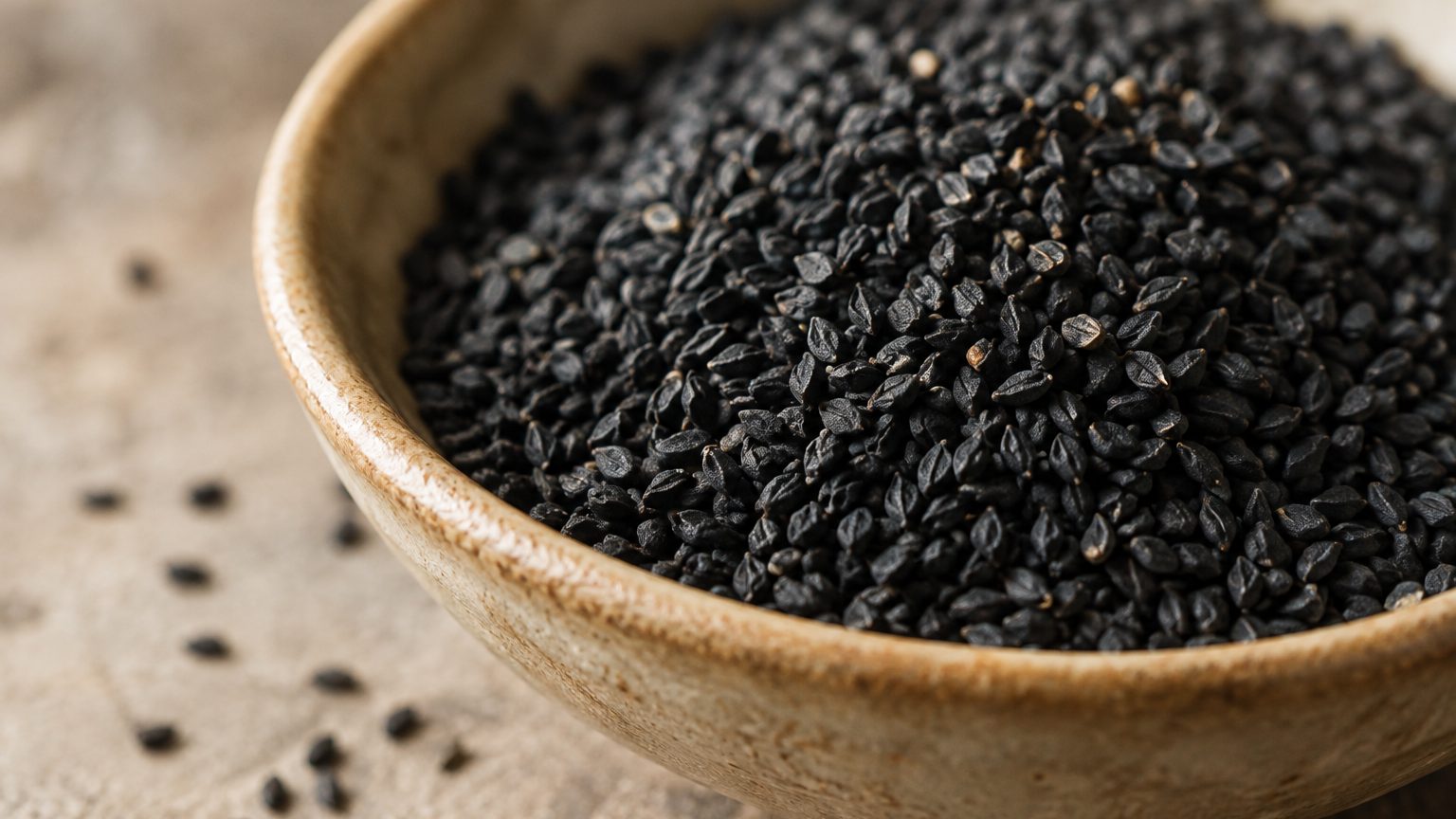
Black seed oil comes from the seeds of Nigella sativa, also called black cumin. Its best-known natural constituent is thymoquinone, a plant compound studied for its antioxidant activity and potential role in supporting normal immune function. You can read more about the broader benefits of black seed oil without treating those potential benefits as a reason to exceed the label serving.
Taking black seed oil on an empty stomach is not necessary. Some people tolerate it, but food is generally the more comfortable option because the oil may cause burping, nausea, or digestive upset. A meal containing some fat is not required, since black seed oil is already an oil.
Consistency matters more than choosing a supposedly perfect hour. Black seed oil research usually examines repeated use over several weeks, not an occasional serving or a single large amount. Create a simple cue, such as taking it after breakfast, and avoid doubling the next serving if you forget one. Follow the package instructions or ask your doctor or pharmacist what to do after a missed serving.
How Much To Take
There is no single black seed oil dosage that applies to every product. Oils differ in form, concentration, thymoquinone percentage, and serving size, so start with the directions on the exact label in front of you.
Published human clinical research on Nigella sativa oil has commonly evaluated about 1 to 3 grams per day. Many trials have used 1 to 2 grams, sometimes divided into two servings, for roughly 8 to 12 weeks. These ranges describe study designs, not a universal recommendation, and different trials measured different outcomes.
Liquid products are often used at about 1 teaspoon, or 5 milliliters, per day. However, one teaspoon from two different products may not provide the same concentration of thymoquinone. Use the liquid product's own measuring tool and directions rather than estimating with a kitchen spoon.
Capsules make the amount easier to track because the oil quantity appears on the Supplement Facts panel. If two softgels provide 1,000 mg, for example, both softgels together make one 1,000 mg serving. Do not confuse the amount per capsule with the amount per serving.
Thymoquinone percentage adds another useful piece of information. A standardized oil identifies a consistent concentration of this researched constituent, while the total milligrams tell you how much black cumin seed oil the serving contains. For more context on this distinction, see what thymoquinone is.
When To Take It
You can take black seed oil in the morning or at night. Research has not established one time of day as consistently superior, so your meal schedule and digestive comfort should guide the choice.
Breakfast works well if you already take other daily supplements in the morning. Dinner may be easier if your evening meal is more substantial or you notice the oil's peppery aftertaste. Whichever you choose, taking it during or immediately after the meal can be more comfortable than taking black seed oil on an empty stomach.
Some ingredient studies have split the daily amount between two meals. That does not mean every product needs to be divided. If your label directs one daily serving, follow that instruction unless your doctor recommends a different schedule. For a two-capsule serving, check whether the label tells you to take the capsules together or simply states a daily total.
Use a routine cue instead of relying on the clock. Keeping the bottle near a breakfast item, adding a reminder to your phone, or pairing the serving with dinner can help you stay consistent. Store the product as directed, away from excess heat and light, and keep it out of reach of children and pets.
If black seed oil causes repeated nausea, cramping, loose stools, or uncomfortable burping, stop and check with your doctor. Changing from an empty stomach to a meal may improve tolerance, but ongoing symptoms should not be ignored.
Ways To Take Black Seed Oil
Capsules and liquid oil are the main oral options. Capsules provide a measured amount without the strong flavor, while liquid gives you more flexibility for mixing. For a detailed form comparison, visit black seed oil capsules vs liquid.
To take capsules, swallow the full label serving with a glass of water during or after a meal. Do not chew or open a softgel unless the manufacturer specifically says you can. The outer softgel may contain gelatin, so check the other ingredients if you follow a vegan or vegetarian diet.
To take liquid black seed oil, measure the label serving carefully. You can swallow it directly and follow it with water or juice. Its concentrated peppery, slightly bitter flavor can linger, which is why many people prefer mixing it into a small amount of food or drink.
Black seed oil with honey is a traditional combination that can make the flavor easier to tolerate. Stir the measured serving into a spoonful of honey and take it with a meal. Honey has not been shown to make black seed oil work faster or increase its potency, and it adds sugar, so it may not suit every eating plan.
You can also blend liquid oil into a smoothie, yogurt, or a small amount of juice. Use only enough food or drink to consume the whole measured serving, since leaving part of the mixture behind changes the amount you receive.
Topical use is separate from oral use. If a liquid product is intended for skin, patch test a small area first and wait at least 24 hours for redness, itching, or irritation. Do not assume an oral softgel is designed for facial or skin application, and avoid the eyes and broken skin.
Taking LiveGood Black Seed Oil
LiveGood Black Seed Oil keeps the routine straightforward: take two softgels daily with a glass of water, best with food. The two-softgel serving supplies 1,000 mg of cold-pressed black cumin seed oil, Nigella sativa, standardized to 5% thymoquinone.
That full disclosure makes it easy to see both the total oil amount and the thymoquinone concentration. Standardization matters because thymoquinone levels can differ among oils, even when the front labels use similar language. The formula supports antioxidant defenses, normal immune function, and general wellness as part of a consistent daily routine.
Each bottle contains 30 servings. At $14.95 for members, that works out to about $0.50 per daily serving, compared with about $1.17 per serving at the $34.95 retail price. The oil is third-party tested and made in a GMP facility, and the formula is non-GMO, gluten free, dairy free, and soy free.
The softgels contain gelatin, glycerin, and purified water, so they are not vegan. If that suits your dietary preferences, the capsule format avoids measuring liquid and limits the oil's strong taste. Take both softgels as the label directs rather than adding extra capsules based on research conducted with a different oil or concentration.
For a measured daily option, LiveGood Black Seed Oil provides 1,000 mg of cold-pressed Nigella sativa oil standardized to 5% thymoquinone per two-softgel serving. Take two softgels with a glass of water, best with breakfast, dinner, or another regular meal. Pairing the serving with the same meal each day supports consistency while helping limit the peppery aftertaste and digestive discomfort some people experience with oil.
Timeline And Safety Checks
Black seed oil is not usually something you can assess after one serving. Human studies have often lasted 8 to 12 weeks, but that does not guarantee you will notice a specific effect within that period. Outcomes vary with the person, product, amount, consistency, and health measure being studied.
Some effects are not sensations you can reliably feel. That is one reason to avoid increasing the serving simply because you do not notice an immediate change. Keep expectations realistic, follow the label, and view the supplement as support for a routine that also includes balanced meals, sleep, movement, and appropriate medical care.
Digestive upset and burping are among the more common complaints associated with oral black seed oil. Taking it with food may help. Stop using it and seek medical advice if symptoms persist or if you develop signs of an allergic reaction, such as swelling, hives, or trouble breathing. For a fuller safety overview, read about black seed oil side effects.
Research suggests Nigella sativa may affect blood glucose, blood pressure, and blood clotting. Ask your doctor or pharmacist before using it if you take diabetes or blood pressure medication, blood thinners, or other prescriptions. You should also consult your doctor if you have kidney or liver conditions, another existing medical condition, or an upcoming surgery.
If you are pregnant or breastfeeding, get your doctor's guidance before taking black seed oil. Parents should not give it to children without a pediatrician's advice, and pet use belongs with a veterinarian. These precautions matter because supplement studies in these groups are limited and adult product directions do not automatically apply to them.
Frequently Asked Questions
How often should I take black seed oil?
Take black seed oil as often as your specific product label directs, which is commonly once daily. Using it with the same meal each day can improve consistency and digestive comfort. Do not take an extra serving after a missed dose unless your doctor, pharmacist, or the product instructions specifically advise it.
Should I take black seed oil on an empty stomach?
You do not need to take black seed oil on an empty stomach. Taking it with food is generally more comfortable and may reduce nausea, burping, digestive upset, and the peppery aftertaste. If your product gives different instructions, follow its label or ask your doctor or pharmacist for guidance.
What should you not mix with black seed oil?
Food, honey, and juice are generally used for flavor, but prescription combinations require more care. Nigella sativa may affect blood glucose, blood pressure, and clotting, so ask your doctor before combining it with diabetes medication, blood pressure medication, blood thinners, or other prescriptions. Medical guidance also matters before surgery.
Where does black seed oil come from?
Black seed oil comes from the seeds of Nigella sativa, a flowering plant native to parts of Southwest Asia, North Africa, and the Mediterranean region. The seeds are also called black cumin or black caraway, although the plant is not the same as ordinary cumin. Cold pressing extracts the oil without relying on high heat.
Can black seed oil help with weight loss?
Research on Nigella sativa and weight-related measures is mixed and does not support treating black seed oil as a stand-alone weight-loss method. Any effect found in ingredient studies should be viewed alongside nutrition, activity, sleep, and medical factors. Follow the label rather than increasing the amount in pursuit of faster results.
Is it better to take black seed oil morning or night?
Neither morning nor night has been proven universally better for black seed oil. Choose a regular meal that makes the serving easy to remember and comfortable to digest. Breakfast and dinner are both practical options, and consistency is more useful than changing your schedule based on claims about a perfect time.