
Frankincense Oil Benefits and Safe Uses
 Written by Nauder Khazan
Ask AI about this article and Essential Oils (Therapeutic Grade)





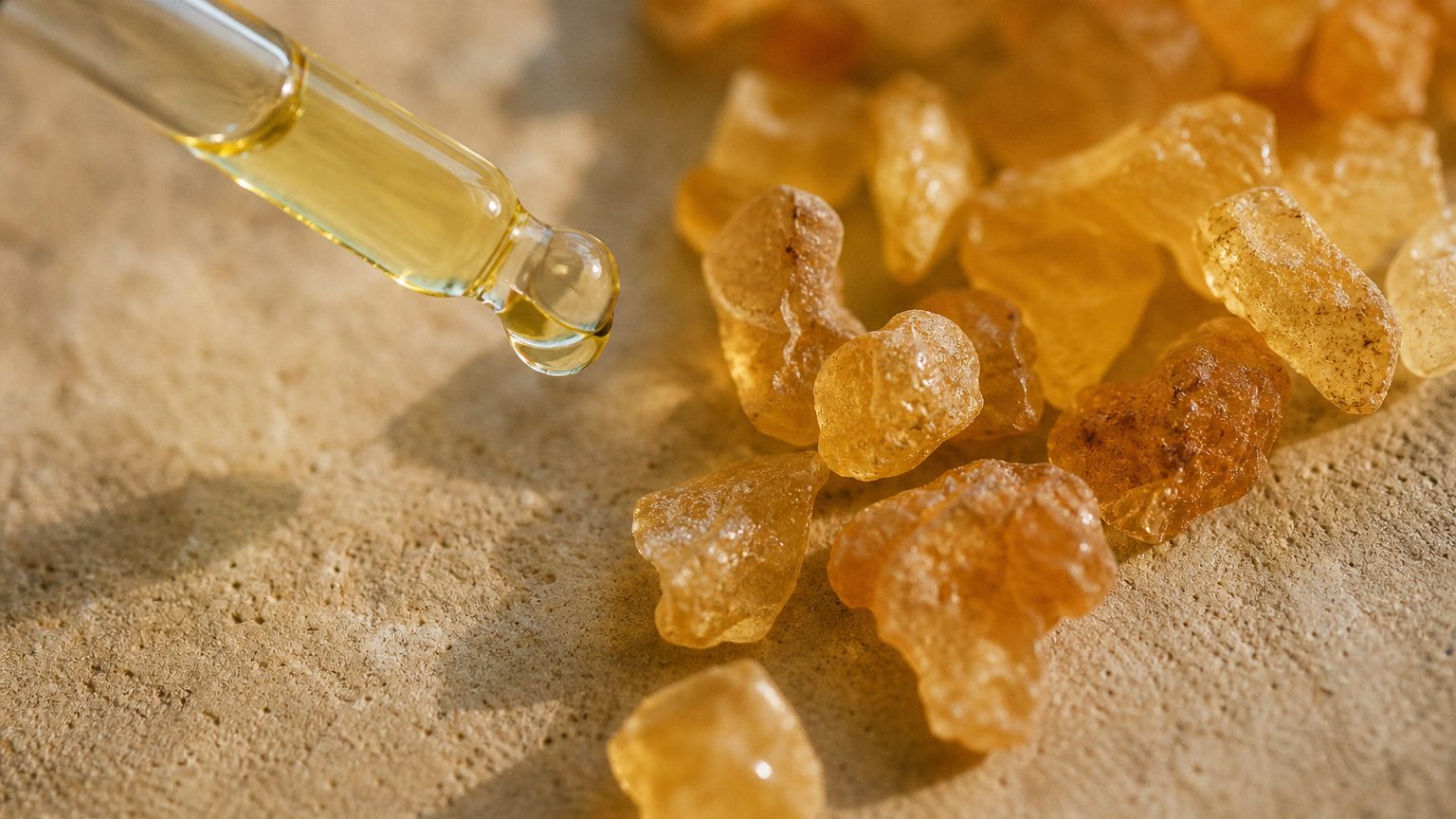
Frankincense oil benefits may include supporting relaxation, enriching a wind-down routine and complementing diluted skincare or massage. However, human research on frankincense essential oil remains limited, and findings from oral Boswellia extracts do not automatically apply to the oil.
Key Takeaways
- Limited evidence: Research specifically involving frankincense essential oil in humans remains preliminary.
- Aromatic support: Its warm, resinous scent may promote a calm atmosphere and a consistent wind-down routine.
- Always dilute: Follow the label and mix frankincense oil with an appropriate carrier before applying it to skin.
- Extracts differ: Research on oral Boswellia extracts does not establish the same benefits for distilled essential oil.
- Skip ingestion: Do not swallow frankincense essential oil unless a qualified healthcare professional specifically directs you.
What Frankincense Oil Is
Frankincense essential oil comes from the aromatic resin of Boswellia trees. Producers make small cuts in the bark, collect the hardened resin and typically use steam distillation to isolate its volatile aromatic compounds. These compounds give the oil its characteristic woody, earthy and slightly citrus-like scent.
Essential oil is not the same thing as raw frankincense resin or a standardized Boswellia supplement. An essential oil contains volatile compounds that evaporate readily and create aroma. An oral extract may contain different nonvolatile constituents, including boswellic acids, that do not transfer into meaningful amounts during steam distillation.
That distinction matters because many online frankincense claims combine research on several different preparations. A study involving a Boswellia extract cannot demonstrate that smelling or applying frankincense essential oil produces the same result. Product concentration, extraction method and route of use all influence what compounds reach your body.
Frankincense also has a long history in incense, perfume and traditional practices. Historical use can explain why people value an ingredient, but it does not replace controlled human research. Modern use is best understood as part of aromatherapy, personal care or a mindful daily ritual rather than as a substitute for medical care. For broader application methods, see how to use essential oils.
Six Potential Frankincense Oil Benefits
The strongest practical uses of frankincense oil relate to aroma and personal care. Several popular claims extend beyond the available evidence, so expectations should remain modest.
-
A calmer atmosphere. Frankincense has a deep, resinous aroma that many people associate with quiet or contemplative settings. Diffusing it may support a calm environment, although scent preferences vary and research has not established a predictable response for everyone.
-
A consistent wind-down cue. Using the same scent before bed can become part of a regular evening routine. The routine itself, including lower light, reduced screen time and a steady schedule, remains more important than the oil.
-
Mindful breathing. Frankincense is commonly used during meditation, prayer or slow breathing exercises. Its spiritual significance is personal and cultural, not a scientifically measurable property of the oil.
-
A pleasant skincare ritual. Properly diluted frankincense can add fragrance to a facial or body oil. Limited laboratory and formulation research does not establish that the essential oil removes scars, regenerates skin or produces reliable wrinkle changes in people.
-
Massage enjoyment. When diluted in a suitable carrier oil, frankincense can add a warm scent to massage. The touch, rest and carrier oil may account for much of the immediate comfort, so you should not attribute the entire experience to frankincense.
-
Natural fragrance. A small amount used according to label directions can add a woody note to personal-care routines. Natural origin does not mean irritation-free, and fragrance-sensitive people may prefer to avoid it.
How Strong Is the Evidence?
Research on frankincense essential oil is less developed than many online benefit lists suggest. Laboratory studies can identify chemical activity in cells or microbes, but those experiments often use concentrations and exposure methods that do not reflect normal aromatherapy or diluted skin application. Laboratory findings are useful for deciding what to study next, not for promising a result in people.
Small human studies may also combine frankincense with massage, other essential oils or additional skincare ingredients. That design makes it difficult to determine what frankincense contributed by itself. Blinding is challenging in aroma research because participants can usually smell whether they received the aromatic product.
Another common error is treating all Boswellia research as interchangeable. Oral extracts, resin, incense smoke and essential oil have different chemical profiles and safety considerations. For example, research discussed in a guide to fish oil and joint comfort concerns a different ingredient and route of use. It cannot support a frankincense claim. The same principle applies to research on fish oil for heart health.
For now, aroma, preference and routine are more defensible reasons to use frankincense oil than broad physical outcome claims. If you enjoy the scent and tolerate the product, it can support a consistent wellness ritual without needing to promise more than the evidence shows.
How to Use Frankincense Oil
For aromatherapy, add frankincense oil to a diffuser only as directed by the oil label and diffuser manufacturer. Run the diffuser in a ventilated space rather than continuously in a closed room. Stop if the aroma causes headache, coughing, nausea or eye irritation.
For topical use, dilute the essential oil with a carrier oil and follow the product's label directions. Carrier oils are plant oils, such as jojoba or fractionated coconut oil, that reduce the concentration of essential oil touching your skin. Do not assume that a stronger mixture works better, since higher concentrations increase the chance of irritation.
Patch test the diluted mixture on a small area of intact skin before wider use. Wait and watch for redness, burning, itching or swelling. A patch test reduces uncertainty but cannot guarantee that you will never develop sensitivity later.
For facial use, keep the diluted oil away from your eyes, eyelids, lips and other sensitive areas. Skincare products with fragrance can irritate some complexions, particularly if your skin is already reactive. For a bath, do not drip undiluted essential oil directly into the water because oil floats and may contact your skin at full strength. Use only a label-approved dispersing method.
Do not swallow the oil or add it to drinks. Essential oil ingestion presents different exposure and interaction concerns than smelling a small amount or using a properly diluted topical preparation.
If you want frankincense in an evening routine, diffuse it according to the label before quiet reading or apply a properly diluted amount to pulse points after a patch test. Frankincense is described as Therapeutic Grade Premium Essential Oils, is Third Party Tested and is listed at member $15.95 vs retail $19.95. It is intended to support aromatherapy, topical and skincare routines, while safe dilution and consistent habits still matter most.
Side Effects and Precautions
Frankincense essential oil can cause redness, itching, burning or an allergic skin reaction. Risk increases when you apply it undiluted, use too much or keep using an oxidized oil. Stop topical use and wash the area with mild soap and water if irritation develops. Seek urgent medical help for breathing difficulty, facial swelling or another severe reaction.
Avoid contact with your eyes, inner ears, nose and other mucous membranes. If oil enters an eye, do not try to neutralize it with another essential oil. Follow poison-control or medical guidance. Keep the bottle securely stored away from children and pets, since even small swallowed amounts can be harmful.
Ask your doctor before use if you are pregnant or breastfeeding, take prescription medication, have kidney or liver conditions, or live with another existing medical condition. Ask your child's doctor before using frankincense around or on a child. Consult a veterinarian before exposing pets, since animals process aromatic compounds differently and can be affected by concentrated vapors or spills.
People with asthma, fragrance sensitivity or reactive skin may not tolerate diffusion or topical use. Good ventilation and shorter exposure can reduce intensity, but stopping use is appropriate if symptoms appear. Frankincense is not generally classified as a phototoxic essential oil, meaning one known to react with ultraviolet light, but a finished blend may contain other oils that are. Check every ingredient and follow its label.
Myths, Quality and Storage
Putting frankincense on the bottoms of your feet does not create a special absorption pathway. Foot skin is relatively thick, and there is no good evidence that this location delivers unique whole-body benefits. If you enjoy using a diluted oil there as part of massage, treat it as a sensory ritual rather than a targeted method.
The belly button has no established ability to distribute frankincense oil throughout the body. Applying essential oil there can still irritate sensitive or folded skin. Claims about belly-button application removing unwanted substances, balancing hormones or changing internal organ function are not supported by credible evidence.
Quality language also deserves context. Terms such as "therapeutic grade" do not have a standardized federal definition for essential oils. More useful quality signals include the botanical species, plant part, extraction method, batch information, storage guidance and credible testing for identity or contaminants. Certification or testing claims should apply to the specific product, not be assumed across an entire brand.
Store frankincense oil tightly closed in a cool, dark place and follow the label's storage and disposal directions. Heat, light and oxygen can change aromatic compounds over time, increasing the possibility of an unpleasant odor or skin sensitivity. Discard oil that smells noticeably different, has leaked or has been stored improperly.
Ultimately, the most realistic frankincense oil benefits come from an aroma you enjoy and a routine you can use safely. It can complement relaxation, massage or skincare, but it should not replace sleep habits, medical care or an evidence-based plan for a specific health concern.