
Psyllium Husk Powder Benefits and Use
 Written by Nauder Khazan
Ask AI about this article and Organic Fiber





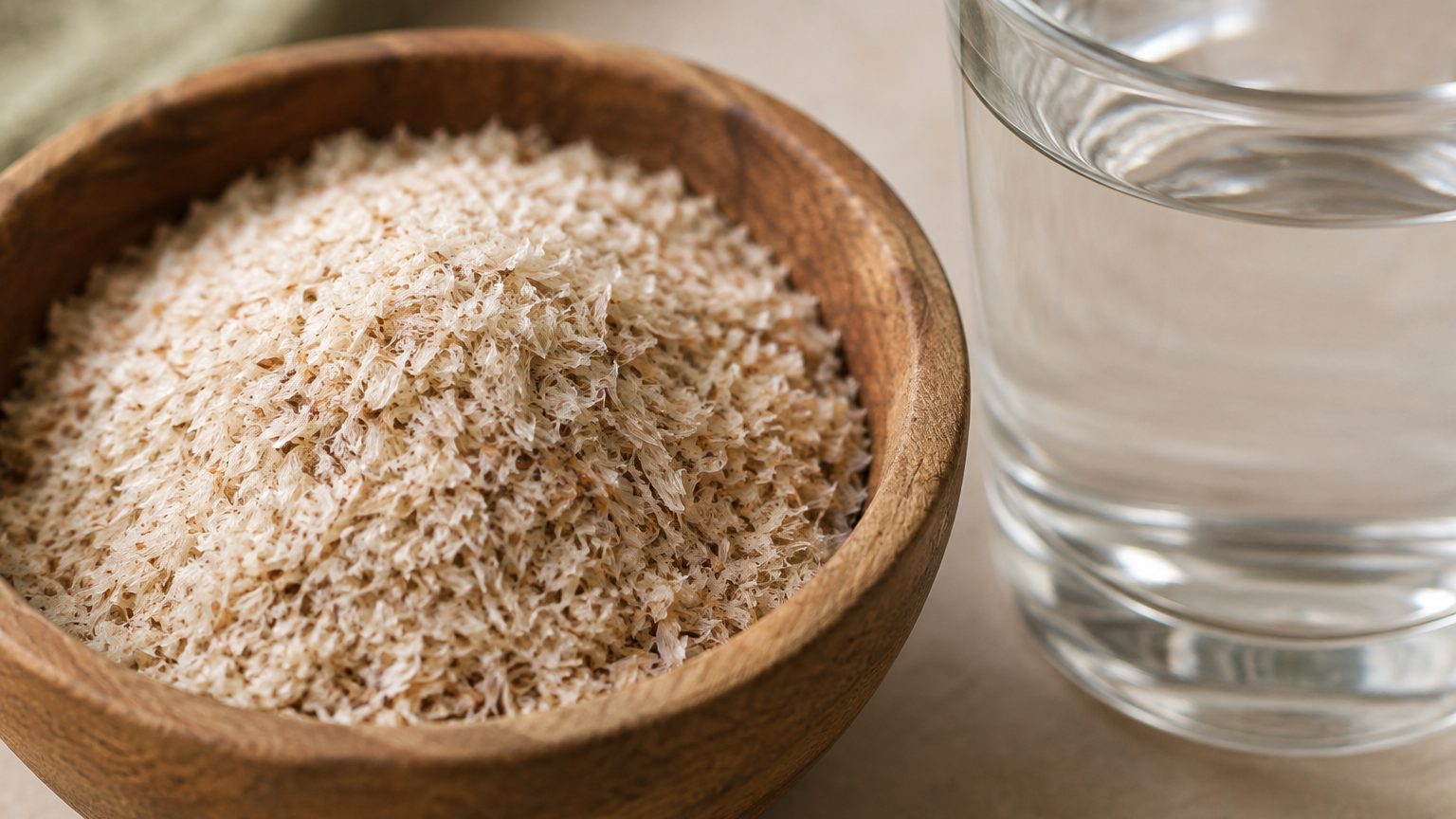
Psyllium husk powder is a soluble, gel-forming fiber that supports regularity, stool consistency, digestive health, and fullness. It works by absorbing water in your digestive tract, but it must be taken with enough liquid. Research also examines its effects on cholesterol measurements and post-meal blood sugar, although results depend on the amount and consistency of use.
Key Takeaways
- Gel-forming fiber: Psyllium absorbs water and forms a soft gel that supports comfortable, consistent bowel movements.
- Strongest evidence: Regularity is the most established of the commonly discussed psyllium husk benefits.
- Daily consistency: Research commonly studies 5 to 10 grams per day, often divided across meals, but you should follow your product label.
- Water is essential: Always mix psyllium thoroughly with the directed amount of liquid and drink it promptly.
- Gradual introduction: Adding fiber slowly can reduce temporary gas, bloating, and abdominal discomfort.
- Medication spacing: Take fiber at least two hours apart from medication and discuss possible interactions with your doctor.
What Psyllium Husk Is
Psyllium husk comes from the outer coating of seeds produced by Plantago ovata, a plant cultivated primarily for its fiber-rich husks. After the husks are separated and milled, they become psyllium husk powder. The finer texture makes the powder easy to mix into water, juice, or smoothies, although it thickens quickly.
Most psyllium fiber is soluble fiber, meaning it interacts with water in your digestive tract. More specifically, it is viscous and gel-forming. Viscous means that it becomes thick after absorbing liquid, much like a thin gel rather than a gritty, insoluble plant fiber.
Psyllium is also only partly fermented by gut bacteria. Fermentation is the process through which bacteria break down certain fibers and produce compounds such as short-chain fatty acids. Because psyllium resists complete fermentation, much of its gel-forming structure remains intact as it travels through the digestive tract.
That combination sets psyllium apart from many other fibers. It holds water, changes stool consistency, and generally produces less fermentation-related gas than highly fermentable fibers. This helps explain why psyllium husk for constipation and general regularity has been studied so extensively.
Psyllium is still only one way to increase fiber. Whole grains, legumes, vegetables, fruits, nuts, and seeds provide varied fibers plus vitamins and plant compounds. A supplement can help close a gap, but it should support rather than replace a fiber-rich eating pattern. For a broader look at different supplemental fibers, see the benefits of fiber supplements.
How Psyllium Works
Psyllium begins absorbing water soon after you mix it. Inside the digestive tract, that water becomes part of a soft gel. The gel increases stool water and volume, supporting regular movement through the bowel without acting like a stimulant.
This water-holding action can help stool form in both directions. With hard stool, retained water supports softness and easier passage. With loose stool, the gel can bind excess water and add structure. Psyllium does not simply speed up digestion, which is why its effects differ from those of stimulant laxative ingredients.
The gel also increases the thickness of material moving through the small intestine. That can slow how quickly nutrients come into contact with digestive enzymes and are absorbed. Researchers have studied whether this process influences fullness and post-meal blood sugar responses, but those effects vary with timing, meal composition, and the amount of psyllium used.
Partial fermentation adds another dimension. Gut bacteria can use some psyllium, but a meaningful portion remains available to hold water. Highly fermentable fibers may feed beneficial bacteria more extensively, while psyllium places more emphasis on gel formation and stool consistency. A varied fiber intake gives you access to both functions.
Psyllium does not work instantly for everyone. Some people notice changes in regularity within a day or two, while others need several days of consistent use. Your usual fiber intake, fluid intake, meals, activity, and individual digestive response all affect the timeline. If you are evaluating any gut health supplements, consistency and tolerance matter more than expecting a dramatic overnight change.
What Research Supports
Regularity has the clearest evidence behind psyllium. Clinical research and reviews describe its ability to increase stool water, improve stool form, and support more consistent bowel movements. An evidence review available through the National Institutes of Health explains that gel-forming psyllium retains water throughout the large intestine, which is central to its effect.
Research has also examined cholesterol measurements. The FDA permits a qualified health claim about soluble fiber from psyllium seed husk and heart disease risk when at least 7 grams of soluble fiber from psyllium is consumed daily as part of a diet low in saturated fat and cholesterol. The precise conditions and required wording appear in the federal regulation for this health claim. This research context applies to psyllium at the specified intake, not automatically to every food or multi-fiber supplement containing it.
Small trials and pooled research have also evaluated psyllium alongside meals. Results suggest that its gel may moderate the post-meal rise in blood glucose, particularly when taken consistently and close to eating. Satiety research similarly suggests that psyllium may help you feel full, but appetite responses are subjective and study results are not uniform.
Typical study intakes often fall between 5 and 10 grams of psyllium per day, divided across one or more meals. These are research amounts, not universal dosing instructions. Product concentrations and serving sizes differ, so follow the label on the supplement you use.
Your overall fiber intake remains the larger goal. Common daily targets are about 25 grams for women and 38 grams for men, although individual energy needs can shift those figures. You can compare your current food and supplement intake with this guide to how much fiber per day.
How to Use Psyllium
The first rule is simple: take psyllium with enough liquid. Mix the amount directed on your product label into water or another beverage, stir thoroughly, and drink it promptly before it becomes too thick. Follow with additional water if the label instructs you to do so.
People who currently eat little fiber often tolerate psyllium better when they introduce it gradually. A sudden increase can produce gas, bloating, or cramping while your digestive system adjusts. Increasing your fluid intake and using psyllium consistently can also support a smoother transition.
When to take psyllium husk depends on your goal and routine. Taking it at the same time each day can support consistency. If fullness is the goal, some labels direct use before a meal. If you prefer it in a smoothie or juice, remember that the mixture will continue thickening as it sits.
Do not use study amounts as a substitute for the label. Research commonly evaluates 5 to 10 grams per day, sometimes divided across meals, but different products may contain pure psyllium, flavored preparations, or multi-fiber blends. The answer to how much psyllium husk per day is therefore product-specific.
Fiber may change how quickly some oral medications are absorbed. Take fiber at least two hours apart from medication. If you use a prescription, ask your doctor or pharmacist whether a longer interval is appropriate for that specific medicine.
Keep tracking the rest of your diet as well. A scoop of fiber does not cancel out a low-fiber eating pattern. Vegetables, beans, lentils, fruit, whole grains, nuts, and seeds provide complementary fibers and nutrients that psyllium alone cannot supply.
Psyllium Alone Versus Blends
Standalone psyllium emphasizes one specific function: water-holding gel formation. It can be useful when you want a simple ingredient and a clearly measured amount. However, it does not provide the same range of fermentable and structural fibers found in a varied diet or thoughtfully formulated blend.
Multi-fiber products combine fibers with different physical properties. Inulin is readily fermented and helps feed beneficial gut bacteria. Pea fiber contributes plant-based bulk, while fruit and seed ingredients can add other fiber fractions. Psyllium complements those ingredients by providing viscous, gel-forming fiber.
LiveGood Organic Fiber uses this blended approach. Each one-scoop serving, about 9.65 grams, supplies 8 grams of dietary fiber, or 29% of the Daily Value, along with 35 calories, 7 grams of total carbohydrate, and 25 milligrams of potassium. The label fully discloses every ingredient rather than grouping them into a proprietary blend.
The formula contains 5,250 milligrams of organic agave inulin powder, 1,500 milligrams of organic psyllium husk, 1,500 milligrams of organic whole pea fiber powder, 375 milligrams each of organic baobab fruit powder and organic chia seed powder, and 250 milligrams of organic apple cider vinegar powder standardized to 5% acid. It also includes 100 milligrams each of organic Ceylon cinnamon bark, organic lemon fruit powder, organic ginger root, and organic turmeric root.
This combination positions psyllium as the gel-forming component within a broader daily fiber formula. The product is USDA Organic, vegan, non-GMO, soy free, gluten free, keto friendly, third-party tested, and heavy metal tested. A container provides 30 servings and costs $14.95 for members or $29.95 at retail, which works out to about $0.50 or $1.00 per serving, respectively.
If you prefer several complementary fiber sources in one fully disclosed serving, LiveGood Organic Fiber supports regularity, digestive health, beneficial gut bacteria, and fullness. Mix one scoop into 6 to 8 ounces of water, juice, or a smoothie, then drink it promptly. The label recommends taking it between meals or 30 to 60 minutes before eating, and many people choose first thing in the morning for consistency.
Side Effects and Precautions
The most common psyllium husk side effects are temporary bloating, gas, cramping, and a feeling of abdominal fullness. These are more likely if you increase your fiber intake too quickly. A gradual introduction, adequate fluid, and consistent use can improve tolerance.
Taking psyllium without enough liquid creates a more serious concern. Because the powder expands rapidly, insufficient water can make it difficult to swallow and may create a choking or blockage risk. Never swallow dry psyllium powder, and do not let a mixed serving sit until it becomes too thick to drink comfortably.
People with swallowing difficulties should speak with their doctor before using psyllium. The same applies if you have a history of bowel obstruction, narrowing of the digestive tract, unexplained abdominal symptoms, kidney or liver conditions, or another existing medical condition. Seek prompt medical care if psyllium is followed by trouble breathing or swallowing, severe abdominal pain, vomiting, or an inability to pass stool or gas.
Allergic reactions are rare but possible. They have been reported more often among people with repeated occupational exposure to airborne psyllium powder. Stop using the ingredient and obtain medical help if you develop symptoms of a serious allergic reaction.
Medication timing also matters. Keep fiber at least two hours away from medication because the gel may affect absorption. Your doctor or pharmacist can advise you about prescription-specific interactions. You should also consult your doctor before using a fiber supplement during pregnancy or breastfeeding, or before giving one to a child.
For most healthy adults, psyllium can fit into a consistent daily routine when used according to the label and paired with enough fluid. The goal is dependable fiber intake and comfortable digestion, not forcing a faster or more dramatic result.
Frequently Asked Questions
Can you take collagen and psyllium husk together?
Yes, collagen and psyllium husk can generally be used in the same routine because they serve different nutritional roles. Psyllium thickens quickly, so mix it with the full amount of liquid directed on its label and drink it promptly. If you take medication or have an existing medical condition, ask your doctor about timing and suitability.
What is psyllium husk powder good for?
Psyllium husk powder primarily supports regularity and healthy stool consistency. Its soluble, gel-forming fiber holds water, helping soften hard stool and add structure to loose stool. Research has also examined psyllium's effects on fullness, cholesterol measurements, and post-meal blood sugar, but those findings depend on the intake, timing, and population studied.
Can I take psyllium husk powder every day?
Many healthy adults can take psyllium husk powder daily when they follow the product label and drink enough fluid. Regular use is often more useful than occasional use because fiber works as part of a consistent routine. Introduce it gradually if your current fiber intake is low, and keep it at least two hours apart from medication.
Is Metamucil just psyllium husk powder?
Metamucil uses psyllium husk as its primary fiber ingredient, but many versions also contain flavors, sweeteners, colors, or other ingredients. Formulas vary, so it is not always identical to plain psyllium husk powder. Check the Supplement Facts and ingredient list to compare the psyllium amount, serving directions, added ingredients, and fiber per serving.
Who should not use psyllium husk powder?
People with swallowing problems, a history of bowel obstruction, or narrowing in the digestive tract should consult a doctor before using psyllium. You should also seek medical guidance if you take prescription medication, have kidney or liver conditions, are pregnant or breastfeeding, or plan to give psyllium to a child. Never swallow psyllium without enough liquid.
What happens if you eat psyllium husk every day?
Daily psyllium can support more consistent bowel movements, stool softness, and overall fiber intake. Some people also feel fuller after taking it. Gas or bloating may occur if fiber increases too quickly, while inadequate liquid raises the risk of choking or blockage. Follow the label, drink enough fluid, and separate psyllium from medication by at least two hours.